
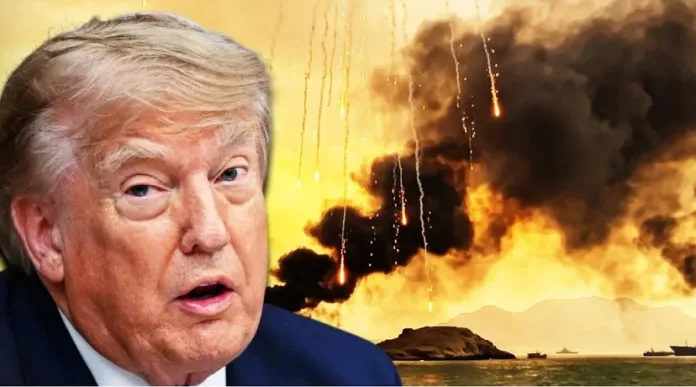

Hormuz oil prices fell as Trump warned Iran to reopen the key shipping route soon
Donald Trump has warned that Iran will be “hit very hard” if the Strait of Hormuz is not opened soon, even as oil prices fell to a three-week low on hopes of a possible deal.
The US president said the vital shipping route would reopen “very soon” or Tehran would face a severe response. His comments came after senior US officials suggested talks had progressed enough for shipments to potentially resume later this week.
Trump told Fox News that discussions were going well and insisted Iran was keen to reach an agreement after months of conflict. He said Washington was having “very good discussions”, but his warning made clear that military pressure remains part of the message.
Hormuz oil prices fell sharply after signs emerged that disruption to the route could ease. Brent crude, the global benchmark, dropped almost 5% to under $80 a barrel on Tuesday. US West Texas Intermediate also fell by more than 5% to around $76 a barrel.
Both contracts reached their lowest levels since 13 July, and prices continued to move lower in Asian trading on Wednesday.
The Strait of Hormuz has become a central pressure point in the conflict between the US and Iran. Before the war began in late February, around one-fifth of the world’s daily oil and liquefied natural gas supplies passed through the narrow waterway between Iran and Oman.
That makes any disruption there a global problem. When ships cannot move freely through the strait, energy markets react quickly, and drivers can end up paying more at the pumps.
Secretary of State Marco Rubio said progress had been made in discussions involving Iran and Oman about getting more ships through the strait. He said there had been movement, but not yet a final deal.
Treasury Secretary Scott Bessent went further, suggesting an agreement could come as soon as Tuesday or Wednesday. He said any deal would mean “freedom of movement” through the route.
Iran has given a different version of events. Tehran says it is not negotiating directly with the US and has no plans to do so. Instead, Iranian officials say they are speaking with Oman, which has acted as a mediator.
A spokesman for Iran’s foreign ministry said talks with Oman over a new mechanism for vessels passing through the Strait of Hormuz had been positive. Qatar, another key mediator between Washington and Tehran, said it was still working with others to find a diplomatic solution, but admitted no direct talks were currently planned.
US Central Command said the southern route through the Strait of Hormuz remained free and open for commercial vessels using the international waterway.
But the wider shipping picture remains dangerous. Iran has halted most traffic through the strait since the conflict began, while the US has imposed a naval blockade of Iranian ports in the region.
Another blockade is also affecting Saudi Arabia’s ports in the Red Sea. That blockade was imposed by Yemen’s Iran-backed Houthis in July, making a key alternative route increasingly risky.
The Red Sea route had become more important after disruption in the Strait of Hormuz, but attacks on vessels have increased. On Tuesday, a projectile sank an Indian-flagged vessel near Yemeni waters, although all 14 people on board were rescued.
Analysts now believe the threat to oil shipping in the Middle East is at its worst since the Iran war began.
The disruption has already pushed fuel prices higher. In the UK, petrol prices have returned to levels seen at the start of the conflict, with the average litre reaching £1.60. In the US, gasoline prices are averaging above $4 a gallon, while diesel is close to $5.40.
Oil prices have repeatedly surged when the conflict has escalated and fallen when talks appeared close to progress. That pattern has left investors cautious, especially after several previous attempts at de-escalation failed.
Trump said on Monday that Iran had its “last chance” to agree a deal allowing commercial shipping to resume. He also claimed he had called off “massive” strikes on the country so talks could continue.
For now, markets are reacting to the possibility of a breakthrough. But with Iran denying direct talks with Washington, no detailed agreement announced, and shipping routes still under threat, the crisis is far from over.