
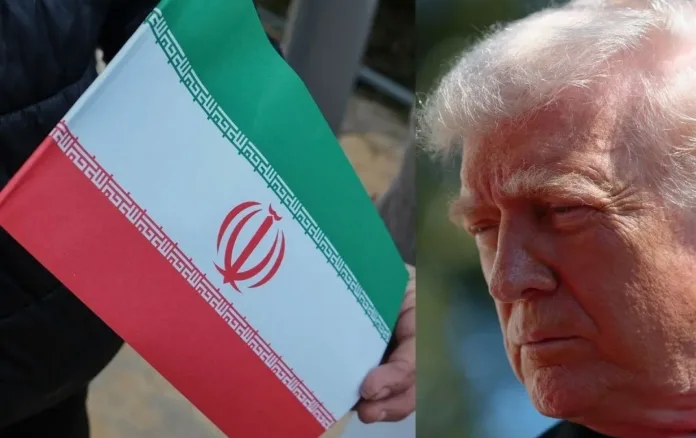

Trump says new Iran talks will begin after he called off planned US strikes
Donald Trump has said new talks with Iran will begin on Monday after he called off what he described as planned “massive” US strikes on the country.
Speaking to reporters on Air Force One, the US president said Washington was now dealing with Tehran through negotiations rather than immediate military action. He said the talks were expected to begin on Monday afternoon, although he did not confirm where they would take place or who would attend.
The Trump Iran talks claim marks another dramatic turn in the conflict between Washington and Tehran. Trump said American forces had been ready to strike, but that Iran and US allies in the Middle East had asked him to hold off because the outline of a deal had been agreed.
He said Saudi Crown Prince Mohammed bin Salman, along with partners in the United Arab Emirates and Qatar, had urged him not to launch strikes over the weekend. According to Trump, those leaders believed there was still a chance of reaching an agreement.
“There’s a deal on Hormuz, and there will be a deal on the nuclear,” Trump said.
The claim has not yet been confirmed by Tehran. Iran has not formally responded to the president’s latest remarks, and its semi-official Mehr news agency denied that the country had asked the US to delay military action. It described Trump’s claim as “nothing but a new lie”.
Iranian Foreign Minister Abbas Araghchi said separately that negotiations with Oman over the Strait of Hormuz were moving towards finalisation, according to Iranian media.
The Strait of Hormuz remains central to the crisis. Around 20% of the world’s crude oil and liquefied natural gas usually passes through the narrow waterway, making any threat to shipping there a major concern for global markets.
Oil prices fell in Asian trading after Trump suggested diplomacy was back on the table. Brent crude dropped by 4.5% to $83.98, while US-traded oil fell by 4.6% to $80.74. Energy markets have swung sharply since the conflict began on 28 February, with traders reacting to the risk of disruption in the Gulf.
Trump did not give a deadline for a deal with Iran. He said the US was ready to act whenever it wanted, but added that he was “not looking to kill people”.
The president also claimed the strikes he cancelled would have been “the biggest attack since World War II”. He declined to say whether Iranian energy infrastructure had been among the planned targets.
That question matters because Trump has previously threatened Iranian civilian infrastructure and power plants. International law experts have warned that attacks on some civilian energy sites could raise serious legal concerns.
Iran has continued to treat US threats as real. Acting Defence Minister Majid Ibn al-Reza said Tehran viewed every threat from its opponents as credible, even if it was also part of psychological warfare. He said Iran would not be caught off guard or remain passive.
The latest comments fit a familiar pattern. Trump has repeatedly warned of overwhelming military action against Iran, then said diplomacy is close to producing a breakthrough. Earlier threats led to face-to-face talks in Pakistan, led by Vice-President JD Vance, but those negotiations ended without a deal.
The political pressure on Trump is also growing at home. Polling has shown dissatisfaction with the war and its economic impact, including among many Republicans. That has caused concern among conservative strategists ahead of the November midterm elections.
For now, Trump is presenting the pause in strikes as a chance for diplomacy. But with Iran disputing parts of his account and no confirmed venue or timetable for the talks, the situation remains fragile.
A deal on the Strait of Hormuz or Iran’s nuclear programme would be a major breakthrough. Until it is agreed in detail, though, the threat of another sudden escalation remains close.