
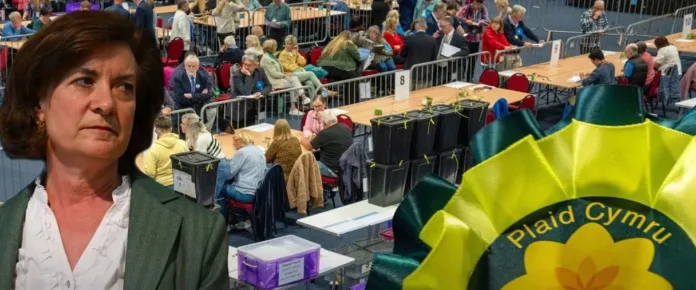

Eluned Morgan steps down after losing her Senedd seat in Labour’s crushing defeat
Eluned Morgan has announced her resignation as leader of Welsh Labour after losing her Senedd seat in a devastating election defeat that has shaken Welsh politics.
The historic result makes Morgan the first serving head of government in UK history to lose their seat while still in office. Her dramatic defeat came as Welsh Labour suffered one of the worst election performances in its modern history, securing just nine seats across Wales.
Speaking after the result was confirmed, Morgan described the outcome as “catastrophic” and accepted full responsibility for Labour’s collapse.
“It ends a century of Labour winning in Wales,” she said. “The party will need to take a really hard look at itself and understand the depth of the challenge that we face.”
Morgan failed to retain her seat in the newly formed Ceredigion Penfro constituency, where Labour failed to win a single seat. Instead, Nigel Farage’s Reform UK secured two seats, while Plaid Cymru dominated the constituency with three victories. The Welsh Conservatives also claimed one seat.
The result marks a political earthquake in Wales. Labour has been the dominant political force in Welsh elections for more than a century and has controlled the Senedd since devolution began in 1999. For the first time ever, the party has now lost its majority in the Welsh Parliament and finished third overall.
Morgan, who became the first woman to serve as Welsh First Minister, said she remained proud of Labour’s achievements during its years in power but admitted voters were deeply frustrated over the state of public services and rising economic pressures.
“We all understand the anger,” she said. “But Wales is stronger when we stand together. We need to heed the anger, not feed the anger.”
The outgoing First Minister also delivered a blunt warning to Keir Starmer and the UK Labour government, urging the party nationally to “change course”. She argued Labour needed to reconnect with working-class voters and address growing inequality across Britain.
Her comments came amid wider turmoil for Labour across the United Kingdom following heavy local election losses and growing pressure on Starmer’s leadership.
Senior Welsh Labour figures admitted the scale of the defeat reflected deep public dissatisfaction over what Deputy First Minister Huw Irranca-Davies described as “bread and butter issues” such as the cost of living, struggling public services and economic hardship.
Speaking before final declarations, Irranca-Davies acknowledged that voters were “sending a message of dissatisfaction” and warned Labour would need to carefully listen to the electorate if it hoped to recover.
Meanwhile, Reform UK celebrated dramatic progress in Wales after previously winning just one per cent of the vote in 2021. Party representatives claimed they had now become serious contenders for power in the Senedd.
The 2026 election also marked one of the biggest changes in Welsh political history. The number of Members of the Senedd increased from 60 to 96, while Wales was reorganised into 16 new super-constituencies under the proportional D’Hondt voting system.
Voter turnout reached 51.8 per cent, the highest national turnout ever recorded in a Welsh election.
For Labour, however, the historic participation only deepened the scale of the humiliation.
After more than a century of political dominance, Welsh voters delivered a brutal message that could reshape the nation’s political future for years to come.