
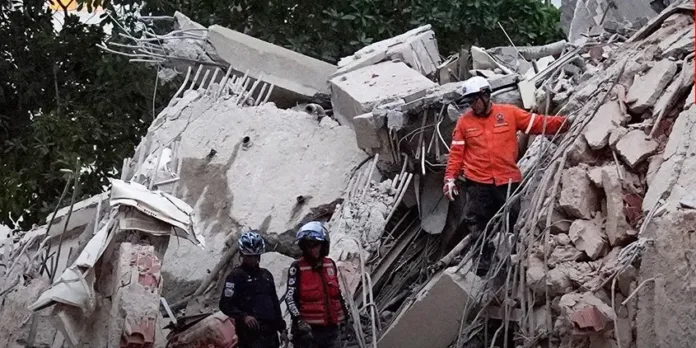

At least 32 people have died after twin earthquakes struck Venezuela, collapsing buildings in Caracas
Venezuela has declared a state of emergency after two powerful earthquakes struck within hours of each other, leaving dozens of people dead, hundreds injured and causing widespread destruction across the capital, Caracas, and surrounding regions.
Authorities say at least 32 people have lost their lives while around 700 others have been injured as rescue teams continue searching through collapsed buildings for survivors.
The twin earthquakes caused extensive damage across several parts of the country, with Caracas among the worst-affected Venezuela areas. Buildings collapsed, roads were damaged and emergency services were deployed across multiple regions as officials worked to assess the scale of the disaster.
Interim President Delcy Rodríguez confirmed the casualty figures and said international rescue teams from several countries were expected to arrive to assist with search and recovery operations.
She also thanked the United States for offering assistance following the disaster.
The government declared a nationwide state of emergency shortly after the earthquakes, allowing emergency services to mobilise additional resources as rescue efforts intensified.
Authorities also confirmed that Venezuela’s main international airport in Caracas suffered damage and was temporarily closed while inspections and safety assessments were carried out.
Emergency crews have continued working around the clock, using heavy equipment and specialised search teams to locate people trapped beneath collapsed structures.
Officials have warned that casualty numbers could continue to rise as more damaged buildings are searched.
The earthquakes were also felt in neighbouring Colombia, highlighting the strength of the seismic event.
Although Venezuela sits near several geological fault lines, earthquakes of this magnitude are relatively uncommon compared with countries located along the Pacific Ring of Fire.
Scientists explain that Venezuela lies between the South American and Caribbean tectonic plates, where seismic activity is generally less frequent than in countries such as Chile or Mexico.
The earthquakes have also created major communication problems.
Reports indicate that mobile phone networks have been disrupted in several areas, making it difficult for families to contact relatives and confirm their safety.
The communication difficulties have been especially distressing for millions of Venezuelans living abroad who have been unable to reach loved ones following the disaster.
Emergency shelters have been established for residents forced from damaged homes while authorities continue assessing structural safety across affected communities.
International assistance has begun to arrive.
United States Secretary of State Marco Rubio announced that search and rescue teams, medical resources and humanitarian aid were being deployed to support relief efforts.
He expressed condolences to those who had lost family members and praised emergency workers responding to the disaster.
Messages of support have also come from political leaders and public figures both inside and outside Venezuela.
Exiled opposition leader María Corina Machado offered her support to those affected, urging Venezuelans to remain united during what she described as an extremely difficult moment for the country.
Rescue operations remain the immediate priority as emergency personnel continue searching damaged buildings and providing medical care to survivors.
Officials have urged residents to remain alert for possible aftershocks and to avoid entering damaged structures until engineers complete safety inspections.
The full extent of the destruction is still being assessed, with authorities continuing to gather information from affected regions.
As Venezuela confronts one of its most serious natural disasters in recent years, attention remains focused on rescue efforts, humanitarian assistance and supporting thousands of people whose lives have been disrupted by the devastating earthquakes.