

Iran fires back at Gulf bases as fears grow of a wider Middle East crisis
The US has launched a second consecutive night of strikes on Iran, sharply raising fears that the fragile ceasefire in the region is collapsing.
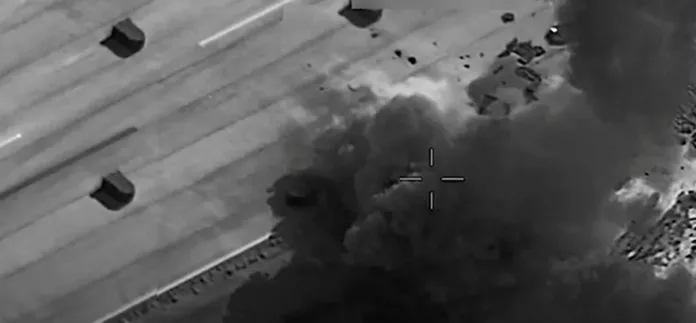
US Central Command said American forces hit approximately 90 targets across Iran in the latest wave of attacks. It said the strikes were aimed at weakening Tehran’s ability to threaten commercial shipping and civilian mariners in the Strait of Hormuz.
The US-Iran strikes followed earlier American attacks on more than 80 targets on Tuesday. Washington said those strikes came in response to attacks on three commercial vessels passing through the Strait of Hormuz, one of the world’s most important energy routes.
Iranian media reported explosions along the country’s southern coast. Iranian state media also said three people had been killed overnight in US strikes, with others injured in an attack near Ahvaz in Khuzestan.
Iran then claimed it had targeted US military sites in Kuwait, Qatar and Bahrain with drones. Its army said the targets included a US Patriot missile system in Kuwait, a satellite early warning system in Qatar and US fuel storage facilities in Bahrain.
Several Gulf states reported attacks or issued security alerts. Bahrain activated air defence sirens and urged residents to remain calm and move to safe places. Kuwait reported intercepting missiles and drones, while Qatar issued a security alert.
The Islamic Revolutionary Guard Corps said it had launched retaliatory attacks on US military bases in Kuwait and Bahrain. It described the strikes as the first phase of a punitive response and warned that more US bases could be targeted if American action continued.
The latest US-Iran strikes came as Donald Trump returned from the Nato summit in Turkey. Speaking aboard Air Force One, the US president said America had hit Iran “very hard” and claimed the US had already “won militarily”.
Trump also said Iran had asked to make a deal, although Tehran has not publicly confirmed that. Less than 24 hours earlier, he had said the ceasefire was over and described talks as a waste of time.
The comments left the future of diplomacy deeply uncertain. Trump said he did not know whether Iran was “worthy” of a deal or whether it would honour any agreement. The latest US Iran strikes therefore came with both military pressure and mixed signals about talks.
Iranian parliamentary speaker Mohammad Bagher Ghalibaf, who is also Iran’s chief negotiator with the US, said America had still not learned that bullying and breaking promises were no longer cost-free.
The renewed fighting also cast a shadow over the final day of public mourning for assassinated former supreme leader Ali Khamenei. His funeral ceremonies stretched across six days and several cities, with Iran’s new leaders using the spectacle to project unity and strength.
But the war has returned to the centre of events. Analysts warned that the region could now face a dangerous state of no war, no peace, with occasional exchanges of fire and uncertain diplomacy.
The Strait of Hormuz remains central to the crisis. A shipping industry official said traffic through the US-backed southern route had dropped to single figures overnight, while about 20 vessels used the northern route overseen by Iran. Around 30 ships were moving daily through the wider area, down from about 70 a week earlier and well below the normal level of about 130.
Oil markets reacted cautiously but remained under pressure. Brent crude rose by about 1% to around $78.80 a barrel after jumping more sharply earlier in the week. Traders are watching the Strait of Hormuz closely because about 20% of the world’s oil and liquefied natural gas usually passes through the waterway.
For now, the US-Iran strikes have pushed the region back towards open confrontation. Both sides are still talking about deals, punishment and deterrence. But with Iran hitting Gulf targets and the US promising harsher action if attacked again, the path back to calm looks narrower than ever.