
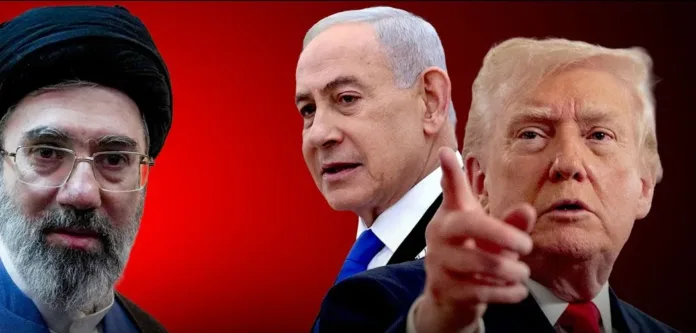

New attacks erupt across the Gulf as stalled negotiations push the conflict deeper into crisis
The conflict between the United States and Iran has entered another dangerous phase after both sides launched fresh attacks, while efforts to secure a ceasefire remain deadlocked.
The latest escalation unfolded across the Gulf region, where military strikes, missile launches and growing tensions around the Strait of Hormuz have raised fears that diplomatic progress could be slipping away.
According to the US military, American forces carried out what they described as self-defence strikes against Iranian targets on Qeshm Island, a strategically important location near the Strait of Hormuz.
US Central Command said the operation targeted an Iranian military ground control station following what it called attempted Iranian attacks across the Middle East.
The US military also reported intercepting several threats in the region. Officials said three Iranian attack drones heading towards civilian shipping were shot down before reaching their targets.
At the same time, American officials accused Iran of launching ballistic missiles towards Gulf countries hosting US military facilities.
According to the US Central Command, two missiles fired towards Kuwait either broke apart or fell short before reaching their destination. Three additional missiles aimed at Bahrain were intercepted by joint American and Bahraini air defence systems.
Iran offered a different version of events.
Iranian officials said they had targeted US military bases and helicopters located in a regional country as retaliation for recent American military actions. The Islamic Revolutionary Guard Corps warned that any attempt to disrupt security in the Strait of Hormuz would carry serious consequences for the United States.
The Strait of Hormuz remains at the centre of the conflict.
The narrow waterway serves as one of the world’s most important energy corridors, carrying a significant share of global oil and gas shipments. Any disruption there has immediate implications for international markets and regional stability.
Earlier in the week, the US military also announced action against a commercial vessel travelling towards Iran.
American officials said a Botswana-flagged tanker failed to comply with repeated instructions from US forces over a 24-hour period. A US aircraft subsequently fired a Hellfire missile into the vessel’s engine room, disabling the ship.
Video footage released by the military purportedly showed the moment the strike took place.
US officials said the action formed part of Washington’s naval blockade of Iran’s Gulf coastline, which began in April.
According to Central Command, six commercial vessels have been disabled and more than 120 others redirected since the blockade was imposed.
The renewed military activity comes at a particularly sensitive moment for diplomacy.
Recent negotiations aimed at ending months of conflict have struggled to gain momentum. Reports indicate that discussions over a potential agreement stalled during the weekend, leaving key issues unresolved.
Among the main sticking points are the future status of the Strait of Hormuz, Iran’s stockpile of highly enriched uranium and the broader framework for restarting nuclear negotiations.
President Donald Trump has continued to express confidence that an agreement remains possible.
Earlier this week, Trump said Iran wanted a deal and suggested that any future arrangement could benefit both sides. However, reports also indicate that the White House has sought revisions to elements of the proposed framework.
Iran has pushed back against those claims.
Iranian foreign ministry spokesperson Esmail Baghaei accused Washington of repeatedly changing its position and introducing new demands into the negotiations.
Meanwhile, US Secretary of State Marco Rubio told lawmakers that sanctions relief had not been offered in exchange for reopening the Strait of Hormuz. He maintained that any easing of restrictions would remain tied to Iran’s nuclear activities.
Despite ongoing diplomatic contacts, the latest exchange of strikes highlights how fragile the situation remains.
With missiles crossing the Gulf, naval tensions increasing, and negotiations showing little progress, hopes for a lasting ceasefire continue to face significant challenges.