

Tehran declares diplomacy futile while Gulf states face fresh missile and drone attacks
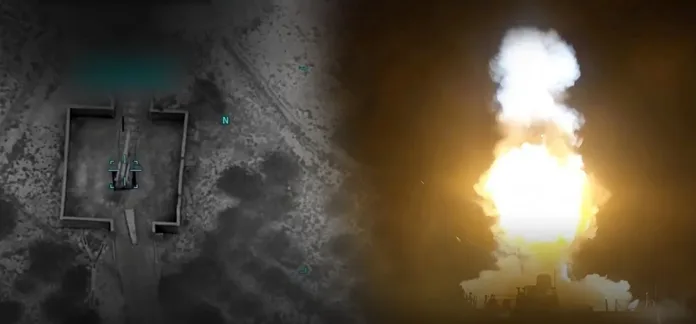
The US has launched a new wave of strikes against Iran, deepening the confrontation over the Strait of Hormuz and placing fresh pressure on the fragile truce agreed last month.
US Central Command said the latest attacks began at 9 pm GMT on Sunday. It said the operation was intended to keep weakening Iran’s ability to attack civilian mariners and commercial ships moving through the Strait of Hormuz.
The renewed US-Iran strikes came after another intense weekend of violence. Centcom said it carried out about 140 strikes on Saturday night, while President Donald Trump said of the weekend attacks on Iran: “We’re beating them up.”
Iran hit back by targeting countries in the region that host US military forces. Jordan’s army said it had shot down four Iranian missiles. Kuwait’s armed forces said they were responding to hostile aerial targets as Iran carried out strikes on US interests in the Gulf.
The latest exchange marks another escalation in a cycle of attacks and counterattacks. Iran has been trying to assert control over shipping through the Strait of Hormuz, a vital energy route, while the US says it is acting to protect freedom of navigation and commercial vessels.
Tehran condemned the latest US-Iran strikes, saying they had made months of diplomacy pointless. Iran’s foreign ministry said the attacks had “rendered futile” efforts to reduce tension and establish peace in the region.
The ministry also accused Washington of bringing insecurity back to the Strait of Hormuz by interfering with Iran’s arrangements for the waterway. It said talks between Iran and Oman in Muscat on Saturday had failed because of what it called overt and covert US pressure on Oman.
The fighting has cast serious doubt over the interim US-Iran truce agreement signed last month. That deal was meant to reopen the Strait of Hormuz and support a further 60 days of negotiations aimed at ending the wider conflict.
Trump has said he considers the ceasefire over, while still leaving the door open to more talks. Iran’s chief negotiator, Mohammad Bagher Ghalibaf, struck a defiant tone on X, saying the era of one-sided deals was over and warning that reality was knocking.
The US-Iran strikes have also widened tensions across the region. Iran’s earlier attacks on Sunday extended to Qatar, a mediator in ceasefire talks that had not come under attack since April. The United Arab Emirates said its air defences had engaged missiles and drones from Iran, its first reported targeting since early May.
Iranian media also reported missile attacks and explosions around Sirik and Bandar Abbas, port cities near the Strait of Hormuz with military facilities. Explosions were also reported near Qeshm Island.
Energy markets reacted quickly. Oil prices rose more than 3.5% when futures trading opened in Tokyo on Monday, with US benchmark WTI moving above $74 a barrel. Before the war, the Strait of Hormuz carried about a fifth of the world’s oil and liquefied natural gas shipments.
Iran’s newly created Persian Gulf Strait Authority said passage through the strait was not currently possible because of what it described as illegal US military movements in the region. It said permits would be issued once stability and calm returned.
The US rejected Iran’s position and said its forces remained ready to protect navigation. A US Navy-led maritime centre said an expanded southern route near Oman remained available for two-way traffic.
For now, the US-Iran strikes have pushed the standoff into a more dangerous phase. Both sides still mention talks, but the violence is moving faster than diplomacy. Tehran says negotiation has been made futile, while Washington says Iran must be held accountable.
The truce has not formally disappeared, but it now looks weaker than ever. With Iran striking regional targets and the US continuing its campaign, the next moves around the Strait of Hormuz could decide whether the conflict slows down or spreads further.