

US-Iran agreement opens new talks but leaves major disputes unresolved after the conflict
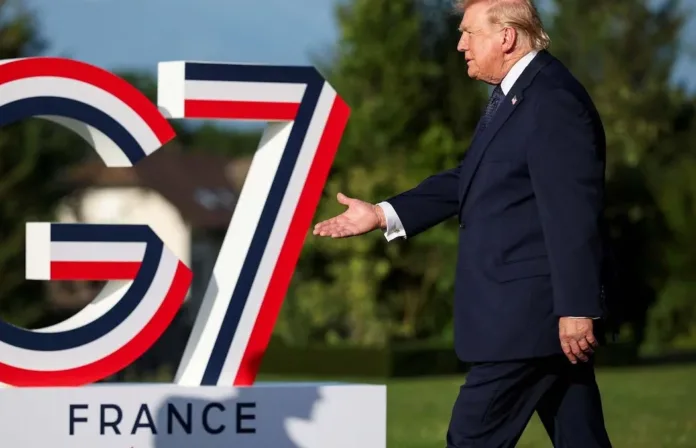
Donald Trump arrived at the G7 summit in France, presenting the new agreement between the United States and Iran as a diplomatic success, but critics have argued that the deal highlights unanswered questions about the cost and outcome of the conflict.
The agreement between Washington and Tehran focuses on halting fighting, reopening the Strait of Hormuz and beginning further negotiations over unresolved issues. A formal signing ceremony is expected to take place in Switzerland following the framework agreement.
However, critics of the administration’s strategy argue that many of the original objectives presented during the conflict remain unresolved.
One major area of uncertainty involves Iran’s nuclear programme. The future of the country’s highly enriched uranium stockpile and long-term enrichment activities is expected to be addressed during upcoming negotiations, meaning the issue has not yet reached a final settlement.
Questions also remain over Iran’s political leadership and regional influence. Although senior military figures were reportedly killed during the conflict, Iran’s government remains in power and new figures have taken leadership positions.
Critics have also argued that the war did not produce a clear resolution regarding Iran’s ballistic missile capabilities or its regional allied groups, issues that may become part of future diplomatic discussions.
Supporters of Trump’s approach point to significant damage suffered by Iran’s military infrastructure during the fighting. They argue that the campaign weakened Iran’s conventional military capabilities and created conditions for negotiations.
The disagreement over the war’s legacy reflects a wider debate over whether the military campaign achieved its intended goals or whether the final agreement represents a compromise after a costly confrontation.
The deal itself remains a framework rather than a complete settlement.
Reports indicate that it includes a 60-day period for further talks and attempts to restore stability around the Strait of Hormuz, a route that is crucial to global energy supplies. Several important details, including the long-term arrangements surrounding Iran’s nuclear activities and sanctions, remain under discussion.
At the G7 summit in Évian-les-Bains, Trump described himself as satisfied with the agreement and expressed optimism about developments in the Middle East.
The president also shifted attention towards the ongoing war between Russia and Ukraine, which remains a major issue for world leaders gathering at the summit.
Trump said he believed progress could be possible after discussions involving both Russian President Vladimir Putin and Ukrainian President Volodymyr Zelenskyy, although previous efforts to secure an agreement have failed to produce a lasting peace.
For Trump, the Iran agreement provides an opportunity to move away from a conflict that carries serious economic and political risks.
Supporters view the deal as a diplomatic breakthrough that prevented further escalation and helped reduce pressure on global energy markets.
Opponents, however, argue that the agreement leaves Iran with significant negotiating leverage, particularly because of the strategic importance of the Strait of Hormuz, through which a large share of global oil supplies pass.
The next phase of diplomacy is expected to be complex and could determine whether the current understanding develops into a lasting agreement or becomes another temporary pause in tensions.
With negotiations set to continue, the debate over the success or failure of Trump’s Iran strategy is likely to remain a central political argument both in the United States and internationally.