
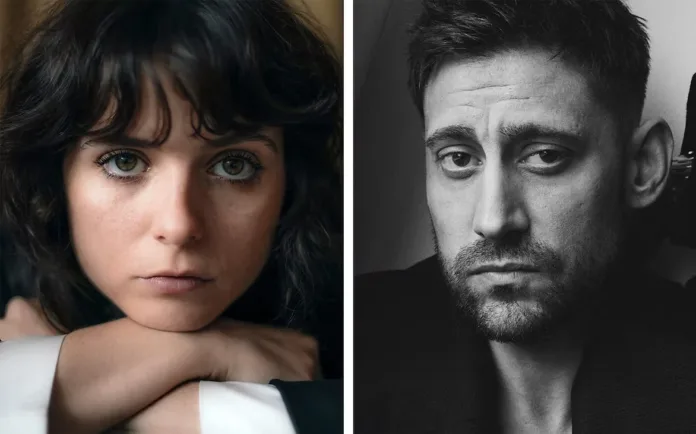

The Witch Farm true story begins in May 1989, when Bill and Liz Rich moved into Heol Fanog, a remote farmhouse in the Brecon Beacons. They say what followed was seven years of footsteps, foul smells, apparitions and exorcisms. BBC One’s four-part drama, which starts on Sunday 22 November, is based on what they reported.
Episode 1 is at 9 pm on BBC One
Episodes 1 and 2 are on BBC iPlayer from 6 am that day
Is The Witch Farm a true story?
Yes. The Witch Farm is based on events that Liz and Bill Rich say they lived through at Heol Fanog, a farmhouse in the foothills of the Brecon Beacons, from 1989. The BBC says some characters, events and timings have been invented or changed for the drama.
The series is written by Danny Robins, who first told the story in his 2022 BBC Radio 4 podcast of the same name. He met Liz while making the podcast, and she told him her story, he said in an interview with BBC News this week.
The drama keeps Bill and Liz’s real names. Their son is called Jonathan on screen, but in real life the boy was Laurence, Bill’s son from his first marriage, BritishTV.com reported. Heol Fanog is a real house and is still a private home, so we are not giving its location.
What happened at Heol Fanog?
Bill and Liz Rich say that within months of moving in, heavy footsteps ran down the stairs, doors slammed unexpectedly, and smells of sulphur and incense came and went. Over seven years it grew into apparitions, the deaths of their animals, injuries and a long run of exorcisms.
Bill was an artist from England, and Liz, who is Welsh, was pregnant with their first child when they moved in with Laurence in May 1989. The house was an old stone building converted from an even older barn, Robins wrote for BBC Radio 4.
The trouble started as winter came. Liz heard footsteps running down the stairs that never reached the bottom, Laurence’s personality began to change, and there were extreme hot and cold spots around the house, BBC News reported in 2022.
“We had exorcism after exorcism.”
Liz Rich, speaking to BBC News in 2022
Liz first went to Brecon Cathedral for help. A priest walked around the house with holy water, and things went quiet for a while before coming back stronger, she told the BBC. The BBC has since described Heol Fanog as having more exorcisms than any other home in British history, and the case was nicknamed the Welsh Amityville.
Why was the Heol Fanog electricity bill so high?
It has never been explained. The family’s first electricity bill was £750 for three months, almost £2,000 in 2022 money, and an official from the electricity board could not explain why so much power was being used, according to the BBC.
The meter would spin wildly, and seemed to surge at the moments when the strange activity was at its worst. Robins asked whether it was a simple fault with the supply, or something in the house draining power to feed itself, in his piece for BBC Radio 4.
That bill is also where the trail to the BBC drama starts.
How did a power bill become a BBC One drama?
Through a newspaper item, a book and a podcast. A short piece in The Independent about the power drain led author Mark Chadbourn to the Riches, he says his book inspired the BBC podcast, and the podcast became this drama.
- 1989
The bill
£750 for three months at Heol Fanog, with no explanation from the electricity board.
- News
The newspaper
A small piece in The Independent about the power drain catches the eye of Chadbourn, then a journalist, and he contacts Bill.
- Book
The 24 witnesses
Chadbourn interviews 24 people, many of whom had never met, including a previous resident, and writes Testimony.
- 2022
The podcast
Robins makes The Witch Farm, an eight-part series for BBC Radio 4, with Liz Rich taking part.
- 2026
The drama
BBC One turns the podcast into a four-part series, filmed in Wales.
Chadbourn calls Testimony his only non-fiction book in a 2022 blog post, and says in another that the BBC podcast was inspired by it. He also worked on the podcast as a consultant, according to Mark Fox’s review of the case, first published in the Fellowship Review.
Robins tells his side a little differently. He told BBC News that his earlier podcast, The Battersea Poltergeist, was a hit around the world, there was pressure to find a follow-up, and that search led him to Liz and Bill Rich.
How accurate is The Witch Farm?
The Witch Farm TV series keeps the real family, house and year, but the BBC says some characters, events and timings were invented or changed for the drama. The clearest change is the son, Laurence in real life and Jonathan on screen.
| Real life | BBC drama | |
|---|---|---|
| The family | Bill, Liz and Bill’s son Laurence, with Liz pregnant | Bill, Liz and their teenage son Jonathan |
| Where from | Bill was an artist from England, and Liz is Welsh | A couple leaving London for a fresh start |
| The house | Heol Fanog, a stone house converted from a barn | Heol Fanog, a remote farmhouse in the Brecon Beacons foothills |
| How long | Seven years, from 1989 | Four episodes of about an hour, set in 1989 |
Real-life details from BBC News and BBC Radio 4. Drama details from the BBC synopsis, as reported by TV Guide.
The drama also includes a traumatic home birth, during which Liz believes she sees a ghostly figure in the bedroom, according to the BBC’s synopsis reported by the Brecon & Radnor Express. As Bill and Liz try to find an explanation, the strain begins to show on their marriage.
When is The Witch Farm on TV?
The Witch Farm starts on BBC One at 9 pm on Sunday 22 November, and episode 2 follows at 9 pm on Monday 23 November. Episodes 1 and 2 go on BBC iPlayer at 6 am on Sunday.
| Episode | BBC One | iPlayer |
|---|---|---|
| Episode 1 | Sun 22 Nov, 9 pm | Sun 22 Nov, 6 am |
| Episode 2 | Mon 23 Nov, 9 pm | Sun 22 Nov, 6 am |
| Episode 3 | Sun 29 Nov, 9 pm | Sun 29 Nov, 6 am |
| Episode 4 | Mon 30 Nov, 9 pm | Sun 29 Nov, 6 am |
Times from TV Guide and Nation.Cymru. It is also on BBC One Wales.
If you are wondering where to watch The Witch Farm, in the UK it is on BBC One and BBC iPlayer, and either way you need a TV licence. Outside the UK, ITV Studios is distributing the series, and no US deal had been announced when BritishTV.com reported on it in August.
Who is in The Witch Farm cast?
Gabrielle Creevy plays Liz Rich and Michael Socha plays Bill Rich in The Witch Farm cast, with Lewin Lloyd as their son Jonathan, Sian Gibson as Bethan and Jeremy Swift as Eddie Burks.
| Actor | Character |
|---|---|
| Gabrielle CreevyBlack Doves | Liz Rich |
| Michael SochaShowtrial | Bill Rich |
| Lewin LloydHis Dark Materials | Jonathan |
| Sian GibsonThe Power of Parker | Bethan |
| Jeremy SwiftTed Lasso | Eddie Burks |
| Edward HolcroftIndustry | Max Harriman |
| Robert PughGame of Thrones | Not announced |
| Roger EvansHouse of the Dragon | Not announced |
| Suzanne Packer | Not announced |
Characters from BritishTV.com, Wikipedia and the BBC. Earlier roles from Stylist and the Brecon & Radnor Express.
Creevy, who was born in Port Talbot, plays Liz in her own Welsh accent, and Robins said it gave the role real authenticity, BBC News reported. She also plays the assassin Eleanor in Black Doves season 2 on Netflix.
Eddie Burks was also the name of a real British ghost hunter, a civil engineer who died in 2005 and made headlines in 1993 over a reported ghost at Coutts bank in London, according to Wikipedia. The BBC hasn’t said whether Jeremy Swift’s character is based on him.
Stacey Gregg directs, and Mammoth Screen makes the series for the BBC. The Witch Farm was filmed in Wales with an almost entirely Welsh crew, Robins told the BBC, and Swansea Museum, Swansea Guildhall and Swansea Civic Centre were among the locations, according to Wikipedia.
Was Heol Fanog really haunted?
Nobody has proved the Heol Fanog haunting either way. Robins built the story around believers and sceptics, and the explanations people have offered range from a rumoured murder on the site in 1848 to fumes from the house’s oil heater.
The case for a haunting
- A local historian found rumours of an axe murder on the site in 1848, according to Higgypop.
- A dowser claimed the farmhouse sits on ley lines.
- Robins pointed to the area’s history of witchcraft and Celtic ritual, and said witchcraft flourished in Wales, where witches were not persecuted the way they were elsewhere.
- Chadbourn’s 24 witnesses, many of whom had never met, described frightening things of their own.
The case against
- Robins looked at whether some kind of intoxication from the house’s oil heater could explain it.
- The house was about half a mile from the nearest neighbour, and Robins asked whether that isolation played on the family’s imagination.
- Dr Ciarán O’Keeffe, one of the podcast’s experts, has pointed to the stress the family was under, writing in Fortean Times, Mark Fox noted.
- The people living there when Robins visited, who had been there for about 25 years, told him the power drains had not happened at all this century.
The murder rumour and the dowser’s claim are from Higgypop’s recap of the podcast. The witchcraft, oil heater and isolation points are from the BBC. The residents’ account is from Mark Fox’s review.
Where can I listen to The Witch Farm podcast?
The Witch Farm podcast is on BBC Sounds. It is an eight-part series from 2022 that mixes drama, starring Joseph Fiennes and Alexandra Roach, with Robins’s own investigation alongside Liz Rich.
The first episode came out on 17 October 2022, according to Mark Fox. Bafflegab and Uncanny Media made it for BBC Radio 4, Nation.Cymru reported, and the theme music is by the Mercury Prize-nominated singer Gwenno, according to Robins’s website.
Other witnesses in the podcast include the exorcist Matt Tricker, according to the BBC.
Is The Witch Farm scary?
It is meant to be. Robins told BBC News he wants viewers to feel scared, but also to be moved by the story and to laugh a little. Lindsay Salt, the BBC’s director of drama, has told viewers to expect some scares, Stylist reported.
Robins also said he wants viewers to make up their own minds about whether ghosts exist, rather than being told what to think. It won’t be the first BBC ghost story to rattle a weekend audience. Ghostwatch, the BBC’s 1992 Halloween hoax, was never shown on the BBC again.
More true stories and TV
- Ghostwatch: the 1992 BBC hoax that was never shown again
- Sleep paralysis demon: why everyone sees the same dark figure
- The Strangers true story: what’s real, and what the internet got wrong
- Abandoned places UK: why they stand empty and which you can visit
- Black Doves season 2: the cast, the reviews and whether season 3 is coming