
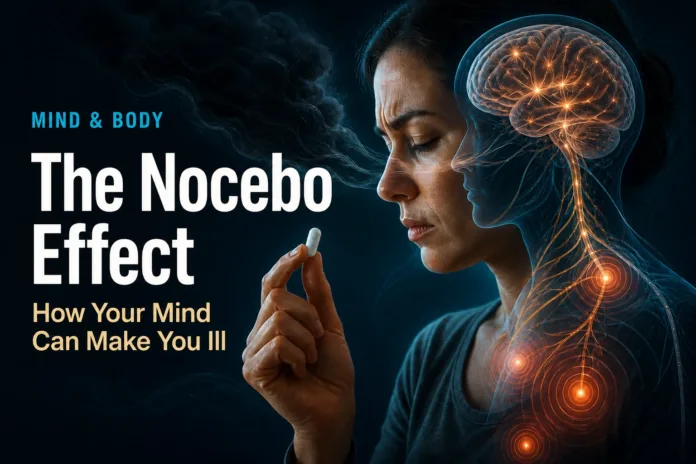

Everyone has heard of the placebo effect, where a sugar pill makes you feel better simply because you believe it will. Far fewer people know it has a sinister twin. The nocebo effect is what happens when negative expectations produce real, physical harm: you are told a treatment might make you feel sick, and so it does, even when there is nothing in the pill at all. It is not imagination or attention-seeking. The symptoms are genuine, measurable and sometimes severe, which is exactly what makes it one of the most unsettling phenomena in medicine.
From the millions who abandon life-saving statins over side effects that were never really caused by the drug, to a man who nearly died from swallowing dummy pills, the nocebo effect quietly shapes how we experience illness. Here is how it works, the strangest documented cases, and how to stop your own mind turning against you.
Key takeaways
Here is the short version before we get into the detail.
- It is the opposite of the placebo effect. Where placebo turns positive expectation into relief, it turns negative expectation into real symptoms.
- The symptoms are genuine. Nocebo reactions produce measurable physical effects, not imagined ones.
- It explains many “side effects”. A landmark statin trial found around 90% of reported side effects also appeared on a dummy pill.
- Words can trigger it. Simply being warned about a side effect makes you far more likely to experience it.
- You can reduce it by understanding it, framing information carefully, and resisting the urge to catastrophise every symptom.
What is the nocebo effect?
The nocebo effect is the phenomenon whereby a negative expectation about a treatment or situation causes real, unpleasant symptoms, even when there is no physical cause. The word comes from the Latin for “I shall harm”, a deliberate mirror of placebo, meaning “I shall please”. If you swallow a harmless capsule believing it will give you a headache and a wave of nausea, and it duly does, you have experienced it first-hand.
What makes it so important, and so easy to dismiss, is that the discomfort is not made up. Brain imaging and physiological studies show that nocebo reactions involve genuine changes in the nervous system, releasing stress chemicals and heightening the perception of pain. The person really does feel worse. They are simply feeling worse because of what they expected, rather than because of anything the treatment did.
Nocebo versus placebo: what is the difference?
The two are opposite sides of the same coin, and both prove how powerfully belief shapes the body.
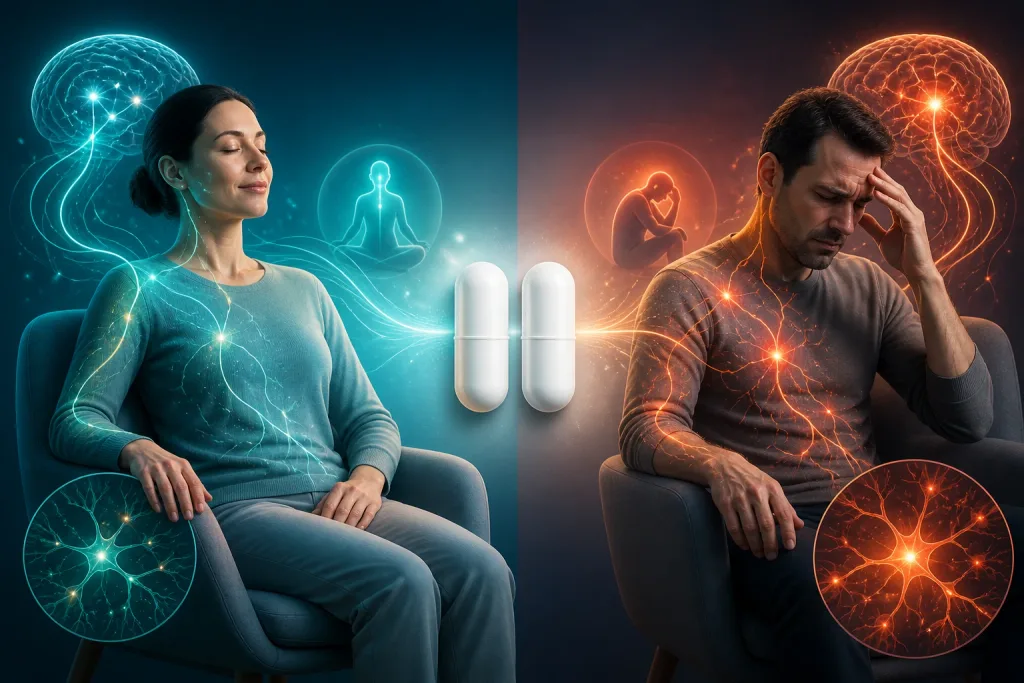
The placebo effect is positive: expecting to get better actually helps you feel better, which is why dummy pills can genuinely ease pain, anxiety and other conditions in clinical trials. The nocebo effect is negative: expecting to feel worse actually makes you feel worse. Same mechanism, opposite direction. A single sugar pill can produce either outcome depending entirely on what the person is told to expect, which is a startling demonstration of how much the mind steers our physical experience.
How does the nocebo effect work?
Three ingredients drive the nocebo effect: expectation, anxiety and conditioning. When you expect something to hurt or harm you, your brain primes itself for that outcome, and anxiety amplifies the signal. Studies have shown that anticipating pain activates the same brain regions involved in feeling it, and even triggers the release of a chemical called cholecystokinin that intensifies pain. In other words, dread does not just make you nervous; it physically turns up the volume on discomfort.
Conditioning plays a part too. If a particular pill, hospital smell or type of treatment once made you feel ill, your body can learn to reproduce that reaction on cue, rather like Pavlov’s dogs salivating at a bell. Layer expectation, anxiety and conditioning together and you have a self-fulfilling prophecy running through the nervous system, which is the engine of a nocebo reaction.
What are the strangest real examples?
The phenomenon sounds abstract until you meet the cases, and some are genuinely startling.
The statin story. Millions of people stop taking cholesterol-lowering statins because of muscle aches and other side effects. Yet a landmark UK-led trial called SAMSON found that around 90% of the symptoms patients blamed on statins also appeared when they unknowingly took a dummy pill. The drug was not the culprit; the expectation of side effects was.
The placebo “overdose”. In a much-cited case, a young man taking part in an antidepressant trial swallowed the 29 capsules he had left in an apparent suicide attempt. His blood pressure plummeted and he was rushed to hospital, seriously unwell, until doctors revealed he had been in the placebo group and the capsules contained no active drug at all. Within minutes of learning the truth, he began to recover.
The side-effect leaflet. Studies repeatedly show that simply warning people about a possible side effect makes them far more likely to report it. In one, men told that a prostate drug might cause sexual side effects experienced them at roughly three times the rate of men who were not warned.
Mass outbreaks. The effect can even spread socially. In cases of mass psychogenic illness, whole groups of people, often in schools or workplaces, develop very real symptoms such as fainting, dizziness or rashes with no physical cause, triggered by anxiety and the sight of others falling ill.
Why does it matter for medication side effects?
This is where it stops being a curiosity and starts affecting real lives. Every medicine comes with a patient information leaflet listing possible side effects, and while that information is important, the very act of reading it can conjure the symptoms it describes. Doctors face a genuine dilemma: they are ethically obliged to warn patients about risks, yet the warning itself can cause harm.
The statin example shows the stakes. When people abandon a medication that is genuinely protecting their heart because of nocebo side effects, the consequences can be serious. This does not mean side effects are never real, and it absolutely does not mean you should ignore how a medicine makes you feel. It means the picture is more complicated than “pill causes symptom”, and that how a treatment is explained can matter almost as much as the treatment itself.
Can the nocebo effect actually harm you?
Yes, and that is precisely why it is taken seriously. Because nocebo reactions involve real physiological changes, they can produce measurable effects on blood pressure, heart rate, pain levels and more, as the placebo overdose case dramatically showed. At the extreme end, some researchers have pointed to so-called “voodoo death”, where people who believed themselves cursed have reportedly died, as a possible illustration of expectation pushed to its limit, though such cases are rare and hotly debated.
For most of us the harm is milder but far from trivial: unnecessary suffering, abandoned treatments, and a spiral of anxiety in which every twinge is read as proof that something is wrong. Understanding that the nocebo effect exists is the first step to loosening its grip.
How do you protect yourself from the nocebo effect?
You cannot switch off expectation entirely, but you can stop it running the show. The most powerful defence is simply knowing the nocebo effect is real, because awareness robs it of some of its power. Beyond that, be careful how you consume health information: reading endless side-effect lists or symptom-Googling at 2am primes your body to produce exactly what you fear.
Try to focus on the intended benefit of a treatment rather than rehearsing everything that could go wrong, and if a medicine’s warnings worry you, ask your doctor or pharmacist to put the risks in context rather than facing the leaflet alone. None of this means dismissing genuine symptoms, which always deserve attention. It simply means giving your mind fewer reasons to manufacture harm that was never there.

The mind–body connection
The nocebo effect is a humbling reminder that the mind and body are not separate machines but one deeply connected system. Expectation alone can raise your blood pressure, deepen your pain and convince you a harmless pill is poisoning you. The good news is that the same wiring that makes it possible also powers the placebo effect, which means belief can heal as readily as it can harm. Knowing which twin you are feeding is the quiet skill worth learning.
Frequently asked questions about the nocebo effect
Is the nocebo effect real?
Yes. It is a well-documented phenomenon backed by clinical trials and brain-imaging studies. It produces genuine, measurable physical symptoms driven by negative expectation, not imagined ones.
What is an example of the nocebo effect?
A classic example is medication side effects. In the SAMSON statin trial, around 90% of the side effects patients reported also occurred when they took a dummy pill, showing the symptoms were driven by expectation rather than the drug.
What is the difference between placebo and nocebo?
The placebo effect is when positive expectation makes you feel better, while the nocebo effect is when negative expectation makes you feel worse. Both show how strongly belief influences the body, just in opposite directions.
Can you die from the nocebo effect?
Extreme cases are rare and debated, but because the nocebo effect causes real physiological changes, it can meaningfully affect the body. Most harm, though, comes as unnecessary symptoms, anxiety and people abandoning helpful treatments.
How do you avoid the nocebo effect?
Being aware it exists is the biggest protection. Beyond that, avoid obsessive symptom-Googling, focus on a treatment’s benefits, and ask a professional to put any warnings in context rather than dwelling on side-effect lists alone.