

Updated on
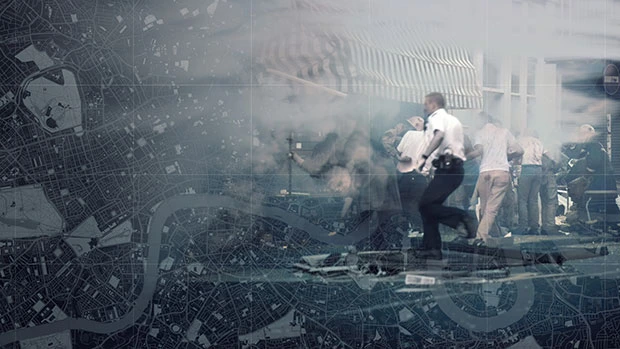
In April 1999, David Copeland, the neo-Nazi who became known as the London nail bomber, set off three nail bombs in London in 13 days. He targeted the Black community in Brixton, the Bangladeshi community on Brick Lane and the gay community in Soho, killing three people and injuring 140. Surviving the London Nail Bombings, a new film on Prime Video, tells it through the people who were there.
The film has been on Prime Video since Tuesday 17 November. Copeland, now 50, is still in prison and can’t be considered for release before 2049. Here’s what happened in those two weeks, who he is, why he did it and how he was caught.
On Prime Video from Tuesday 17 November
Surviving the London Nail Bombings
A 90-minute film told by the people caught up in three attacks in April 1999.
- Brixton48 injured
- Brick Lane13 injured
- Soho3 killed, 79 injured
Quick look
- What did he do?Set off three nail bombs in London in April 1999, killing three people and injuring 140.
- Is he still in prison?Yes. He is serving six life sentences with a minimum term of 50 years.
- Which prison?Not officially confirmed. His last court case, in 2015, placed him at HMP Belmarsh.
- When could he get out?Not before 2049, when he will be 72, and release isn’t automatic.
- The new filmSurviving the London Nail Bombings, on Prime Video since 17 November.
What is Surviving the London Nail Bombings?
Surviving the London Nail Bombings is a feature-length documentary about David Copeland’s three bomb attacks in London in April 1999. It has been on Prime Video in the UK and Ireland since Tuesday 17 November.
It is told mainly through the memories of people who were there, alongside archive news reports, CCTV and pictures taken by a photographer who happened to be nearby, according to Televisual. Prime Video bills it as the definitive eyewitness account of the deadliest far-right attack on British soil.
The film is directed by Tom Peppiatt and made by Yeti Television, a Welsh production company, with Sphere Abacus handling distribution. The distributor says it also looks at the communities that were targeted, and at how the effects of terrorism can last for decades.
Who is David Copeland?
David James Copeland is the neo-Nazi behind the 1999 London nail bombings. He was born on 15 May 1976, so he was 22 at the time and is 50 now, and he worked as an engineer’s assistant on the London Underground.
He grew up in Yateley, Hampshire, with his parents and two brothers, and left school in 1992. His full name, date of birth, job and upbringing are from the record of the case.
His father found him the job, on the Jubilee Line extension, according to the anti-fascist magazine Searchlight. He had been a member of the British National Party before moving to the National Socialist Movement, a smaller neo-Nazi group, where he became its southern regional organiser in early 1999, the magazine says.
Why did David Copeland do it?
David Copeland told police he wanted to start a race war. He chose Brixton, Brick Lane and the Admiral Duncan to hit London’s Black, Bangladeshi and gay communities.
“My main intent was to spread fear, resentment and hatred throughout this country; it was to cause a racial war,” he told police, according to the record of the case, which cites BBC Panorama. He said his first idea had been to bomb the Notting Hill Carnival, inspired by the bombing at the 1996 Atlanta Olympics.
Searchlight says his hatred of gay people was probably rooted in being teased about being gay himself when he was younger, and that he was influenced by the racist novel The Turner Diaries and by National Socialist Movement material. Police and prosecutors presented him as a lone wolf.
What happened in the 1999 London nail bombings?
Over 13 days in April 1999, David Copeland left homemade nail bombs in three parts of London. The last one, in the Admiral Duncan pub in Soho, killed three people. In total, 140 people were injured.
- Brixton, south LondonThe first bomb went off on Electric Avenue, by Brixton Market, at about 5.25 pm. It injured 48 people.
- Brick Lane, east LondonA man found the bag in the street and put it in the boot of his car to take to the police. It exploded outside 42 Brick Lane, injuring 13 people.
- Admiral Duncan, SohoAt about 6.37 pm, the third bomb went off in the busy gay pub on Old Compton Street. Three people were killed and 79 injured, and four survivors lost limbs.
Times and casualty figures from the record of the case on Wikipedia.
Who died in the Admiral Duncan bombing?
Three people died in the Admiral Duncan bombing in Soho on 30 April 1999: Andrea Dykes, 27, John Light, 32, and Nik Moore, 31.
Killed at the Admiral Duncan, 30 April 1999
- Andrea Dykes27
- John Light32
- Nik Moore31
Andrea Dykes was four months pregnant and was out with her husband, Julian, the Evening Standard reported. John Light had been his best man, and Nik Moore was a friend she was there with, according to PinkNews. On the 25th anniversary in 2024, her father, Phil Maddock, said: “The pain still feels as raw today as it did 25 years ago.”
Thomas Douglas, who was talking to Andrea at the bar when the bomb went off, lost both legs. He died in 2017. The pub’s manager, David Morley, survived the bomb but was killed in an attack by a group of teenagers in 2004, PinkNews says.
The Admiral Duncan is still on Old Compton Street, and people were invited there on 30 April 2026 to mark 27 years since the bombing. A plaque beside three trees in St Anne’s Gardens, on Wardour Street, remembers the three people who died, according to London Remembers.
How was David Copeland caught?
Police released CCTV of a man carrying a sports bag in Brixton on 29 April 1999. A workmate recognised him and called police, but Copeland set off his third bomb the next evening. He was arrested that night at the rented room in Hampshire where he was living.
He was also recognised by an informant for Searchlight inside the British National Party, who saw the CCTV image on television and in a newspaper. In its account of the hunt for the London nailbomber, Searchlight says that once the Evening Standard printed the picture, Copeland went home, collected a finished bomb and took it to London. The Court of Appeal later said he brought the third attack forward to avoid arrest.
Police found his room decorated like a Nazi shrine, along with bomb-making equipment and a partly made bomb under the bed, Searchlight says. He was charged with murder on 2 May.
What sentence did David Copeland get?
David Copeland got six life sentences at the Old Bailey on 30 June 2000 for three murders and the bombings. In 2007, the High Court ruled he must serve at least 50 years.
- Pleads guilty to causing the explosions and admits manslaughter on the grounds of diminished responsibility, but denies murder. The jury convicts him of all three murders in June.
- Mr Justice Burton sets a minimum term of 50 years.
- The Court of Appeal throws out his challenge to the 50 years.
- The earliest he can be considered for release, when he will be 72.
At his trial, five psychiatrists said he had paranoid schizophrenia. But letters he wrote to a journalist posing as a pen pal, in which he claimed to be faking his illness, damaged his defence, the record of the case says.
The Court of Appeal later found his schizophrenia did not reduce his responsibility for the attacks, which it said were carefully planned and driven by racial and sexual prejudice, according to the 2011 judgment.
Where is David Copeland now, and which prison is he in?
David Copeland, now 50, is still in prison, serving his life sentences. He can’t be considered for release before 2049, and which prison he is in has not been officially confirmed.
The most recent court case involving him places him at HMP Belmarsh in south east London. In June 2014 he attacked a fellow prisoner there with a toothbrush fitted with razor blades, and in October 2015 he was given another three years at Woolwich Crown Court, PinkNews reported.
Several websites say he is now at HMP Frankland in County Durham, but none of them gives a source, so treat that as unconfirmed. The Daily Mail has reported that he converted to Islam in prison, according to A&E.
Gary Fellowes, who survived the Admiral Duncan bomb, told the Mirror in 2024 that he hopes Copeland is never released. He won’t say his name, because he believes Copeland wanted to be famous, the Evening Standard reported.
Is it the same as Nail Bomber: Manhunt on Netflix?
No. Nail Bomber: Manhunt is a different documentary about the hunt for Copeland, released on Netflix in 2021. Surviving the London Nail Bombings is a new 2026 film built around the survivors.
If you have watched the Netflix film, the new one tells the same two weeks from the other side: the people in Brixton, Brick Lane and the Admiral Duncan whose lives were changed by it.
How can you watch Surviving the London Nail Bombings?
Surviving the London Nail Bombings is on Prime Video in the UK and Ireland, where it came out on Tuesday 17 November. You’ll need a Prime Video subscription to watch it.
Surviving the London Nail Bombings
The release date is from Amazon’s November Prime Video listings.
David Copeland: your questions answered
Is David Copeland still alive?
There have been no reports of his death. He is 50 and serving life sentences, and the most recent court case involving him was in 2015.
Is David Copeland still in prison?
Yes. He is serving six life sentences with a minimum term of 50 years, so he can’t be considered for release before 2049.
Will David Copeland ever be released?
Not before 2049 at the earliest, when he will be 72. Even then, release isn’t automatic.
How old is David Copeland now?
He is 50. He was born on 15 May 1976, so he was 22 when he carried out the bombings.
How many people did David Copeland kill?
Three: Andrea Dykes, John Light and Nik Moore, who died in the Admiral Duncan bombing in Soho. In all, 140 people were injured across the three attacks.
Is Surviving the London Nail Bombings on Netflix?
No. It’s on Prime Video in the UK and Ireland. Netflix has a different film about the case, Nail Bomber: Manhunt, from 2021.