
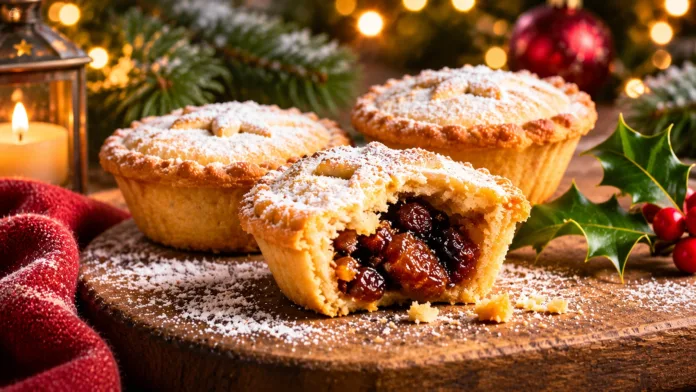

Is it illegal to eat mince pies on Christmas Day? Not now. But it was, once.
The real story of the year mince pies broke the law, the Parliament that cancelled Christmas, and why Scotland went without it for centuries.
No, it isn’t illegal to eat mince pies on Christmas Day. The story that Oliver Cromwell banned mince pies, and that the law is still on the books, is one of Britain’s most repeated Christmas myths. The Law Commission confirmed in 2015 that no current law stops you.
But there was one Christmas when eating a mince pie really did break the law, and the ban people half remember was real. Parliament abolished Christmas in England in 1647, and in Scotland the Church spent centuries trying to stamp it out.
Here’s what actually happened, who was behind it, and why the mince pie took the blame.
It’s illegal to eat mince pies on Christmas Day in England, because of a law Oliver Cromwell passed.
False. No law in force bans mince pies, and none ever named them.
On 25 December 1644 they were off the menu, because Christmas Day fell on a compulsory fast day.
Quick look
- Today: No law in force in the UK stops you eating mince pies on Christmas Day.
- The one exception: 25 December 1644, when Christmas Day fell on a monthly fast day and feasting of any kind was banned.
- Who banned Christmas: Parliament, in June 1647. Cromwell wasn’t even there when it passed.
- How long it lasted: In England, 13 years, until the monarchy returned in 1660.
- Scotland: Yule was outlawed in 1640, and Christmas Day only became a public holiday in 1958.
Is it illegal to eat mince pies on Christmas Day?
No. No law in force in the UK stops you eating mince pies on Christmas Day, and the Law Commission confirmed in 2015 that no current law prohibits it.
The myth does the rounds every December, usually as a fun fact that it’s still “technically illegal” in England because Cromwell’s law was never repealed. The Ferret checked exactly that claim and rated it false. No law ever banned mince pies by name, and the Puritan laws against Christmas didn’t survive.
The Christmas Day law that actually bites today is about shops. Under the Christmas Day (Trading) Act 2004, large shops in England and Wales, those over 3,000 square feet, must stay closed on 25 December, the Library of Congress Law Library notes.
Was it ever illegal to eat mince pies on Christmas Day?
Yes, once. On 25 December 1644, Christmas Day fell on a compulsory monthly fast day, so eating mince pies, or anything else, was against the law. The Law Commission says 1644 is the only Christmas Day when that was the case.
In 1642, an ordinance made the last Wednesday of every month a compulsory fast day. In 1644, Christmas Day fell on that Wednesday. Parliament was asked to make an exception for Christmas and refused, ordering that the day be kept with “the more solemne humiliation”.
So it wasn’t a mince pie ban. It was a ban on feasting, and for one Christmas the mince pie went down with everything else.
The Law Commission’s finding is reported by the Institute of Advanced Legal Studies.
Did Oliver Cromwell ban Christmas?
Not personally. Parliament abolished Christmas in June 1647, and the Cromwell Museum says he had very little role in it. He wasn’t in Parliament when the ban was passed.
Cromwell was in Parliament when it refused to lift the 1644 Christmas fast, but his mind was on other business. By June 1647 he was staying away, because he faced possible arrest over his support for the army’s protests about pay.
He never gave his view on the ban in any of his letters or speeches, the museum says. As a Puritan he may well have approved, and he certainly didn’t undo it. When he became Lord Protector in 1653, the ban stayed in place for the rest of his rule.
When was Christmas banned in England?
On 8 June 1647, when Parliament passed An Ordinance for Abolishing of Festivals, ending Christmas, Easter and Whitsun as holy days. The ban lasted until the monarchy was restored in 1660.
How England cancelled Christmas
- 1642The monthly fastThe last Wednesday of every month becomes a compulsory fast day.
- 25 Dec 1644No feasting allowedChristmas Day falls on the fast day, and Parliament refuses to make an exception.
- 1645A new rule bookThe Directory of Public Worship replaces the Book of Common Prayer. No special services for Christmas.
- 8 Jun 1647Christmas abolishedChristmas, Easter and Whitsun are scrapped, with a monthly day off in their place.
- 1652Shops told to openParliament orders shops to trade on Christmas Day and fines people for holding or attending services.
- 1656Kept awake by partiesMPs complain the ban is ignored. A tougher bill fails at its first reading.
- 1660Christmas is backThe monarchy returns under Charles II and the ban falls away.
Sources: the Cromwell Museum, the Library of Congress Law Library and the Institute of Advanced Legal Studies.
The Puritan laws had never received royal assent, so when Charles II took the throne in 1660 they simply lapsed, The Ferret explains.
Why did Oliver Cromwell and the Puritans ban Christmas?
Because many Puritans, the godly party Cromwell belonged to, saw Christmas as too close to Catholicism, found no basis for it in the Bible, and thought the celebrations had become drunken and debauched.
The mince pie got caught up in that. In the 1650s, when England had no king, Puritans attacked it as indulgent and suspiciously Catholic. In 1656, the poet Richard Fletcher mocked their outrage by calling the pie “Idolatrie in crust!”
That is probably how the pie ended up at the centre of the myth. But historians, including the food historian Sam Bilton, call the mince pie ban a myth: no law ever singled out the pie.
How did people react to the Christmas ban?
Plenty of people ignored it, and some rioted.
There were protests against the 1644 fast in Bury St Edmunds, and riots in Kent and elsewhere after the 1647 ban, though the Cromwell Museum suggests some rioters were Royalists using Christmas as an excuse. Riots in Ipswich reportedly left one person dead.
Town criers walked the streets calling “No Christmas, No Christmas”, and patrols in London seized things they believed were meant for celebrations. It didn’t work. By 1656, London shops were still shutting on Christmas Day, despite the order to open, and MPs were complaining about being kept awake by Christmas parties nearby.
Why was Christmas banned in Scotland?
Because after the Reformation of 1560, the Church of Scotland rejected Yule as a Catholic holy day, and in 1640 the Scottish Parliament passed an Act that outlawed it.
The Kirk enforced it at local level. In Aberdeen in December 1574, fourteen women were admonished for playing, dancing and singing carols on Yule day. In 1575, the General Assembly abolished every holy day except the Sabbath, Yule included. In Glasgow on 26 December 1583, five people were ordered to make public repentance for keeping Yule, the National Records of Scotland says.
The 1640 Act, the Act dischairging the Yule vacance, scrapped the Yule holiday and banned keeping it in future. It was repealed in 1712, but the Church went on discouraging Christmas for generations.
Was Christmas banned in Scotland for 400 years?
Not by law. The legal ban ran from 1640 to 1712. But Christmas wasn’t freely celebrated in Scotland from the Reformation in 1560 until 1958, when it became a public holiday, almost 400 years later.
Christmas Day became a public holiday in Scotland in 1958, according to The Scotsman and Historic Environment Scotland, and Boxing Day followed in 1974. The National Records of Scotland gives a later date, 1971, so you’ll see both.
Until then, Christmas Day was business as usual for many Scots, and Hogmanay was the big winter celebration.
Why is it called mincemeat if there’s no meat in it?
Because mince pies used to be made with meat. Early recipes used mutton, beef, tongue or tripe, and meat-free mincemeat gradually took over from the 1800s.
Elinor Fettiplace’s recipe from 1604 used mutton and beef suet, and Mrs Beeton’s 1861 book still gave a beef version alongside a fruit one. Modern mincemeat is dried fruit, apple, nuts and spices, usually with brandy, plus beef or vegetable suet, according to Wikipedia’s history of the mince pie.
Some superstitions outlasted the meat. Eat a mince pie on each of the 12 days of Christmas, the old belief goes, and you’ll have a happy month for each one in the year ahead.
Mince pie and Christmas ban FAQs
Is it illegal to eat mince pies on Christmas Day in England?
No. No law in England stops you eating mince pies on Christmas Day.
Did Oliver Cromwell ban mince pies?
No. No law ever banned mince pies by name. They were only off limits on Christmas Day 1644, when it fell on a fast day.
When did Christmas come back in England?
In 1660, when the monarchy was restored under Charles II.
When was Christmas banned in Scotland?
In 1640, by an Act of the Scottish Parliament. It was repealed in 1712.
Can shops open on Christmas Day?
Small shops can. Shops over 3,000 square feet in England and Wales must stay closed.
Sources
The Cromwell Museum, the Institute of Advanced Legal Studies, the Library of Congress Law Library, The Ferret, the National Records of Scotland, Historic Environment Scotland, The Scotsman, and Wikipedia’s entries on the mince pie and Christmas in Scotland.
More Christmas on Daily Tuesday