

Updated on|
Leah’s Law would mean mandatory prison for anyone convicted of a third sexual offence. The petition passed 100,000 signatures on Thursday 22 October, three Milton Keynes MPs have pledged to take the Croucher family’s case to the Ministry of Justice, and the ministry has now responded. Here is what it said, what the law would do, what 100,000 signatures does and does not mean, and the case behind it.
Leah Croucher’s parents took their campaign for a new sentencing law to Westminster on Wednesday 14 October, meeting their local MPs to discuss Leah’s Law for the first time. Three Milton Keynes MPs have since said they back the campaign, and the Ministry of Justice has responded, saying it is “deeply sorry for the failings in this case” but that sentencing is a matter for independent judges.
The petition behind it passed 100,000 signatures early on Thursday 22 October, and it stood at 115,342 on Friday 30 October. The family have since asked supporters to help take it to 200,000.
A big share of that came in a single day. The two-part documentary about their daughter’s killing aired on 13 and 14 October, and the 24 hours around the first episode added 20,284 names on their own. The count then picked up again, rising by about 14,600 between Wednesday 21 and Friday 23 October.
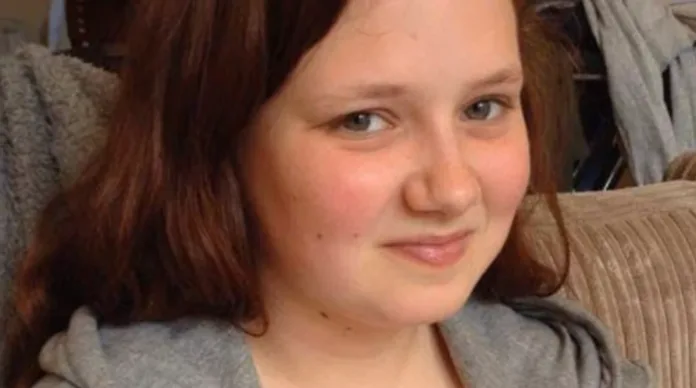
The campaign, started by her parents Claire and John Croucher, wants a mandatory minimum prison sentence for anyone convicted of a third sexual offence.
Their daughter was 19 when she was killed in February 2019 by Neil Maxwell, a convicted sex offender who was under probation supervision at the time and who the authorities had lost track of.
What is Leah’s Law?
Leah’s Law is a proposed change to sentencing, named after Leah Croucher, that would make a prison sentence mandatory for anyone convicted of a third sexual offence in England and Wales, with a District Judge overseeing sentencing in repeat cases that fall below that threshold.
The petition makes a comparison argument rather than an emotional one. Mandatory minimum sentences already exist in England and Wales for domestic burglary and for Class A drug trafficking. The Crouchers’ case is that repeat sexual offending is treated more leniently than either, and that there is no defensible reason for it.
Claire Croucher put the family’s reasoning plainly to MKFM. “If we don’t stand up and say the law is wrong and it needs to change, who else is going to?”
The family argue that a law of this kind, had it existed earlier, would have kept Maxwell in prison rather than under supervision in the community.
The District Judge part of the proposal is aimed squarely at his case. A year before Leah disappeared, Maxwell was convicted of sexual assault and given a community order rather than a prison sentence, the petition says. It calls for a District Judge to oversee sentencing in all repeat sexual offence cases, “so a decision like the one that let Maxwell walk free can never be made again.”
The campaign has also been backed by Lisa Squire, whose daughter Libby, a University of Hull student from High Wycombe, was raped and murdered in February 2019 by Pawel Relowicz, a convicted sex offender. “It makes perfect sense,” she told Greatest Hits Radio. “If you offend three times, you should go to prison.”
She also wants non-contact sexual offences to count. Relowicz’s previous convictions included voyeurism and exposure. “Within 18 months, he’d gone from voyeurism and exposure to rape and murder,” she said.
Sentencing law is made separately in Scotland and Northern Ireland, so a change passed at Westminster would apply in England and Wales.
Have the Crouchers taken Leah’s Law to Parliament?
Yes. Claire and John Croucher met their local MPs at Westminster on Wednesday 14 October, the first time any MP had agreed to discuss Leah’s Law with them. Three Milton Keynes MPs have since pledged to make sure ministers at the Ministry of Justice hear the case.
“Our local MPs have agreed to meet and discuss Leah’s Law for the very first time,” the family wrote ahead of the meeting, adding that they hoped it would bring them “a step closer to the change we are fighting so hard for.”
The three are Callum Anderson, MP for Buckingham and Bletchley, Emily Darlington, MP for Milton Keynes Central, and Chris Curtis, MP for Milton Keynes North, all Labour.
“We will be making sure their views are heard at the Ministry of Justice,” Anderson said. Darlington said: “We must learn from cases like Leah’s and consider reforms that could help prevent future tragedies.” Curtis said the couple “have shown remarkable determination in turning personal tragedy into a campaign for change.”
Rayo reported that sentencing minister Jake Richards is already engaging with the MPs, and that talks with other ministers are planned in the coming days and weeks.
None of that is a bill. As of 30 October we have found no bill on Leah’s Law.
It does change the campaign’s position, though. Until the Westminster meeting, Leah’s Law existed only as a petition. It now has three MPs publicly behind it and a route to ministers, which is how campaigns of this kind usually progress when they progress at all.
The Ministry of Justice has now responded, though not with a commitment. A spokesperson told Greatest Hits Radio on 27 October that its “thoughts remain with Leah Croucher’s family and friends” and that it is “deeply sorry for the failings in this case”.
After an in-depth review, the spokesperson said, the department has strengthened how it risk assesses sex offenders and is making sure complex cases go to more experienced probation officers.
“Sentencing decisions are made by independent judges in line with Sentencing Guidelines,” the spokesperson added, but “repeat offenders must face consequences that cut crime and protect the public.”
The first part answers the supervision failings the inquest identified. The second is the part that matters for Leah’s Law, and it points back to judges and the Sentencing Guidelines rather than to a mandatory minimum, which the statement, as reported, does not mention.
How many people have signed the Leah’s Law petition?
The Leah’s Law petition had 115,342 verified signatures on Friday 30 October 2026, after passing 100,000 early on Thursday 22 October. The family are now asking for 200,000.
The petition launched on 23 September 2026 and reached 44,000 in its first fortnight. It stood at close to 50,000 on Monday 12 October, the day before the documentary began, 70,236 by the afternoon of Wednesday 14 October, 75,217 on Thursday 15 October, 88,916 on Wednesday 21 October and 103,517 on Friday 23 October.
The jump from close to 50,000 to 70,236 in those two days puts roughly 20,000 signatures on the broadcast itself. The family spent seven years trying to get this story heard, and a single night of television moved the number further than the preceding week had.
After slowing to roughly 2,300 a day in the week after the broadcast, the count picked up again as it closed in on 100,000. John Croucher thanked “everyone who has signed, shared and supported us through this campaign” when it crossed the line. It added about 10,400 more in the five days to Wednesday 28 October, and about 1,400 more by Friday 30 October.
The family have now set a new target. “Please, please, keep sharing and help us reach 200,000,” Claire and John said in a video update, reported by the Milton Keynes Citizen on 26 October. “The more of us out there we can get, the bigger the voice we have in Parliament.”
Will Leah’s Law be debated in Parliament now it has 100,000 signatures?
Not automatically. The Leah’s Law petition is on Change.org, not the UK Parliament petitions site, so passing 100,000 signatures does not trigger a debate in the House of Commons.
That threshold belongs to the Government and Parliament petitions site. A petition there which passes 10,000 signatures gets a written response from the Government, and one which passes 100,000 is considered for debate, and is usually debated, unless the Petitions Committee decides the issue has been covered recently or is already scheduled.
There is currently no petition for Leah’s Law on that site. We checked the Parliament petitions database again on 30 October and found none.
This distinction is being blurred in some coverage, which has reported that the campaign needed 100,000 signatures to reach a Commons debate. On a Change.org petition, no number triggers anything.
The family see the number as pressure rather than a trigger. “The more signatures we achieve, the stronger our request will be felt in parliament,” John Croucher told MKFM.
There are other routes into the Commons that do not depend on a petition count. Any MP can apply for a Westminster Hall or adjournment debate, or put questions to Justice ministers. As of 30 October we have found no debate on Leah’s Law scheduled by either route, and no written question to ministers naming the Croucher case.
That does not make 100,000 meaningless. It makes it evidence rather than a trigger. Campaigns of this kind have reached legislation before, but by way of MPs, ministers and sustained coverage, not by crossing a line on a counter, which is precisely why the MPs’ backing is the more significant development so far.
How to watch The Search for Leah Croucher: A Parent’s Nightmare
Both parts of The Search for Leah Croucher: A Parent’s Nightmare have aired on U&W and are streaming free on U.
Each episode runs 75 minutes. Streaming on U is free but requires you to sign in.
| Part | Title | First shownAired | Status |
|---|---|---|---|
| 1 | Our Son | Tuesday 13 OctoberTue 13 Oct | On U now |
| 2 | Our Daughter | Wednesday 14 OctoberWed 14 Oct | On U now |
Claire and John Croucher appear throughout, along with Leah’s sister Jade.
The episode titles are not incidental. Part one is about Haydon.
What happened to Leah Croucher?
Leah Croucher left home in Milton Keynes on the morning of 15 February 2019 to walk to work and was never seen again. Her remains were found in an attic three and a half years later.
She was 19. She left the family home on Quantock Crescent in Emerson Valley at around 8 am for a two-mile walk to her job at a direct debit collection agency in Knowlhill. She never arrived.
The last confirmed sighting is CCTV footage at 8.16 am on Buzzacott Lane in Furzton. Her phone left the mobile network at around 8.34 am and never reconnected.
Thames Valley Police visited more than 4,000 homes across 2019 and 2020. One of them was 2 Loxbeare Drive in Furzton, less than a mile from where she lived. Officers called at least twice. Nobody answered, and they moved on.
On 10 October 2022 a handyman investigating a smell at that address found her rucksack and personal possessions. Her remains were in the attic.
The force’s handling was reviewed afterwards at the request of Police and Crime Commissioner Matthew Barber. In a statement published in November 2022, he said the review found the force had taken her disappearance seriously from the outset, and that “there is nothing that suggests the police had any reasonable lines of enquiry” that would have connected Leah to Maxwell or to that house any sooner. At the time, he said a live murder investigation, Operation Innsbruck, was continuing.
Who was Neil Maxwell?
Neil Maxwell was a convicted sex offender who was employed to maintain 2 Loxbeare Drive and was the only person with access to it. Police named him as their prime suspect in Leah Croucher’s killing on 14 October 2022.
The owners of the property lived overseas. Maxwell held the keys.
He had been convicted of sexual assault in February 2018 and did 200 hours of unpaid work that year, ITV News reported from the inquest. By November 2018 he was wanted by police over a sex attack in Newport Pagnell, and he used false names to avoid arrest.
He died in April 2019, two months after Leah disappeared, which means no one has ever been tried for her killing.
What did the inquest find?
The inquest into Leah Croucher’s death concluded in June 2024 that she was unlawfully killed by Neil Maxwell on or around 15 February 2019, probably during a sexual attack. The cause of death could not be established.
Milton Keynes coroner Tom Osborne identified a series of failings in how Maxwell was being monitored at the time.
He was supervised by an inexperienced probation officer. The risk he posed to the public was underestimated and not escalated. His risk assessment was deficient. Monitoring failed to pick up that he was neither attending his appointments nor living at his registered address. And information was not properly shared between police and probation through ViSOR, the violent and sex offender register.
Osborne stopped short of saying those failings caused her death. “I cannot therefore conclude that those failings identified contributed to her death,” he said, while allowing that “it may be possible that those findings may have played a part in her death.”
That distinction is the reason the family are campaigning on sentencing rather than on supervision. Their argument is that the monitoring question would never have arisen if he had been in prison.
Why are the family trying to clear John and Haydon’s names?
Leah Croucher’s family are trying to clear John and Haydon’s names because, for more than three years, online speculation accused her father and brother of involvement in her disappearance.
Claire Croucher has described the family’s two aims in the same breath. “We made it clear that we had a couple of objectives,” she told MKFM, “to clear John and Haydon’s name and to make Leah’s Law.”
Leah’s brother Haydon died in 2019, in the months after she vanished. Her parents have spoken about losing two children.
The accusations continued regardless, and the family went as far as discussing the forensic evidence publicly to end them. “It is conclusive,” Claire said.
John described the scale of it on ITV’s This Morning on Tuesday 13 October. “The trolling was constant,” he said. “It didn’t matter what post you put out, I was getting direct messages.”
It is the part of this story that has had the least coverage and says the most about what the last seven years have actually been like for them.
How to sign the Leah’s Law petition on Change.org
The Leah’s Law petition is on Change.org, under the title “Leah’s Law: mandatory sentences for repeat sex offenders”, started by Claire and John Croucher. It is still open for signatures, and had 115,342 on Friday 30 October.
The petition sets out two asks. A mandatory minimum prison sentence for a third sexual offence conviction, and a District Judge overseeing sentencing in repeat sexual offence cases that fall below that bar.
The family are now asking for 200,000 signatures. You can read and sign it on the Leah’s Law petition page.
This page is updated as the campaign develops.
Your questions
What is Leah’s Law?
Leah’s Law is a proposed mandatory minimum prison sentence for anyone convicted of a third sexual offence, campaigned for by Leah Croucher’s parents, Claire and John.
How many people have signed the Leah’s Law petition?
The Leah’s Law petition had 115,342 signatures on Friday 30 October 2026. It passed 100,000 on Thursday 22 October, and the family are now aiming for 200,000.
Have the Crouchers met any MPs?
Yes. They met their local MPs at Westminster on Wednesday 14 October, and three Milton Keynes MPs have pledged to put the case for Leah’s Law to the Ministry of Justice.
Will it be debated in Parliament now it has 100,000 signatures?
Not automatically. The Leah’s Law petition is on Change.org, and the 100,000 debate threshold applies only to petitions on the UK Parliament petitions site.
Where can I watch the Leah Croucher documentary?
Both parts are streaming free on U. It aired on U&W, channel 25 on Freeview.
Who killed Leah Croucher?
Leah Croucher was killed by Neil Maxwell, a convicted sex offender named by police as the prime suspect and found by the inquest to have unlawfully killed her. He died in April 2019.
Was anyone charged?
No. Maxwell died in April 2019, before he was identified as a suspect in Leah’s killing, so no one has ever stood trial.
When was Leah Croucher found?
On 10 October 2022, at a house on Loxbeare Drive in Furzton, Milton Keynes, three and a half years after she disappeared.
If anything in this story has affected you, Samaritans can be reached free on 116 123, at any time, from any phone. A Welsh language line is available on 0808 164 0123.