
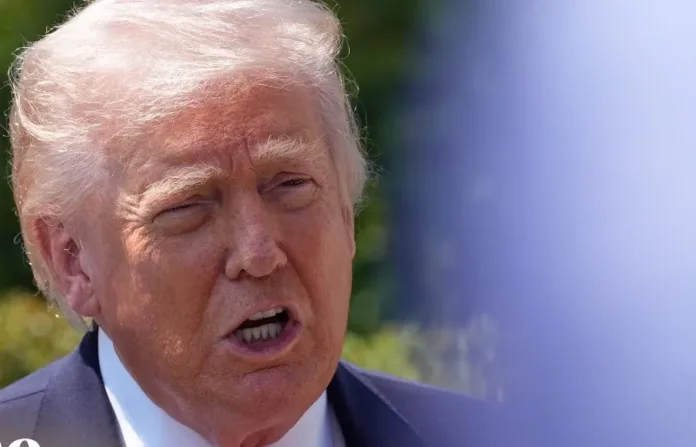

Trump says US and Iran could strike a deal soon, but Israel-Lebanon ceasefire remains fragile
In a dramatic turn of events, a tenuous ceasefire has been established between Israel and Lebanon, but the peace remains fragile. This comes amid soaring tensions in the region, with the United States pushing forward with what President Donald Trump calls a “historic” deal with Iran. However, with hostilities still simmering at the border, the ceasefire is far from certain.
Trump’s optimism shines through as he confidently states that the US and Iran are “very close” to a breakthrough. Speaking from Las Vegas, Trump hinted that fresh talks could take place as early as this weekend, an assessment that has the international community holding its breath. The crux of the potential agreement, according to Trump, lies in Iran’s willingness to hand over its enriched uranium—one of the main sticking points in the ongoing negotiations.
With Iran agreeing to turn over what Trump described as “nuclear dust,” believed to be enriched uranium buried underground following US-Israeli airstrikes, the US president painted a hopeful picture of a war coming to a close. However, Iran has not yet commented on this claim, and analysts remain cautious about the outcome of any such deal.
Meanwhile, the situation on the ground between Israel and Lebanon remains highly volatile. Just hours before the ceasefire officially took effect, Israeli forces and Hezbollah continued to exchange fire along the Lebanese border. The ceasefire agreement, which officially came into effect at midnight local time (21:00 GMT), was seen as a potential breathing space but is unlikely to bring lasting peace to the region.
The ceasefire, brokered with US assistance, has been welcomed by the United Nations, with Secretary-General António Guterres urging all parties to respect the agreement. He expressed hope that the truce would pave the way for long-term negotiations and contribute to a broader peace process. However, the ceasefire’s fragile nature means that it is unlikely to provide much more than temporary relief.
As part of the agreement, Israeli forces have been ordered to remain in a 10km-deep “security zone” in southern Lebanon, with a stern warning for residents not to return to the area. The continuing presence of Israeli troops underscores the tenuous nature of the truce and the deep distrust that persists between the two nations.
In the background, a larger geopolitical struggle continues to unfold. The UK and France have called for an urgent meeting to address the growing instability in the Strait of Hormuz. This key waterway, which is crucial for global energy supplies, has been effectively closed by Tehran in response to US-Israeli airstrikes. The UK and France are spearheading an international effort to reopen the Strait and secure shipping routes for the long term.
British Prime Minister Keir Starmer, along with French President Emmanuel Macron, will lead discussions with leaders from around 40 nations. The leaders are expected to focus on restoring freedom of navigation in the region and ensuring that the ceasefire holds. They are also exploring the possibility of deploying a multinational defensive force to safeguard the Strait and international shipping routes.
Despite these diplomatic efforts, Trump’s statements about Iran highlight a much bigger picture. The US president’s optimistic comments about a near-finalised deal with Tehran are sending shockwaves through the international community. If successful, the agreement could pave the way for a de-escalation of tensions in the Middle East, but the shadow of uncertainty remains, particularly regarding the fragile ceasefire between Israel and Lebanon.
As the situation develops, the coming days will be critical in determining whether a true peace can be achieved or whether these fragile truces and tentative talks will crumble under the weight of ongoing regional conflict.