

Iran says a Hormuz shipping deal with Oman is close, but safe passage remains uncertain
Iran says it has reached an agreement with Oman on a new route for shipping through the Strait of Hormuz, but warned that the deal does not mean the crisis in the waterway is over.
Foreign ministry spokesman Esmaeil Baqaei said the agreement was in its “final stages”, although he gave no detailed explanation of how the route would work. He said the “geographical coordinates” had been agreed with Oman.
The Hormuz shipping deal could mark a significant step in efforts to reopen one of the world’s most important energy routes. About a fifth of global oil and liquefied natural gas usually passes through the Strait of Hormuz, making any disruption there a major threat to energy markets.
But Baqaei warned that safe passage through the strait was still not guaranteed. He said insecurity remained because of the US naval blockade of Iranian ports and what Tehran sees as aggressive action against Iranian interests.
The US and Oman have not yet commented on Iran’s claim.
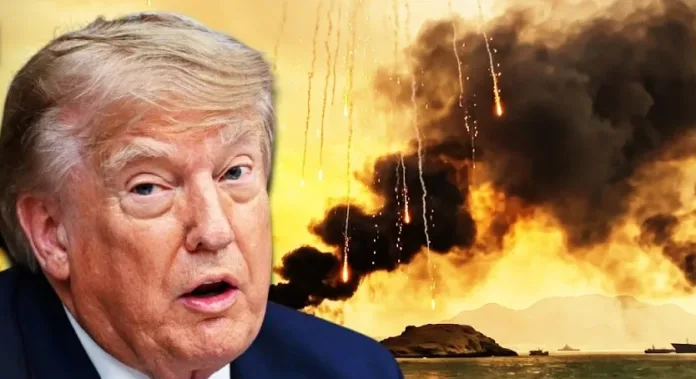
The announcement comes after Donald Trump warned that Iran would be “hit very hard” if the Strait of Hormuz did not reopen “very soon”. His comments followed claims from senior US officials that talks had progressed enough for shipments to potentially resume later this week.
Iran, however, continues to insist that it is not negotiating directly with Washington and has no plans to do so. Tehran says it is speaking with Oman, which has acted as a mediator during the crisis.
Iran’s Deputy Foreign Minister Kazem Gharibabadi later said the proposed route would be temporary and could remain open for two to four months. He did not provide further details on the mechanism.
Oil prices edged lower after Iran’s announcement. Brent crude, the global benchmark, fell by 0.3% to $79.24 in morning Asian trading. Energy prices have moved sharply throughout the conflict as traders respond to threats, attacks and possible diplomatic breakthroughs.
Since the war began in February, traffic through the Strait of Hormuz has fallen heavily. Iran has said vessels must receive clearance before passing through the strait, and has attacked ships that ignored the order.
One of the biggest unresolved issues is whether Iran will be able to charge vessels to use the route. Tehran is reportedly seeking fees of between 5% and 7% of cargo value from ships crossing the strait. Oman is said to be discussing fees closer to 3%, while Washington wants no fees at all.
That dispute matters because it could decide whether the Hormuz shipping deal becomes a workable solution or another short-lived arrangement. A route may exist on paper, but shipowners and governments will still want guarantees on safety, cost and control.
The proposed arrangement would also reportedly give Tehran control over ships entering the Gulf through the Strait of Hormuz, a point likely to concern the US and its allies.
The crisis has already tested previous diplomatic efforts. In June, Iran and the US signed a Memorandum of Understanding aimed at stopping the fighting, reopening the Strait of Hormuz and reaching a wider agreement within 60 days. That deal quickly collapsed, and attacks resumed within days.
The pressure on shipping is not limited to Hormuz. The US has maintained a naval blockade of Iranian ports, while Yemen’s Iran-backed Houthis have imposed a blockade on Saudi Arabia’s Red Sea ports since July. That has made alternative shipping routes more dangerous too.
Iran’s internal political picture has also added uncertainty. Supreme Leader Ayatollah Mojtaba Khamenei has not appeared publicly since being wounded in the strikes that killed his father, Ayatollah Ali Khamenei. President Masoud Pezeshkian said communication with him was currently difficult, while insisting he remained a source of strength.
For now, Iran is presenting the agreement with Oman as progress. But with no full details released, no US or Omani confirmation, and Trump still threatening military action, the Strait of Hormuz remains a dangerous flashpoint.