
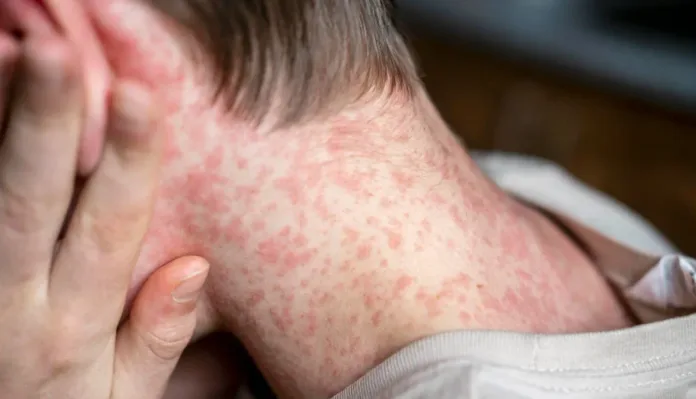

Two young lives are lost as officials warn that the highly infectious virus is still spreading
Two children have died from measles in England as health officials report another sharp rise in infections, intensifying concern over falling childhood vaccination coverage.
The UK Health Security Agency confirmed the deaths on Thursday, 11 June. One child died from acute measles, while the second death resulted from the late effects of the infection.
Officials also recorded 106 additional laboratory-confirmed cases during the latest two-week reporting period. That brought England’s total to 736 cases between 1 January and 8 June 2026, compared with 959 across the whole of 2025.
The latest figures reveal that measles remains active across the country rather than being confined to a single outbreak. During the most recent four weeks, the highest levels of infection were reported in London, the East of England and the West Midlands.
Most confirmed cases involved unvaccinated children aged 10 or younger, according to UKHSA. The pattern has renewed urgent warnings to parents and carers who have delayed or missed appointments for the MMR or MMRV vaccines.
Dr Vanessa Saliba, a consultant epidemiologist at UKHSA, offered condolences to the families and warned that measles can become extremely serious. She urged families to check their children’s records and arrange any missing doses through their GP practice.
People can catch up on missed measles vaccinations at any age. Vaccination also reduces the risk faced by babies who are too young to receive their first dose and by people who cannot be vaccinated because of a health condition.
Embed from Getty Images
Measles spreads easily when an infected person coughs, sneezes or breathes. It often begins with a high temperature and cold-like symptoms before a rash develops. Although many patients recover, the virus can cause severe complications, including pneumonia and inflammation of the brain. Rare delayed complications can also prove fatal.
The deaths come amid sustained concern over England’s declining vaccination coverage. In 2024-25, 91.8% of five-year-olds had received one dose of the MMR vaccine, a fall of 0.1 percentage point from the previous year. The figure remains below the 95% level needed to support measles elimination.
The United Kingdom regained measles elimination status in 2021, but rising transmission later reversed that progress. In January 2026, health authorities confirmed that endemic measles transmission had been re-established based on the country’s 2024 data.
Pressure for reform had already been building before the latest deaths. In February, MPs and health experts warned that the NHS was failing to ensure enough children received both recommended doses. They called for changes to how vaccinations are offered, arguing that the existing system was leaving dangerous gaps between communities.
Coverage varies sharply across England. Some areas have recorded uptake levels comparable with countries facing far greater pressure on their health systems, adding to concern that access problems, missed appointments, and delayed catch-up efforts are exposing children unnecessarily.
Health Secretary James Murray described the deaths as a devastating reminder that measles is not a harmless childhood infection. He urged parents and carers to check whether children had received every recommended dose, stressing that those who miss an appointment can still catch up.
The latest data carries a stark message. Measles remains highly infectious, vaccination rates remain below the level required to halt sustained transmission, and children are bearing much of the risk.
Officials say the virus continues to circulate widely, making every missed vaccination a potential opening for further spread.
UKHSA is urging families not to wait for another outbreak or warning. Parents who are unsure about a child’s vaccination history should check their records and contact their GP practice. For health officials, preventing further illness now depends on closing those vaccination gaps before the virus finds more unprotected children.