
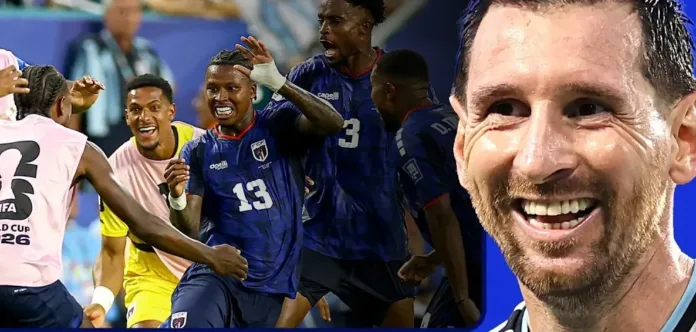

Cape Verde bow out in tears after pushing Argentina to the brink in Miami
Cape Verde may have left the World Cup, but their story will not disappear quietly.
The tournament’s smallest nation bowed out in Miami after a devastating 3-2 extra-time defeat by reigning champions Argentina. The final whistle left the Blue Sharks on the turf, exhausted, heartbroken and proud. They had not won the match, but they had won something far bigger: the attention and admiration of the football world.
The Cape Verde exit came after one of the tournament’s great underdog performances. They fell behind to a Lionel Messi goal, fought back to 1-1, then refused to fold when Argentina struck again in extra time. Sidny Lopes Cabral then produced a stunning equaliser to drag his country back from the edge.
For a few breathless minutes, a penalty shootout against the world champions felt possible. Then came the cruel twist. Cristian Romero’s header deflected off Diney Borges and sent Argentina through. Cape Verde’s players dropped to the grass as their historic run finally ended.
Former Scotland international James McFadden told BBC Radio 5 Live that Cape Verde had “lost, but they’ve won”. He praised their courage, togetherness and belief, saying their journey had become the story of the tournament.
That is why the Cape Verde exit felt so emotional. This was not just another defeated team leaving a major competition. It was a debut nation, ranked 67th in the world, walking away after proving it could stand with giants.
Cape Verde began their campaign by holding European champions Spain to a 0-0 draw. Goalkeeper Vozinha became an instant cult hero after making seven saves and lifting the Cape Verde flag in tears. They then drew with Uruguay, scoring their first World Cup goals and showing that the Spain result had not been a one-off.
By the time they faced Argentina, the Blue Sharks had already changed how people saw them. Against Messi and the holders, they nearly created one of the biggest shocks the World Cup has ever seen.
Manager Bubista could not hide his pride afterwards. He said Cape Verde had shown that a small country could compete with the best teams in the world. He called it history for the nation and said drawing level twice against the world champions was incredible.
Roberto “Pico” Lopes, the Shamrock Rovers centre-back who played in all four matches, said the tournament had changed something lasting. He told BBC Sport that nobody asks where Cape Verde is on the map any more. For him, that alone made history.
The Cape Verde exit also changed the debate around the expanded 48-team World Cup. Former England right-back Gary Neville said he would “never be a sceptic again” after watching their performance. He called it one of the greatest underdog displays he had ever seen.
Ian Wright said Fifa must help create more moments like this. He argued that when smaller nations receive the chance, they can reach the biggest stage and challenge the world’s best.
Vozinha became one of the faces of that dream. At 40, and without a club after leaving Portuguese second division side Chaves, he finished the tournament with 18 saves, the third-highest total of the World Cup. Neville said he expected the goalkeeper to find a good club after his performances, while Wright said Vozinha had “hero energy”.
The Cape Verde exit was painful, but it was not empty. Their players cried because they wanted more. Their fans believed because the team gave them reason to believe. Their opponents survived because Cape Verde made them suffer.
The Blue Sharks are going home, but the World Cup will remember them.