
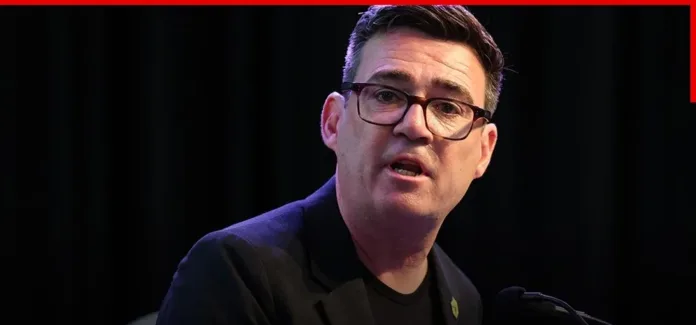

Labour leader-in-waiting sets out a decade-long vision centred on regional growth and local power
Andy Burnham is set to outline an ambitious plan to reshape how Britain is governed, promising to deliver “good growth in every postcode” by transferring significant powers from Whitehall to local communities if he becomes the UK’s next prime minister.
In his first major speech since winning the Makerfield by-election and returning to Westminster, Andy Burnham will present a vision for a decade of government focused on decentralising decision-making and boosting economic growth across every region of the country.
Embed from Getty Images
The Makerfield MP is expected to argue that Britain’s highly centralised political system has contributed to persistent regional inequalities and that greater local control is essential to unlocking long-term prosperity. His proposals would build on the devolution model developed during his time as Greater Manchester mayor, extending similar arrangements across the UK.
Central to Burnham’s plan is what he describes as the largest transfer of power away from Whitehall in modern British history. He is considering granting local authorities additional powers over taxation, including greater control of business rates, following renewed debate within Labour over fiscal devolution.
Burnham will also use the speech to begin outlining his broader programme for government as he prepares to succeed Sir Keir Starmer as prime minister. He is expected to tell supporters that Britain requires a “circuit-breaker” to restore confidence in politics and drive economic renewal.
His proposed reforms are based on what has become known as the “Makerfield test”, an approach that evaluates policies according to their impact on local communities. Burnham believes national decision-making should place greater emphasis on regional needs rather than relying on policies designed centrally in Westminster.
As part of his vision, every region would have the opportunity to negotiate its own devolution settlement, with areas able to elect mayors if they choose. Burnham has long argued that stronger local leadership would allow communities to make better decisions on transport, housing, infrastructure and economic development.
He is also expected to commit to moving parts of the Prime Minister’s Office from Downing Street to Manchester. The proposal is designed to reinforce his commitment to decentralisation while improving coordination of long-term economic development across the country.
Burnham will argue that changing who governs Britain is not enough without fundamentally changing how the country is governed. He is expected to call for a political culture that prioritises place over party, problem-solving over political point-scoring, and long-term planning instead of short-term decision-making.
Economic renewal will form a key pillar of his programme. Burnham plans to commit to a 10-year mission focused on reindustrialisation, expanding housing, improving national infrastructure and strengthening essential public services, including water. Some infrastructure funding would also be devolved to local authorities to allow communities greater flexibility over investment decisions.
He is also expected to propose reforms to public procurement rules, encouraging government contracts to provide greater support for British businesses while increasing apprenticeships, work placements and wider social benefits.
Education will feature prominently in his plans. Burnham intends to continue efforts to place vocational and technical qualifications on an equal footing with traditional academic routes. He will also begin setting out a significant response to the Milburn report aimed at reducing the number of young people who are not in education, employment or training.
Attention is also focused on Burnham’s future Cabinet, particularly the appointment of a chancellor. Ed Miliband is widely viewed as a leading contender, although other senior Labour figures, including Shabana Mahmood, Wes Streeting, Yvette Cooper and John Healey, have also been linked with the role.
Some Labour MPs have expressed concern that appointing Miliband could unsettle financial markets because of his economic and energy policies. However, supporters argue his experience and willingness to challenge Treasury orthodoxy would help deliver Burnham’s broader economic agenda.
Burnham’s allies insist he remains committed to Labour’s existing fiscal rules and tax pledges, believing that maintaining financial discipline will be crucial to reassuring businesses and investors while pursuing an ambitious programme of reform.
His speech is expected to provide the clearest indication yet of how a Burnham-led government would seek to reshape Britain’s political and economic landscape, placing devolution, regional investment and long-term growth at the centre of its agenda.