
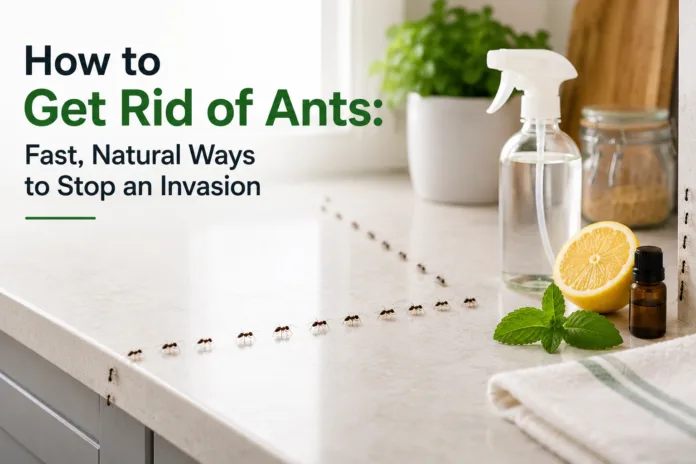

A single ant on the worktop is rarely a single ant. Where one scout appears, a marching line usually follows, which is why the trick to get rid of ants is not just squashing the ones you can see but breaking the invisible trail they follow and wiping out the nest they came from. The fastest first move is to wipe the trail with warm soapy water or a diluted vinegar spray, which erases the scent the ants use to navigate and instantly scatters the line.
That stops the immediate parade, but to get rid of ants for good you need to understand why they came, deal with the colony rather than the stragglers, and close the doors behind them. Here is exactly how.
Key takeaways: how to get rid of ants
Here is the short version of how to get rid of ants before we get into the detail.
- Erase the trail first. Wipe surfaces with soapy water or diluted vinegar to destroy the scent trail the ants follow.
- Bait beats spraying. Killing visible ants does nothing to the nest; bait is carried back to the queen and wipes out the whole colony.
- Cut off food and water. Ants invade for sugar, grease and moisture, so removing those removes the reason they came.
- Block the entry points. Seal the cracks and gaps they are using to get in.
- Most house ants are harmless, just a nuisance, but they will keep returning until the nest and the attractants are dealt with.
What causes ants to come into your house?
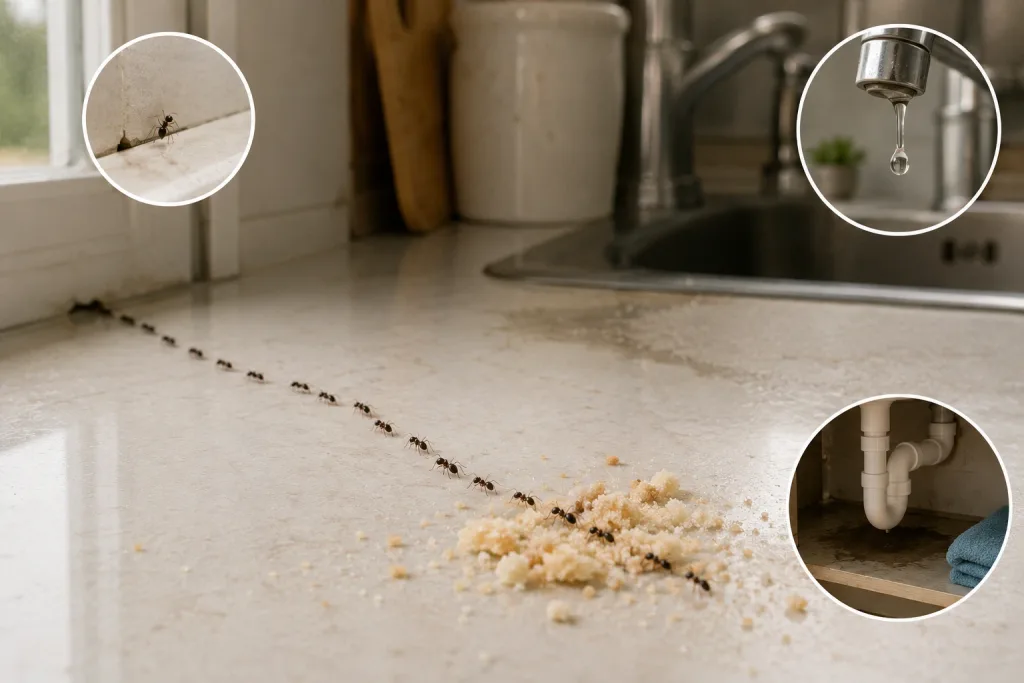
Ants come indoors for three simple things: food, water and shelter. In most homes it is food that draws them, and sugary or greasy spills are the biggest lure of all, though a dripping tap or a damp patch under the sink can be just as attractive during dry spells. Warm weather often triggers the first invasion, as colonies become more active and send out scouts in search of supplies.
Those scouts are the key to the whole problem. When a scout finds food, it hurries back to the nest laying down a chemical scent trail as it goes, and the rest of the colony simply follows the motorway it has created. That is why ants appear in a neat line seemingly out of nowhere, and it is also the weakness you will exploit to get rid of ants, because break the trail and the followers lose their way.
How do you get rid of ants fast?
The fastest way to get rid of ants is to destroy their scent trail and block their entry point in the same go. Mix warm water with a good squirt of washing-up liquid, or make a fifty-fifty solution of white vinegar and water, and wipe down every surface the ants are crossing, following the line right back to where they are getting in. This both kills the ants on contact and wipes out the invisible trail, so the reinforcements behind them have nothing to follow.
Once the trail is gone, find the gap they are marching through, whether it is a crack in the skirting, a gap around a pipe or a poorly sealed window, and block it temporarily with something simple like petroleum jelly, tape or a smear of silicone. That stops fresh ants arriving while you tackle the source. Bear in mind that this fast fix clears the visible invasion, but on its own it will not get rid of ants permanently, because the nest is still out there sending more.
What is the best home remedy for ants?
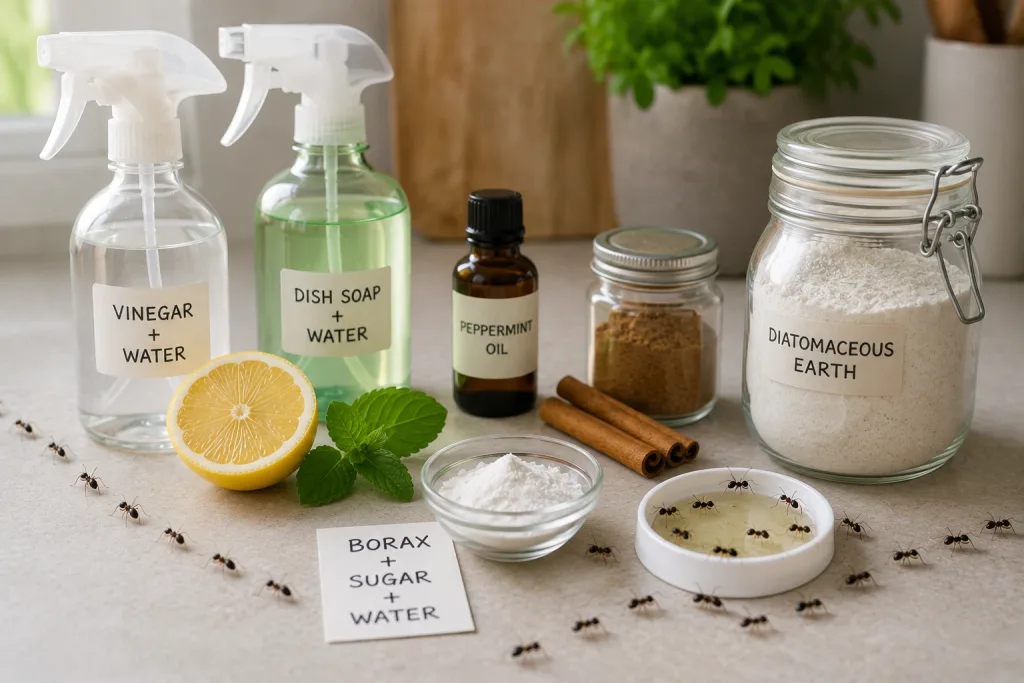
Several everyday items work brilliantly, and most people already have them in the cupboard. A white vinegar spray (half vinegar, half water) is the all-rounder, cleaning up trails and deterring ants from returning. A washing-up liquid and water spray kills ants on contact while stripping away their scent. Lemon juice, peppermint oil and cinnamon are natural deterrents ants dislike, useful along windowsills and doorways.
For something stronger, food-grade diatomaceous earth sprinkled where ants travel damages their exoskeletons and dries them out; keep it dry to stay effective. And the most powerful home remedy of all is a simple borax bait: mix a little borax with sugar and water, and the ants carry the sweet, deadly mixture back to the nest. Borax is effective precisely because it works slowly, but for that reason keep any borax bait well out of reach of children and pets. Used together, these remedies let you get rid of ants without reaching for harsh chemicals.
Why does ant bait work better than spraying?
This is the single most important thing to understand, because it is where most people go wrong. Spraying insecticide kills the ants you can see, which feels satisfying, but those visible ants are only the foragers, a tiny fraction of the colony. The queen and the thousands of workers back at the nest are untouched, so within a day or two a fresh line appears and you are back to square one.
Bait flips this on its head. Instead of killing ants instantly, bait is designed to be tasty and slow-acting, so the foragers carry it home and share it throughout the colony, poisoning the workers and, crucially, the queen. It feels counterintuitive to let ants walk off with the bait rather than squashing them, but that patience is exactly what lets you get rid of ants at the source rather than endlessly battling the symptoms. If you only take one lesson from this guide, make it this one: bait the colony, do not just spray the stragglers.
How do you get rid of ants in the kitchen?
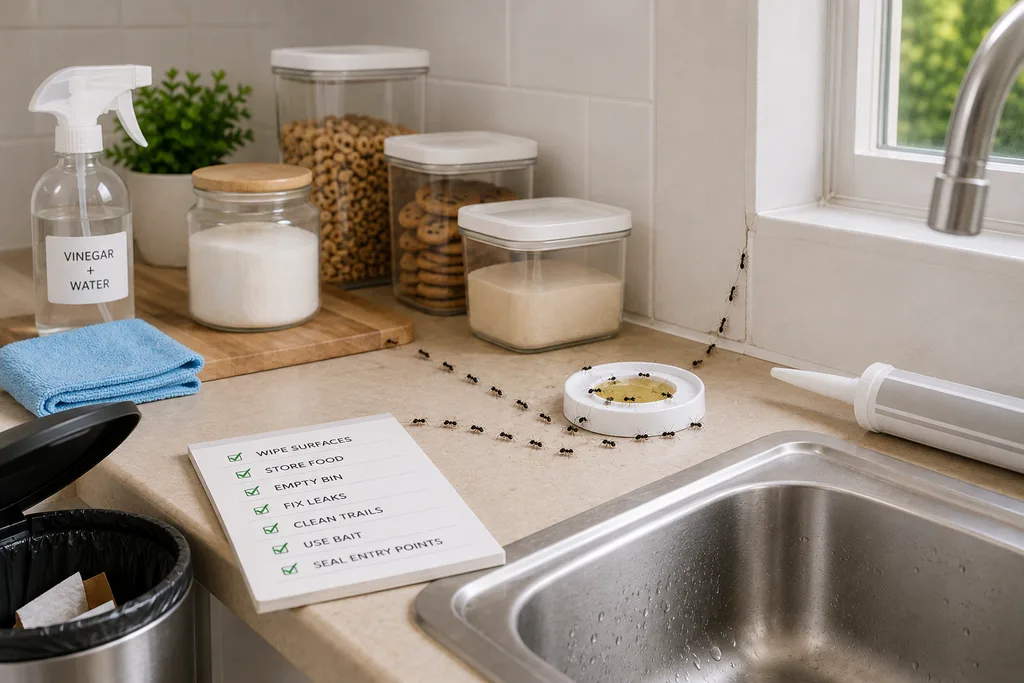
The kitchen is ground zero for most ant problems, so it deserves special attention. Start by removing the buffet: wipe down every surface, sweep up crumbs, and store food, especially sugar, honey, cereal and biscuits, in airtight containers rather than open packets. Rinse anything sticky before it goes in the recycling, empty the bin regularly, and deal with any leaks or standing water, since moisture matters as much as food.
With the attractions gone, clean the trails with your vinegar or soapy spray, place ant bait near where they are entering but out of reach of children and pets, and seal the entry gaps. The combination of a spotless kitchen, an erased trail and bait doing its quiet work on the nest is what reliably gets rid of ants in the room where they cause the most trouble.
How do you get rid of ants in the garden?
Ants in the garden are a slightly different problem, and the honest answer is that you rarely need to get rid of ants outdoors entirely, because they aerate the soil and eat other pests. The real goal is to move nests away from patios, doorways and the house wall, where they become a nuisance or a route indoors. For an accessible nest, pouring a kettle of boiling water directly into the entrance can be effective, though take care with nearby plants and your own feet, and repeat over a few days, since one dousing rarely reaches the whole colony.
For nests under paving and patio slabs, a solution of washing-up liquid in hot water poured into the cracks works in much the same way. Try to avoid dousing the whole garden in harsh pesticide, which harms bees and other wildlife; target the specific nest instead. Then keep the ants from marching back indoors by sealing the outdoor gaps they use and moving bins and food waste away from the walls of the house.
How do you stop ants coming back?
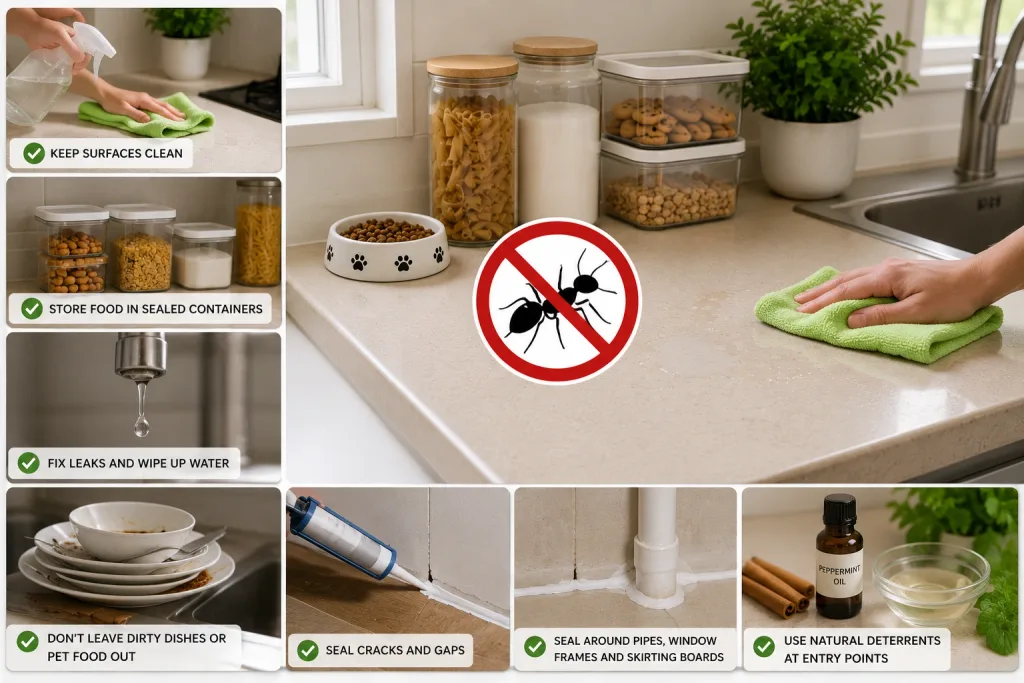
Prevention is really just making your home boring to ants. Keep surfaces clean and free of crumbs and spills, store food in sealed containers, and never leave dirty dishes or pet food out overnight. Fix dripping taps and wipe up standing water so there is nothing for them to drink.
Then close the doors: seal cracks in walls, skirting boards and around pipes and window frames with caulk or filler, as these are the motorways ants use to get inside. A line of deterrent such as peppermint oil, cinnamon or vinegar along known entry points adds a final layer. Do these consistently and you will not just get rid of ants once, you will stop them ever setting up the trail again.
Frequently asked questions about ants
What smell do ants hate?
Ants strongly dislike peppermint, vinegar, lemon, cinnamon and cloves. Using these scents along windowsills, doorways and skirting boards can deter ants, though scent alone will not clear a colony that has an established food source.
Does killing ants attract more?
Crushing ants can release alarm pheromones and leave a scent that other ants detect, so wiping them up with soapy water is usually smarter than squashing them. More importantly, killing foragers does nothing to the nest, which is why bait works far better.
Do ants go away on their own?
Rarely, and not quickly. As long as your home offers food, water and a scent trail to follow, ants have every reason to stay. You generally need to remove the attractants and treat the nest to get rid of ants for good.
What is the fastest way to get rid of ants?
Wipe the trail with soapy water or a vinegar spray to scatter the line and kill ants on contact, then block the entry point. For a lasting fix, add bait so the colony is dealt with, not just the visible ants.
Are ants in the house harmful?
Common black garden ants are a nuisance rather than a danger, but they can walk over bins and then food, so they are worth clearing on hygiene grounds. If you have a persistent or unusual infestation, it is worth calling a professional.
Where do we go from here?
To get rid of ants, work with how they behave rather than against it. Erase the scent trail that guides them, cut off the food and water that invited them, and above all bait the colony instead of just spraying the foragers, because the nest is the real target. Finish by sealing the cracks they came through and keeping surfaces clean, and the marching line that appeared out of nowhere will disappear just as completely. For a stubborn infestation that will not shift, a member of the British Pest Control Association can help.
Dealing with more than one unwanted visitor? Read our guide on how to get rid of fruit flies next.