

Most Bali guides were written for Instagram. This Bali travel guide is written for the bit nobody posts: the visa desk, the tourist levy, the new arrival card and the rules that changed in 2025 and 2026. You still get the cliff temples, the rice terraces and the roast pork. You just get them with prices in pounds and without the nasty surprises.
Bali in 60 seconds
UKDPS
No direct flights. One stop, roughly 16 to 20 hours.
- Where: an island province of Indonesia, between Java and Lombok. Not a country, and not in Thailand.
- Before you land: fill in the free All Indonesia arrival card and pay the Bali levy.
- Money: Indonesian rupiah. £1 is roughly IDR 23,700.
- Plugs: two round pins (types C and F). Pack an adaptor.
- Don’t: ride a scooter on just a UK licence, or bring anything cannabis-related. That includes CBD.
- Diary note: on Tuesday 9 March 2027 the whole island, airport included, switches off for Nyepi.
Where is Bali, and is it a country?
Bali is an island province of Indonesia. It sits just east of Java and west of Lombok, a little south of the equator. It is not a country in its own right, and despite what a surprising number of people type into Google, it is not in Thailand.
Here is the fact that surprises most first-timers: mainland Bali is almost exactly the size of Norfolk. The main island covers about 5,387 square kilometres. Norfolk covers 5,384. Small, then, but it does not feel it. Mount Agung, the island’s highest volcano, reaches 3,031 metres, more than twice the height of Ben Nevis, and traffic in the south can turn a short hop into a long afternoon.
Bali is also a mostly Hindu island, around 86% of its people, inside the country with the world’s largest Muslim population. That one fact explains a lot of what you will notice: the little offerings on every doorstep, a temple in every village and roast pork on menus all over the island.
When is the best time to visit Bali?
The best time to visit Bali is during the dry season, roughly April to October. For the best balance of weather and crowds, aim for May, June or September. July and August are the driest and sunniest months, but also the busiest, with UK summer holidays and Australian winter school holidays both falling around then.
Dry seasonWet seasonPeak crowds
The wet season runs roughly from November to March, and the Foreign Office notes the rains can start in October. Rain often comes in heavy bursts rather than all day, and the island is at its greenest, often with lower prices too. The catch is localised flooding, which can snarl traffic and knock out power. Christmas and New Year stay busy whatever the weather.
The day the whole island switches off
Nyepi, the Balinese Day of Silence, falls on Tuesday 9 March 2027. From 6am that day to 6am the next, Bali shuts down. Ngurah Rai airport closes for the whole day, nobody is allowed out on the streets, and visitors are expected to stay in their hotel with noise down and lights low. If your dates cross it, plan around it, or lean in: the night before brings the ogoh-ogoh parades of giant demon effigies.
How do you get to Bali from the UK?
There are no direct flights from the UK to Bali. Every route has at least one connection, usually through Dubai, Doha, Abu Dhabi, Singapore or Istanbul. With one stop, journeys usually take somewhere between about 16 and 20 hours, depending on the connection.
You will land at Ngurah Rai International Airport (DPS), on the south of the island near Kuta. Volcanic ash can ground flights in and out of Bali even when the eruption is on another island, as happened when Mount Lewotobi erupted on Flores. Buy travel insurance that covers disruption, and buy it when you book.
Do you need a visa for Bali from the UK?
Yes. British passport holders need a visa to enter Indonesia, including Bali. Indonesia added six countries to its visa-free list in July 2026, and the UK was not one of them.
- Which visa: the visa on arrival (VoA) for tourists. It costs IDR 500,000 (about £21) and lasts 30 days.
- How to get it: apply online before you fly as an e-VoA on the official Indonesian immigration site, or pay at the airport on arrival by cash or card.
- Staying longer: you can extend once, for another 30 days, so 60 days is the maximum.
- Your passport: it must be valid for at least six months from the day you arrive and have two blank pages.
- Onward ticket: you need proof of a return or onward flight.
- Overstaying: the fine is IDR 1,000,000 (about £42) for every day over.
Only apply through the official immigration site. Search for “Bali visa” and you will find agency sites that look official and add their own fees on top. The rules above come from the UK government’s entry requirements for Indonesia, which is the page to check again just before you travel.
What do you need to do before you land in Bali?
Three things, and older guides only mention one or two of them.
- Sort your visa. Either the e-VoA online in advance or the visa on arrival at the airport, as above.
- Fill in the All Indonesia arrival card. It has been compulsory for every arrival since 1 October 2025. It is free, it is done online on the official All Indonesia site, and you can submit it up to three days before you land. It replaced the old separate customs and health forms, so if a guide tells you to fill in three different forms, it is out of date. Screenshot the QR code it gives you.
- Pay the Bali tourism levy. It is IDR 150,000 (about £6.30) per person, paid once per trip, and children are not exempt. It is cashless: pay through the official Love Bali website or app, or at the counters at the airport and ports. You get a QR voucher as proof. A rise has been floated since 2024, but as of October 2026 none has been made law.
Add it up and the visa and levy come to about £27 a head before you have bought a single Bintang.
Where should you stay in Bali?
For a first trip, split your stay between a beach base in the south and Ubud inland. Each area has a very different personality, so pick the one that matches yours.
The south
Seminyak
Best for first-timers who want polish
Boutiques, beach clubs (Potato Head is the famous one), sunset bars and a huge choice of restaurants. Expect traffic.
Canggu
Best for surf, cafés and laptops
Black-sand surf beaches such as Echo Beach, smoothie-bowl cafés, graffiti-covered streets and a big digital-nomad crowd.
Uluwatu
Best for cliffs, surf and sunsets
The clifftop temple, surf breaks like Padang Padang and beach clubs perched above the sea. It is spread out, so you will need a driver.
Nusa Dua
Best for families and resort days
A tidy enclave of big resorts with calmer water. Easy and comfortable, if a little removed from everyday Bali.
Sanur
Best for a slower pace
A calm beach, a long seafront path and the fast boats to the Nusa islands. Popular with families and older travellers.
Kuta and Legian
Best for budget and nightlife
Closest to the airport, cheapest and loudest. Fine for a night either side of your flight.
Inland
Ubud
Best for culture and green
Rice terraces, the royal palace, yoga studios and the Monkey Forest. No beach, but this is where Bali’s art and culture live.
The islands
Nusa Penida and Lembongan
Best for snorkelling and big views
Islands a boat ride away, with the famous cliffs, clear water and manta rays. Penida’s roads are rough going.
Quieter corners
Amed, Sidemen and Munduk
Best for escaping the crowds
Diving and snorkelling in the east, rice valleys and waterfalls in the cooler hills. Bali before the beach clubs arrived.
A rough shape for 10 days
Four nights on the coast (Seminyak, Canggu or Uluwatu), a day trip or one night on Nusa Penida, then four or five nights in Ubud with the Mount Batur sunrise hike. Keep it to two or three bases. Every move costs half a day in traffic.
What are the best things to do in Bali?
Watch the Kecak fire dance at Uluwatu Temple
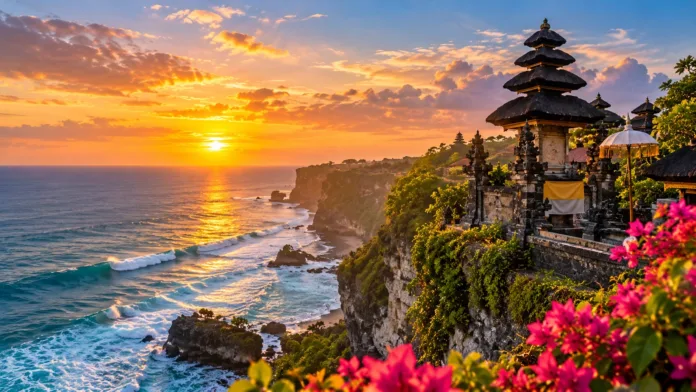
Uluwatu Temple sits on a cliff above the Indian Ocean, and at sunset it hosts the Kecak fire dance: dozens of chanting performers acting out a story from the Ramayana as the sky turns orange. The ticket is separate from temple entry. Go early for a decent seat.
Walk through the Sacred Monkey Forest in Ubud
A forest of temples, moss-covered statues and a troop of monkeys with strong opinions about your sunglasses. Keep bags zipped, take off anything dangly and do not feed the monkeys.
See the Tegallalang rice terraces
The postcard view of Bali. Go before the tour buses, when the light is soft and the swings and selfie platforms are quiet.
Hike Mount Batur for sunrise
An active volcano, a 2am alarm and a view across to Mount Agung as the sun comes up. You start walking around 4am and reach the top for sunrise at about 6am. A local guide is required in practice, and the Kintamani area charges foreign visitors an entry fee. Do it early in your trip while jet lag is on your side, and finish in the hot springs afterwards.
Take a boat to Nusa Penida
Kelingking Beach, with its T-Rex-shaped cliff, is one of the most photographed views in Bali, and Manta Point offers a real chance of snorkelling with manta rays. Kelingking has a strange recent story too. A 182-metre glass lift was being built into the cliff to carry visitors to the sand, until Bali’s governor ordered it torn down in November 2025 for being built in a protected area without the proper permits. The way down to the beach is the steep cliff path, and it is a proper scramble.
Embed from Getty ImagesCatch Tanah Lot at sunset
A temple on a rock in the sea, cut off at high tide. It is the closest of the big temples to Seminyak and Canggu, which makes it busy, but the sunset silhouette is worth the crowd.
Chase waterfalls
Sekumpul and Gitgit are in the north, a long day trip from the south but the most dramatic. Tegenungan is a short drive from Ubud if you want a waterfall without the expedition.
Dive or snorkel
Amed and Menjangan Island are the go-to spots for coral and calm water, and Nusa Lembongan is an easy snorkelling day from Sanur.
Spot dolphins at Lovina
Early-morning boats head out to watch dolphins as the sun comes up. Be warned that it gets crowded with boats, so set your expectations.
Book a Balinese massage or a yoga class
The cheapest luxury on the island. Ubud and Canggu are full of yoga studios, and a traditional Balinese massage after a day of temples is non-negotiable.
What the big sights cost to get in
| Attraction | Adult entry | Good to know |
|---|---|---|
| Sacred Monkey Forest, Ubud | £5.50IDR 130,000 | Children £4.20 |
| Uluwatu Temple | £2 to £2.50IDR 50,000 to 60,000 | Sources disagree on the 2026 price |
| Kecak fire dance, Uluwatu | About £6.30IDR 150,000 | Separate from temple entry |
| Tanah Lot | £3.20IDR 75,000 | Children £1.70 |
| Kintamani area (Mount Batur) | About £2.10IDR 50,000 | Guide fee is extra |
Prices checked on 9 October 2026 and converted at £1 = IDR 23,700. You pay in rupiah at the gate, and both the prices and the exchange rate change, so treat these as a guide. Sources: Sacred Monkey Forest and Tanah Lot official sites.
What should you eat in Bali?
Eat where the locals eat: at warungs, small family-run cafés serving Balinese and Indonesian food for a fraction of what the beach clubs charge. Busy warungs with a quick turnover are your best bet.
- Nasi goreng and mie gorengFried rice and fried noodles, Indonesia’s national comfort food, usually with an egg on top.
- Babi gulingSpit-roast suckling pig with crackling and spices. Remember the Hindu island in a Muslim-majority country? This is why you can get it here.
- LawarChopped meat and vegetables mixed with grated coconut and spices.
- Bebek betutuDuck rubbed in Balinese spices and slow-cooked until it falls apart.
- Sate lilitBali’s own satay, minced fish or meat wrapped around lemongrass sticks.
- Nasi campurRice with a mix of small sides, different at every warung.
- Pisang gorengFried banana, for when you need something sweet.
- Smoothie bowlsYes, they really are everywhere.
Wash it all down with bottled or filtered water, never the tap.
Is Bali safe for UK tourists?
For most visitors, yes. Millions of people have trouble-free trips. But the Foreign Office’s safety advice for Indonesia flags some specific risks that are worth knowing before you go.
Drinks: methanol and spiking
Methanol poisoning from counterfeit spirits has caused deaths and serious illness, including from drinks bought in licensed bars, shops and hotels. You cannot taste or smell it. Be wary of cheap spirit-based cocktails, stick to drinks from sealed bottles and cans, and get urgent medical help if you or a friend feel unwell after drinking. Drink spiking has also been reported in Bali, Lombok and the Gili Islands, and the FCDO says reported cases of sexual assault are high in Bali and Lombok. Watch your drink being made and never leave it unattended.
Scooters: your UK licence is not valid
A UK driving licence on its own is not valid in Indonesia. You need an International Driving Permit that covers motorbikes. Police checks are reported to be much stricter in 2026, with fines of around IDR 250,000 to 500,000 (about £10 to £21). The bigger risk is your insurance: ride without the right licence and it may not pay out after an accident. The Foreign Office says motorbike accidents in Bali, some fatal, have risen sharply, so for most people a car with a driver is the smarter choice.
Drugs: zero tolerance, CBD included
Indonesia’s drug laws are among the toughest in the world, with long prison sentences or the death penalty. All cannabis products are illegal, including CBD and hemp-based products, and police raid venues popular with foreigners. Redcar grandmother Lindsay Sandiford was sentenced to death in 2013 after being caught arriving in Bali with cocaine worth an estimated £1.6 million. She spent 12 years on death row before being returned to the UK in November 2025.
Scams and theft
- Bag snatching from passing motorbikes is common, so keep phones and bags on the side away from the road.
- Card fraud is common. Do not let your card out of sight, and watch for fake helpline numbers stuck on cash machines.
- Only change money at licensed money changers, which show a Bank Indonesia logo and a QR code.
- Agree the price up front at spas, nail salons and tattoo parlours, where scams are on the rise.
- Use registered taxi firms such as Bluebird, and on ride apps check the driver matches the app before you get in.
Health: Bali belly, bites and jabs
Bali belly is the nickname for traveller’s diarrhoea, usually caused by contaminated food or water. Drink bottled or filtered water, wash your hands often and pack oral rehydration sachets. Rabies is present in Indonesia, so any bite or scratch from a monkey or dog needs medical attention straight away. Pack strong mosquito repellent, and check the TravelHealthPro advice for Indonesia and see your GP or a travel clinic well ahead of your trip.
Nature: volcanoes, earthquakes and floods
Indonesia sits on one of the most active stretches of the planet. Respect volcano exclusion zones, which can change at short notice, and download the BMKG app for earthquake and tsunami alerts. In the wet season, localised flooding can cause chaos on the roads.
What are the new rules for tourists in Bali?
Bali has tightened up on tourist behaviour, and since March 2025 a governor’s code of conduct spells out what is expected. The short version:
Do
- Cover shoulders and knees at temples, and wear a sarong and sash where asked. Bigger temples usually provide them at the gate.
- Book guides and tours through registered operators.
- Bring a refillable bottle. A 2025 rule bans businesses from producing and distributing bottled water in plastic bottles under one litre, and it survived a court challenge in July 2026.
- Do the paperwork. The arrival card and levy are now part of the deal.
Don’t
- Climb sacred trees, shrines or monuments.
- Enter the inner parts of a temple unless you are there to pray in Balinese dress.
- Step on the canang sari, the small woven trays of flowers left on the ground as offerings. Step around them.
- Ride a scooter without an International Driving Permit that covers motorbikes.
How do you get around Bali?
| Option | Best for | Watch out for |
|---|---|---|
| Private driver | Day trips and temple runs. They wait while you explore. | Agree the day rate before you set off |
| Grab and Gojek | Short hops in the south, and the airport has official pick-up points | Some villages have pushed back against app drivers |
| Registered taxi | Short trips and evenings | Stick to firms such as Bluebird |
| Scooter | Confident riders with the right licence | You need an IDP that covers motorbikes, a proper helmet and insurance that covers you |
| Fast boat | Nusa Penida and Nusa Lembongan | Most leave from Sanur |
How much does Bali cost, and how should you pay?
Your flight will be the biggest cost. Once you are there, Bali can be as cheap or as lavish as you want: a warung lunch costs pocket change, while a clifftop villa can blow the budget in a single night. The fixed extras are the visa (about £21) and the levy (about £6.30), plus entry fees at the big sights.
Cards work in most hotels and in many restaurants and shops in tourist areas, but carry rupiah for warungs, markets, parking and temple donations. Use cash machines inside banks or shops where you can, and change money only at licensed changers.
Frequently asked questions about Bali
How many days in Bali is enough?
For a first trip, seven to ten days in Bali covers a beach base, Ubud and an island day trip. Two weeks lets you add the quieter north or east.
Is Bali expensive?
Getting there is the expensive part. On the ground, Bali can be cheap or lavish. The fixed extras are the visa (about £21) and the tourist levy (about £6.30).
Do I need a visa for Bali from the UK?
Yes. UK passport holders need a visa on arrival or e-VoA for Bali. It costs IDR 500,000 (about £21), lasts 30 days and can be extended once.
How long is the flight to Bali from the UK?
There are no direct flights to Bali from the UK. With one stop, the journey usually takes about 16 to 20 hours.
What is the Bali tourist tax?
The Bali tourist tax is a levy of IDR 150,000 (about £6.30) per person per trip, children included. Pay it cashless through Love Bali or at arrival counters.
What is Bali belly?
Bali belly is the nickname for traveller’s diarrhoea, usually from contaminated food or water. Drink bottled or filtered water and pack rehydration sachets.
Can you drink the tap water in Bali?
No. Do not drink the tap water in Bali. Stick to bottled, filtered or boiled water.
Is Bali in Thailand?
No. Bali is part of Indonesia. Thailand is a separate country further north.
What currency is used in Bali?
Bali uses the Indonesian rupiah (IDR). In October 2026, £1 was worth roughly IDR 23,700.
When is Nyepi in 2027?
Nyepi 2027 is on Tuesday 9 March. Bali, including the airport, shuts down from 6am that day until 6am the next.
What is the new rule for tourists in Bali?
Since 2025, tourists in Bali must follow a code of conduct (modest temple dress, no climbing sacred sites, licensed guides), fill in the All Indonesia arrival card and pay the levy.
Is Bali worth visiting?
Yes, as long as you go in knowing how it works now. Sort the visa, arrival card and levy before you fly, steer clear of Nyepi unless you want a very quiet day, skip the scooter unless your licence covers it, and give yourself time in both the south and Ubud. Do that and the cliff temples, rice terraces and warung lunches are all the reward you need.
Bali also throws up the odd surprise, like the Boeing 737 that turned up in a field and the “spider wall” that sent the internet into a frenzy. Consider yourself warned.
Heading further round Southeast Asia? Read our guide to the best activities in Thailand next.
How we checked this guide
Checked 9 October 2026Researched and written by Sabiya Gul. Every rule, fee and date above was checked against these official sources. Bali’s rules change often, so check them again just before you travel.
Entry and paperwork
- UK Foreign Office: entry requirementsVisa, passport and overstay rules
- All Indonesia, Indonesian ImmigrationThe arrival card
- Love Bali, Bali Provincial GovernmentThe tourist levy
Safety, health and rules
- UK Foreign Office: safety and securityMethanol, scooters, drugs, scams and Nyepi
- TravelHealthProVaccines and health advice
- Bali Tourism OfficeThe governor’s code of conduct
Prices
- Sacred Monkey Forest SanctuaryTickets and opening hours
- Tanah LotTicket prices
- XE currency converterPound to rupiah rate used for prices
Spotted something that has changed? Let us know and we will update the guide.