

Ask any cat owner, “Why do cats purr?” and most will answer, “Because they’re happy.” That is certainly true, but it is only half the story.
Cats purr when they feel safe and content, but they may also purr when they are frightened, stressed, in pain or trying to get something from you. This means that purring is not simply a sign of happiness. It is a complex form of communication that can reveal a great deal about a cat’s emotional and physical state.
Understanding why cats purr can help you recognise when your cat is relaxed, when it wants attention and when it may need extra care. Here is what that gentle rumble actually means and why it is one of the most fascinating sounds in the animal world.
How do cats purr?
A purr is produced by the muscles in a cat’s voice box, or larynx. These muscles rapidly open and close the space around the vocal cords as the cat breathes in and out. The movement can happen up to 150 times per second, creating the familiar low, vibrating sound.
Because the movement occurs during both inhaling and exhaling, the purr sounds continuous rather than coming in short bursts.
Kittens can begin purring when they are only a few days old. This is an important clue when trying to understand why do cats purr. Newborn kittens cannot see or hear properly, so purring may help them communicate with their mother. The mother cat can purr back, reassuring her kittens and strengthening their bond.
Why do cats purr? The main reasons
Contentment and relaxation
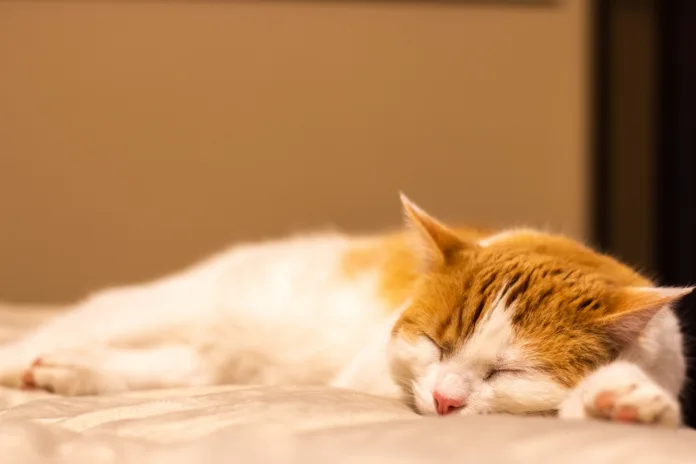
The classic reason cats purr is contentment. A cat curled up on your lap with half-closed eyes, a loose body and relaxed paws is probably purring because it feels comfortable and secure.
You may also hear your cat purring while resting in a favourite spot, lying in the sunshine or settling down to sleep. In these situations, the sound is usually a sign that your cat feels safe in its environment.
Bonding with people and other cats
Purring begins as an early form of communication between kittens and their mother. Kittens purr while feeding, and their mother may purr in response.
Adult cats continue using purring to express closeness and trust. When your cat sits beside you, kneads your blanket or rubs against you while purring, it may be reinforcing its bond with you.
This is one reason cats often purr more loudly around people they know and trust.
Asking for something
Sometimes the answer to “Why do cats purr?” is surprisingly simple: they want something from you.
Cats can produce what researchers often call a “solicitation purr.” This sound combines a normal low purr with a higher-pitched, urgent cry. Cats commonly use it when they want food, attention or access to a closed room.
The higher sound can be difficult for people to ignore, which makes it an effective way for cats to get a response from their owners.
Self-soothing during stress
Purring does not always mean that a cat is happy. Cats may also purr when they feel anxious, frightened or uncomfortable.
For example, a cat may purr during a veterinary appointment, after an injury or while hiding from something stressful. In these situations, the vibrations may help the cat calm itself, much like a person humming, breathing slowly or repeating comforting words during a difficult moment.
Pain and possible healing
Cats sometimes purr when they are ill or in pain. This may be another form of self-soothing, but some researchers have also explored whether the vibrations have physical benefits.
A cat’s purr generally falls within a low-frequency range of around 25 to 150 Hz. It has been suggested that frequencies in this range could support bone strength, tissue repair and pain relief. However, purring should not be treated as proof that a cat is healing or does not require medical attention.
Is purring always a good sign?
Not necessarily. Because cats purr for several different reasons, a purr on its own does not guarantee that your cat feels well.
Always consider the rest of your cat’s body language. A relaxed posture, slow blinking, soft facial expression and comfortably raised tail usually suggest a happy cat.
However, a cat that is hunched, tense, hiding, breathing differently, refusing food or avoiding movement may be purring because it is stressed or uncomfortable. Persistent changes in behaviour should be discussed with a veterinarian, even when the cat continues to purr.
Frequently Asked Questions
Why do cats purr when you stroke them?
Stroking can imitate the warmth, grooming and closeness a cat experienced with its mother as a kitten. When your cat purrs during gentle petting, it is usually showing that it feels relaxed, bonded and comfortable with the attention.
However, watch for signs of overstimulation, such as a flicking tail, flattened ears or sudden skin twitching.
Do cats purr when they are in pain?
Yes. Cats may purr to comfort themselves when they are hurt, frightened or unwell. This is why purring should always be interpreted alongside body language, appetite, movement and normal behaviour.
Can all cats purr?
Most domestic cats can purr. Some smaller wild cats can also produce similar continuous sounds.
Big cats such as lions and tigers do not purr continuously in exactly the same way as domestic cats. Their vocal anatomy allows them to roar, while cats that produce a continuous purr generally cannot roar in the same way.
Ultimately, there is no single answer to why cats purr. Purring can express happiness, affection, hunger, stress or discomfort. By paying attention to the situation and your cat’s complete body language, you can better understand what that gentle rumble is trying to tell you.