

The US says the deal is for civilian energy, but critics fear it could reshape nuclear politics in the Gulf
The United States and Saudi Arabia have signed a major civil nuclear agreement that could reshape energy and security politics across the Middle East.
The Saudi nuclear deal is being presented by Washington as a peaceful cooperation agreement, designed to help the Gulf kingdom build a civilian nuclear energy programme with American support. The US Department of Energy said the pact will create major opportunities for American companies and set the foundation for a long-term partnership with Riyadh.
But the agreement has already triggered concern because its full text has not been made public, and US media reports say it may allow Saudi Arabia to enrich uranium in the future. Enriched uranium can be used as fuel for nuclear power plants, but the same technology can also raise fears about weapons capability if safeguards fail or political conditions change.
US Energy Secretary Chris Wright defended the Saudi nuclear deal, saying it upholds high standards of nuclear safety and non-proliferation. The Energy Department also said a bilateral safeguards agreement was signed alongside the nuclear cooperation pact, giving officials a legal framework for oversight.
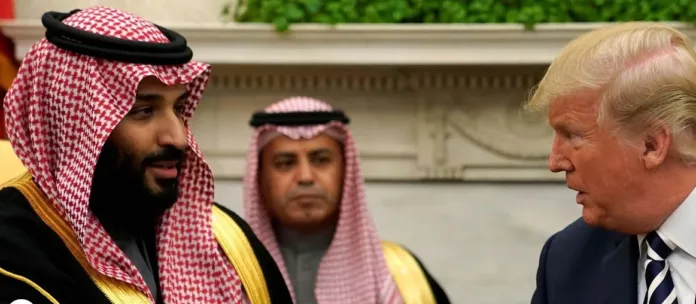
Saudi Arabia described the agreement as an extension of existing energy cooperation with Washington. The deal follows Crown Prince Mohammed bin Salman’s visit to the US last year and marks another sign of Donald Trump’s close relationship with Riyadh.
The timing is politically sensitive. The announcement comes as fighting between the US and Iran continues to escalate. Saudi Arabia hosts US bases that have been targeted during the regional crisis, while Iran-backed Houthis in Yemen have announced a maritime blockade against the kingdom.
The Saudi nuclear deal could also affect the balance of power with Iran. Tehran says its nuclear programme is peaceful, but the US and Israel have long accused it of trying to move towards a bomb, an allegation Iran denies. Saudi Arabia has previously said it does not seek nuclear weapons, but Mohammed bin Salman said in 2018 that if Iran developed a nuclear bomb, Saudi Arabia would follow.
That history is why enrichment is the most controversial part of the agreement. Experts say any provision allowing Saudi Arabia to enrich uranium on its own soil would mark a major shift in US nuclear policy. The US has traditionally resisted helping partners develop domestic enrichment because it can increase proliferation risks.
Critics have also compared the Saudi nuclear deal with the US agreement signed with the United Arab Emirates in 2009. Under that arrangement, the UAE accepted limits on producing its own nuclear fuel. If Riyadh receives more flexible terms, other countries in the region may demand similar treatment.
The agreement will now go to Congress for review. Some lawmakers from both parties are expected to raise objections, although Trump’s Republicans control both chambers. The debate is likely to focus on whether the safeguards are strong enough and whether the deal gives Saudi Arabia too much nuclear capability.
Secretary of State Marco Rubio has pushed back against criticism, saying the US would not sign any agreement that increases the risk of nuclear proliferation. Democrats, including Senator Edward Markey, have accused the administration of recklessness and warned that the deal could weaken long-standing non-proliferation goals.
There is also a diplomatic shift. Previous US efforts to secure a nuclear agreement with Saudi Arabia were tied to Riyadh recognising Israel. That condition now appears to have been dropped, according to US media reports, in what would be a major win for the Saudi leadership.
The Saudi nuclear deal may bring billions of dollars in commercial opportunities for American firms, especially if US companies are involved in building reactors or fuel infrastructure. Washington may also see the deal as a way to keep Russia and China from gaining deeper influence over Saudi nuclear plans.
For Saudi Arabia, the agreement is a strategic prize. It brings the kingdom closer to its long-held ambition of developing nuclear energy and strengthens ties with Washington at a volatile moment.
For the region, however, the risks are clear. The Saudi nuclear deal is officially about civilian power, but its real impact may depend on what Congress allows, what safeguards are enforced and whether the agreement encourages a wider race for nuclear technology in the Middle East.