
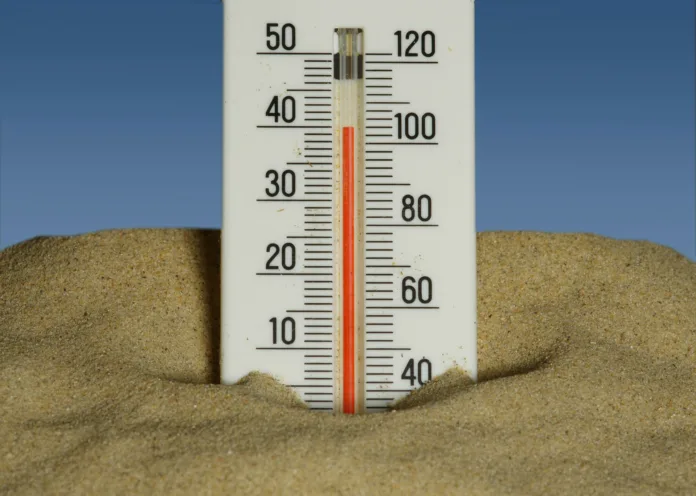

Temperatures could reach 39C this week as scientists warn of even hotter summers ahead
The United Kingdom is preparing for what could become the hottest June heatwave in recorded history, with forecasters warning that temperatures may rise well above the long-standing record set in 1976.
The Met Office has issued a rare red warning for extreme heat, predicting temperatures could reach 39C across parts of southern and south-eastern England on Wednesday and Thursday.
If those forecasts are realised, the country will exceed the previous June record of 35.6C, set during the famous heatwave of 1976, by more than three degrees.
The warning comes as Britain marks the 50th anniversary of the 1976 heatwave, a summer remembered for severe drought conditions, water shortages, failed harvests and soaring food prices.
Experts say the comparison highlights how dramatically the climate has changed over the past five decades.
Scientists gathered to reflect on the anniversary warned that extreme heat events are becoming more common and more intense as global temperatures continue to rise.
They noted that the 1976 heatwave occurred in a much cooler climate than today, meaning similar weather patterns now produce significantly higher temperatures.
Looking further ahead, climate experts also unveiled a future forecast illustrating what a plausible summer heatwave could look like in 2056.
The scenario predicts temperatures reaching 45C in parts of England, 41C in Wales, 38C in Scotland and 30C in Belfast.
According to the forecast, temperatures could remain above 40C for nine days during a two-week heatwave.
Such conditions would represent an unprecedented challenge for the country.
Meteorologist Laura Tobin presented the future scenario at an event in London, describing temperatures in the high 30s and 40s as dangerous for everyone.
The forecast urged people to remain indoors where possible, keep curtains closed, stay hydrated and seek cooler environments if they lacked access to air conditioning.
Tobin said the prospect of future temperatures reaching 45C was difficult to imagine and expressed concern about the impact such conditions could have on future generations.
Met Office chief scientist Professor Stephen Belcher described this week’s heat warning as a stark reminder of the direction in which the climate is moving.
He said heatwaves in the UK are becoming increasingly frequent and intense, while prolonged periods of high temperatures combined with humidity create serious risks for communities and public health.
Belcher noted that average UK summer temperatures have already increased by approximately 1.4C since 1976.
He added that not only average temperatures but also extreme weather events have changed significantly.
Professor Ed Hawkins of the University of Reading said that while the 1976 heatwave was extraordinary, it occurred in a much cooler world.
According to Hawkins, a comparable heatwave today would likely be around 3C hotter because of current climate conditions.
Researchers also highlighted the broader consequences associated with prolonged extreme heat.
These include increased risks to public health, disruption to education and work, pressure on food production, water shortages, threats to wildlife and a higher likelihood of wildfires.
Professor Hayley Fowler of Newcastle University said many people remember the sunshine of 1976 but often overlook the severe impacts that accompanied it, including crop failures, rising food costs, heat-related illness and widespread fires.
Climate Change Committee chief executive Emma Pinchbeck said reducing emissions remains essential to limiting future warming.
However, she also warned that unusual weather events and extreme heat are increasingly becoming part of everyday life in the UK.
As temperatures continue to climb this week, authorities are urging people to take precautions and remain aware of the risks associated with prolonged exposure to extreme heat.
With records expected to fall and warnings in place, Britain now faces one of the most significant June heat events in its history.