
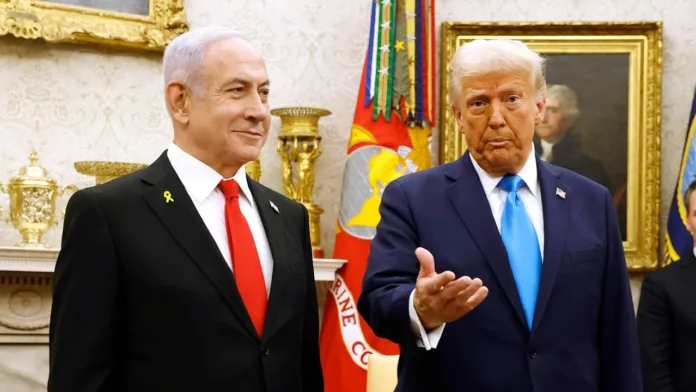

Netanyahu heads to Washington as Iran, Lebanon and election pressure strain his Trump ties
Benjamin Netanyahu is heading back to Washington, but this visit may not follow the familiar script.
For years, meetings between the Israeli prime minister and Donald Trump have been carefully staged displays of friendship. There would be handshakes, warm words and repeated promises about the strength of the US-Israel alliance.
This time, the mood looks far less predictable.
Netanyahu arrives as a leader under pressure at home, with Israel’s election approaching in October and polls suggesting he faces a difficult path to another term. The Trump-Netanyahu meeting also comes as he tries to repair a relationship with the US president that has become more strained since their last encounter.
The two leaders were closely aligned earlier this year as the US and Israel moved into a military campaign against Iran. At the start, both men praised the level of cooperation and presented the action as a major show of strength.
But the war did not deliver the swift outcome Trump had expected. The conflict dragged on, Iran did not collapse, and the president began looking for a way out. Netanyahu, by contrast, wanted to keep pressure on Tehran.
That divide now sits at the centre of the meeting.
Netanyahu is expected to present Trump with new intelligence on Iran’s nuclear and military rebuilding. He is also expected to warn against diplomatic concessions to Tehran. But Israeli sources believe Trump has little appetite for restarting a full-scale fight, especially before America’s elections in November.
The April ceasefire with Iran has also caused friction. Netanyahu has avoided directly attacking Trump over the deal, but some of his allies have criticised it sharply. Pro-Netanyahu media figures have also taken aim at people around Trump who were involved in the talks, including Vice President JD Vance, Jared Kushner and Steve Witkoff.
Vance, in turn, has accused figures inside Netanyahu’s government of trying to undermine negotiations and shape American opinion against the agreement. He warned that Israel risked alienating its most powerful remaining ally.
The disagreements go beyond Iran.
Lebanon has become another flashpoint. Trump has pushed Netanyahu to stop fighting Hezbollah and avoid actions that could threaten a ceasefire. Israel agreed to a trilateral arrangement with Lebanon, but Netanyahu does not want a full withdrawal from southern Lebanon unless Hezbollah disarms first.
According to the report, Netanyahu told his security cabinet that the Trump administration wants Israeli forces pulled back from positions in Lebanon, Gaza and Syria. Netanyahu has made clear that he intends to resist that pressure.
Two other issues have added to Israeli unease. One is Trump’s possible sale of advanced F-35 fighter jets to Turkey. The other is a US-Saudi civil nuclear agreement. Israeli officials fear the Turkey deal could weaken Israel’s military advantage, while the Saudi nuclear plan could increase regional nuclear risks.
Trump, however, has shown little sign that he will let Netanyahu dictate those decisions. Asked about possible fighter jet sales to Turkey, he said nobody controls such sales but him and described Turkey as a “tremendous ally”.
Netanyahu wants assurances that any deals with Turkey or Saudi Arabia will not damage Israel’s security position. He also wants progress on a new long-term US-Israel defence pact to replace the existing Obama-era agreement when it expires.
The Trump-Netanyahu meeting also carries political value for Netanyahu. Trump remains one of his strongest international assets, and visible support from Washington could help him before Israel’s election.
But the symbolism may be limited. The meeting is not currently expected to include a public photo opportunity. That could mean sensitive strategy is being discussed behind closed doors.
Or it could signal something colder: a relationship still useful, but no longer easy.