
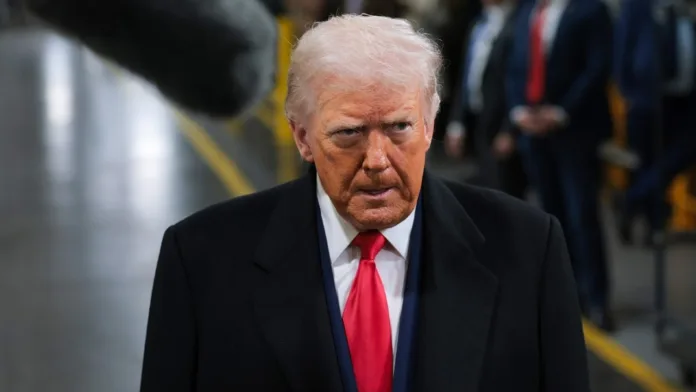

Trump denies a US weapons shortage and vows to punish officials accused of leaking information
Donald Trump has denied reports that the United States is running short of key weapons, as pressure grows over the state of America’s military stockpiles during the long-running war with Iran.
The US president insisted the country still had “massive amounts” of munitions and said more weapons were being manufactured and sent to the US when needed.
His comments came after reports raised questions about whether months of fighting had placed serious strain on America’s missile supplies. The war is now in its sixth month, with no peace agreement in place and repeated strikes continuing to consume advanced weapons.
The US weapons shortage row has become politically sensitive for the White House because many of the systems being discussed are difficult to replace quickly. Modern missiles can take months or years to fund, order, build and deliver, making stockpile pressure harder to solve during an active conflict.
Trump also used his post to attack those he believes leaked information about the issue. He said suspected “leakers” were being hunted down and warned that long jail sentences would be sought.
The remarks followed reports that the US had used a large share of its global stockpile of long-range precision missiles during Operation Epic Fury and the strikes that followed. CBS News, the BBC’s US partner, cited two unnamed sources with direct knowledge of the matter.
The Washington Post also reported that Trump had confronted Defence Secretary Pete Hegseth over a possible weapons shortfall. The BBC said it had not confirmed that report.
Trump dismissed the coverage and strongly defended Hegseth, saying he was extremely happy with the defence secretary’s work. He also described the reporting as false and accused those behind it of treasonous behaviour.
Exact details about US missile stockpiles remain classified, which makes the full picture difficult to assess publicly. Since taking over at the Pentagon, Hegseth has also moved to restrict the amount of information journalists can gather from defence officials.
However, public estimates suggest the US has used significant quantities of air-defence weapons. The Centre for Strategic and International Studies estimated that by the end of July, the US had between 759 and 827 Patriot missiles left, down from about 2,330 before the conflict began.
The same analysis suggested the US had used around 60% of its THAAD missiles, which are designed to intercept incoming attacks.
Iran quickly used the reports to claim that American capabilities were weakening. Defence Minister Majid Ibn-e-Reza said Iran’s own defence industry meant it could respond to any threat, and argued that the enemy’s limitations were becoming clearer.
The US is also facing weapons demand beyond the Iran conflict. Washington has supplied Ukraine with Patriot missiles since Russia’s invasion in 2022, but shrinking stockpiles could make future transfers more difficult.
Trump recently said Ukraine’s request for more Patriot missiles would be a “big step”, while adding that talks between the two countries were still continuing.
The administration has repeatedly insisted the US has enough weapons. Trump told the Wall Street Journal last month that America had more munitions than any other country and more than it needed.
Hegseth has also rejected shortage claims, calling them a manufactured story. At the same time, the administration has signalled that it wants to increase production and rebuild supplies.
Last month, Hegseth asked the Senate for $87bn in emergency funding to pay service members and rapidly replenish equipment and munitions.
For Trump, the issue is now both military and political. If the US has enough weapons, the administration will want to prove it can continue the war without weakening American readiness elsewhere. If the stockpile concerns grow, questions over planning, production and transparency will become harder to avoid.