


US chip giant’s value now tops the GDP of every country except the US and China
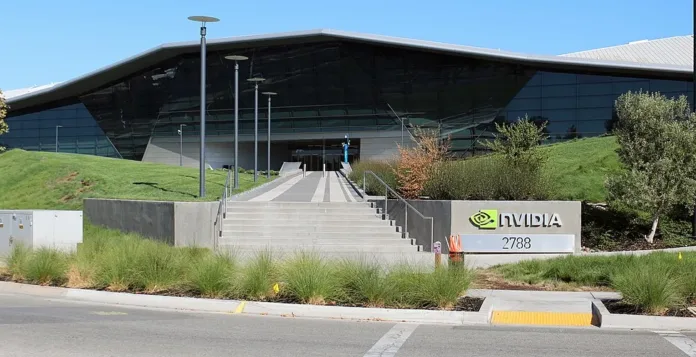
Nvidia has become the first company in history to reach a market valuation of $5 trillion (£3.8 trillion), capping a stunning ascent driven by global demand for artificial intelligence chips.
Shares in the California-based chipmaker rose more than 5.6% to over $212 on Wednesday morning, lifting its market value to the record level and cementing its status as the world’s most valuable company. The milestone highlights the scale of investor enthusiasm around artificial intelligence, which has powered a massive rally in tech stocks this year.
Once known for making graphics processors for gaming, Nvidia has transformed itself into the central supplier of the advanced chips that power AI systems and data centres. Its products now underpin technology used by OpenAI, Oracle, Microsoft and other major players in the industry.
Nvidia’s growth has been extraordinary. The company first crossed the $1 trillion threshold in June 2023, hit $4 trillion just three months ago, and has now added another trillion in less than 100 days — the fastest rise in market history. Its market value now exceeds the gross domestic product of every country except the United States and China, according to World Bank data.
Embed from Getty Images
Microsoft and Apple, both valued at more than $4 trillion, remain the closest competitors. Together with Nvidia, the three companies have accounted for much of the American stock market’s surge this year. Analysts estimate that AI-related firms have contributed around 80% of total gains on Wall Street in 2025.
Nvidia’s rise has sparked growing debate about whether markets are experiencing an AI-fuelled bubble. Danni Hewson, head of financial analysis at AJ Bell, said the $5 trillion figure was “a sum so vast the human brain can’t properly get a handle on it”. She added: “Of course, this will do nothing to dispel fears over an AI bubble, but the market seems keen to march on regardless.”
Warnings have also come from regulators and major financial institutions. The Bank of England, the International Monetary Fund and JP Morgan boss Jamie Dimon have all suggested investors may be underestimating the risks of overvaluation in the tech sector. Dimon told the BBC that “the level of uncertainty should be higher in most people’s minds”.
Some analysts have pointed to the growing network of cross-investment among leading AI companies as a potential concern. OpenAI, which helped ignite the current AI boom with the launch of ChatGPT in 2022, recently secured a $100bn investment from Nvidia, further deepening the ties between the industry’s largest players.
Nvidia’s stock performance has remained strong despite geopolitical turbulence. Its shares briefly dipped in April amid renewed concerns over US President Donald Trump’s trade policies, which have included new tariffs and export controls on China. While Washington had previously restricted Nvidia from selling its most advanced chips to the Chinese market, Trump reversed that decision in July in exchange for a deal that requires the company to pay 15% of its Chinese revenues to the US government.
Trump, who is expected to meet Chinese President Xi Jinping this week, said on Wednesday that the pair would discuss Nvidia’s Blackwell AI processors. His comments helped push the company’s stock even higher.
Chief executive Jensen Huang, who has become one of Silicon Valley’s most recognisable figures, announced a series of new partnerships on Tuesday and projected $500bn in AI chip orders through next year. “We are witnessing the next industrial revolution,” Huang said. “Every company is racing to build AI infrastructure, and Nvidia is at the centre of that transformation.”
Despite the euphoria, market strategists say Nvidia’s rapid rise may be unsustainable if global demand slows or AI spending cools. For now, however, investors appear undeterred. As one analyst put it, “Nvidia isn’t just riding the AI wave — it’s the wave itself.”