
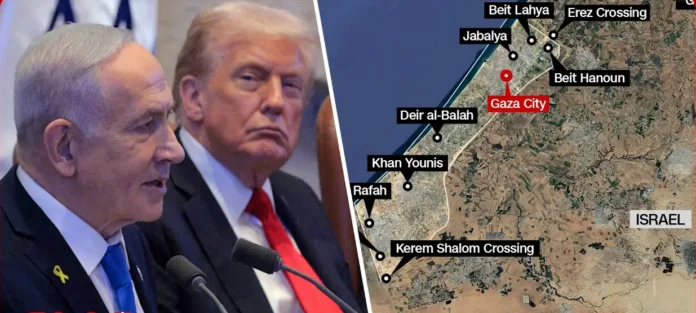

Netanyahu rejects a US-backed Gaza plan while facing pressure from Trump and far-right allies
Benjamin Netanyahu has publicly rejected a US-backed Gaza peace plan, even as reports in Israel suggest he had been discussing parts of the proposal with military officials just days earlier.
The Israeli prime minister is now caught between two powerful but conflicting pressures. His far-right coalition partners want Israel to intensify military action in Gaza and support settlements inside the territory. Donald Trump, meanwhile, wants Israel to move towards a permanent settlement and a return to Palestinian control through his Board of Peace.
With an Israeli election just over two months away, Netanyahu appears to be trying to protect his position at home while avoiding a complete rupture with Washington.
On Sunday, he rejected a new 15-point plan for Gaza. The proposal reportedly included a Hamas commitment to give up its weapons, meeting one of Israel’s central demands. Netanyahu also resisted US pressure to end the wars in Gaza, Lebanon and Iran without stronger Israeli control over the outcome.
His comments caused surprise inside Israel’s defence establishment. According to Israeli media, commanders had been discussing the implementation of the plan with Netanyahu and IDF chief of staff Eyal Zamir only days earlier.
Those reported meetings focused on pilot areas in southern Gaza where an international force could eventually replace Israeli troops. The discussions also covered possible withdrawal points around Rafah and how Israeli forces would interact with any outside security force.
Netanyahu’s office has rejected claims that he discussed detailed withdrawal plans.
The public rejection appeared especially pointed because it came soon after a reported visit by Admiral Brad Cooper, the head of US Central Command. Israeli media reported that he had delivered a message from the Trump administration urging Israel to move towards ending operations in Gaza and Lebanon.
That puts Netanyahu in a risky position. Israel remains heavily dependent on US diplomatic and military support, especially at a time when it faces growing international isolation.
But Netanyahu has often used sharp public rhetoric while making more cautious moves behind the scenes. Reports suggest he recently raised the threshold for approving Israeli airstrikes in Gaza, meaning targeted killings now require approval from the chief of staff unless Israeli forces face imminent danger.
He has also previously limited action in Lebanon and, last year, reportedly ordered jets heading towards Iran to turn back after pressure from Trump.
That pattern may explain why Washington has not yet treated Netanyahu’s rejection as a final break. US officials may see his remarks as election messaging aimed at far-right allies rather than the end of negotiations.
Still, patience in Washington may not last forever. Trump has his own political calendar, with US midterm elections taking place shortly after Israel votes. A prolonged deadlock over Gaza could become a liability for both leaders.
The Gaza peace plan row also highlights how difficult Netanyahu’s political balancing act has become. If he moves too far towards Trump’s plan, he risks angering the far-right ministers who help keep his government alive. If he rejects the plan completely, he risks testing Israel’s most important alliance.
His recent White House visit was reportedly low key, with no joint statement. That was a striking contrast for a leader who has often campaigned on his close relationship with US presidents and his reputation as an international statesman.
For Palestinians in Gaza, the political manoeuvring has brought little relief. The ceasefire announced last October was meant to stop fighting and open the way for reconstruction, but the situation on the ground remains severe.
Israeli attacks have continued, and the entry of equipment, fuel and supplies needed to rebuild homes, schools and medical infrastructure has been blocked. Many surviving residents are still living in tent camps with limited sanitation, while food shortages remain widespread.
The Board of Peace’s top envoy, Nickolay Mladenov, has not publicly challenged Netanyahu’s rejection. He has said only that discussions continue.
For now, Netanyahu appears to be playing for time. He is speaking to his domestic allies, signalling resistance to Trump, and leaving just enough ambiguity for talks to continue. But the longer the war continues, the harder it becomes to satisfy all sides at once.