
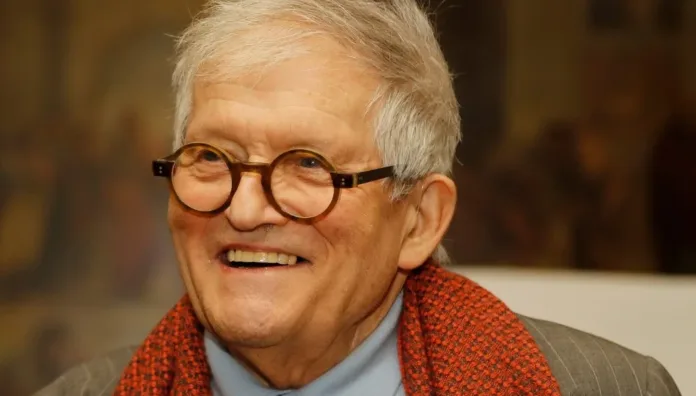

Tributes pour in after the death of one of Britain’s most influential artists
The art world is mourning the loss of David Hockney, one of Britain’s most celebrated and influential artists, who has died at the age of 88. His death marks the end of a remarkable career that spanned more than six decades and helped shape the landscape of contemporary art both in Britain and around the world.
Hockney passed away peacefully at home on 11 June 2026, just one month before his 89th birthday, according to a statement released by his representatives. The announcement triggered an immediate wave of tributes from political leaders, cultural institutions and fellow artists who recognised the extraordinary impact he had on modern art.
Few artists managed to leave such a distinctive mark on visual culture. Hockney first rose to prominence during the 1960s as part of the British pop art movement. Over the years, however, he repeatedly reinvented himself, refusing to remain confined to a single style or medium. His work evolved from painting and drawing to photography, digital art and experiments with emerging technologies, reflecting a lifelong curiosity about how people see and interpret the world.
Many people associate Hockney with his iconic swimming pool paintings. Works such as A Bigger Splash and Portrait of an Artist (Pool With Two Figures) became internationally recognised symbols of the California lifestyle that fascinated him after moving to Los Angeles in the 1960s. Bright colours, sharp light and striking compositions became hallmarks of his artistic identity.
Yet his legacy extends far beyond those famous images.
Throughout his career, Hockney constantly challenged artistic conventions. He experimented with photo-collages, explored new approaches to perspective and embraced digital tools long before many of his contemporaries. Even in later life, he continued producing innovative work, proving that artistic reinvention did not have to fade with age.
Tributes have highlighted not only his creativity but also his personality. UK Prime Minister Keir Starmer joined a growing list of public figures honouring Hockney’s contribution to British culture. King Charles III described him as one of life’s true originals and praised both his artistic brilliance and personal charm. Cultural leaders echoed those sentiments, describing him as a transformative figure whose influence extended far beyond galleries and museums.
The response from the art community has been equally heartfelt. Artists and curators have spoken of Hockney’s ability to inspire generations through his willingness to experiment and his refusal to follow established rules. Many have pointed to his enduring enthusiasm for creativity and his determination to keep exploring new ideas throughout his life.
Born in Bradford in 1937, Hockney rose from modest beginnings to become one of the most recognised figures in global art. His career earned international acclaim, major exhibitions and a reputation as one of the defining artistic voices of the twentieth and twenty-first centuries.
His passing closes a remarkable chapter in British cultural history.
Yet the work he leaves behind continues to speak for itself. From Yorkshire landscapes to Californian pools, from traditional canvases to digital creations, Hockney spent a lifetime encouraging people to look more carefully at the world around them.
That legacy now remains, even as Britain says goodbye to one of its greatest artistic innovators.