
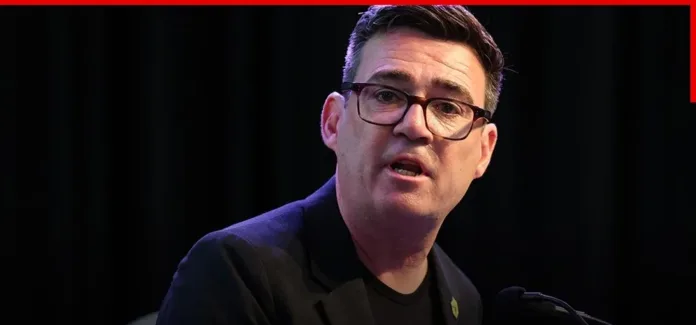

Greater Manchester mayor wins makerfield seat, increasing pressure on Keir Starmer
Andy Burnham has secured a decisive victory in the Makerfield by-election, a result that has intensified pressure on Prime Minister Keir Starmer and strengthened speculation about a potential leadership challenge within the Labour Party.
The Greater Manchester mayor comfortably defeated Reform UK candidate Robert Kenyon to win the parliamentary seat, receiving 24,927 votes and finishing more than 9,000 votes ahead of his closest rival.
The victory gives Burnham a return to the House of Commons, a necessary step if he chooses to challenge for the Labour leadership and ultimately seek the role of prime minister.
Speaking to supporters following the result, Burnham presented the outcome as a moment that could mark a wider shift in British politics.
He said many people felt that politics was failing to deliver and that the country was not where it should be. Burnham promised to dedicate himself to ensuring that Makerfield became associated with the political change he believes Britain needs.
The result has increased uncertainty over Starmer’s future.
Political observers believe Burnham’s success could either increase calls for Starmer to resign or lead to a leadership contest involving Burnham, Starmer and former health secretary Wes Streeting.
Under the UK parliamentary system, a governing party can replace its leader and install a new prime minister without holding a nationwide general election.
Burnham has emerged as a prominent figure among those viewed as potential successors to Starmer.
An Ipsos poll published before the by-election showed Burnham was preferred as prime minister by 25% of British adults, compared with 12% who selected Starmer.
If Burnham eventually becomes prime minister, he would become the seventh person to hold the office since the United Kingdom voted to leave the European Union in the 2016 Brexit referendum.
Starmer, who led Labour to a significant election victory in 2024, has faced increasing criticism over his leadership amid declining public support and growing dissatisfaction within parts of his party.
The pressure intensified after Labour experienced major setbacks in local and regional elections in May, prompting more internal calls for a change in direction.
Several ministers have left Starmer’s government during his time as prime minister, with some expressing concerns over his leadership or disagreements with his policies, including Streeting.
Despite the growing pressure, Starmer has repeatedly rejected calls to step down.
He has insisted that he will fight any attempt to remove him and has argued that a leadership battle would be damaging for both the country and the Labour Party.
Burnham entered the by-election campaign with a message centred on reforming Labour and transforming British politics.
Often referred to by supporters and commentators as the “king of the north” because of his popularity in parts of northern England, Burnham has built his political identity around challenging Westminster’s approach to regional inequality.
Since becoming Greater Manchester mayor in 2017 and winning re-election in 2021 and 2024, he has frequently criticised what he sees as an excessive concentration of political and economic power in London.
He has also attacked economic policies that he argues have failed to bring prosperity to many communities outside the capital.
In his victory speech, Burnham said Makerfield would become the guiding principle behind his political approach.
He argued that applying a “Makerfield test” to decisions made in Westminster would help ensure that areas neglected by national politics received greater fairness.
The by-election was triggered after Labour’s Josh Simons resigned as MP for Makerfield to allow Burnham the opportunity to return to Parliament and pursue a possible leadership bid.
Around 75,000 voters were eligible to take part in the election, with turnout reaching 58.75%, an increase from 52.4% recorded during the 2024 general election.
Burnham’s victory has now transformed the political landscape inside Labour, setting the stage for what could become a major struggle over the future direction of the party and the leadership of the United Kingdom.