

Ukraine says Kyiv was left exposed by an air defence shortage as Russian strikes killed 13
At least 13 people have been killed and 40 injured after Russian strikes hit Kyiv overnight, as Ukraine warned that shortages of air defence missiles are leaving the capital dangerously exposed.
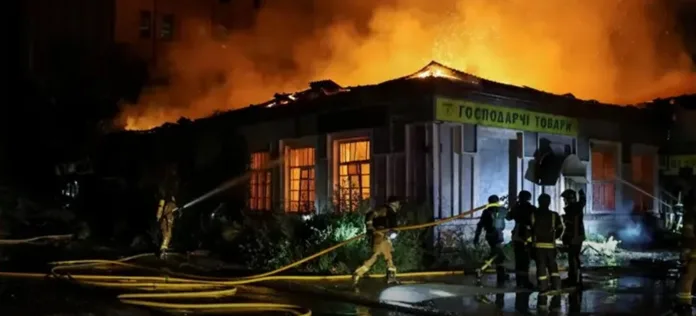
Apartment blocks and warehouses were struck across the city, according to Ukraine’s State Emergency Service. A children’s hospital and a school were also damaged in the attack.
Prime Minister Yulia Svyrydenko confirmed the death toll, while President Volodymyr Zelensky said the deaths showed the urgent need for more air defence support from Ukraine’s western allies.
Ukraine’s air defence shortage has become one of Kyiv’s most serious battlefield problems. Ukraine relies heavily on Patriot interceptor missiles to stop Russian ballistic missiles, but supplies have become strained.
Zelensky said Ukraine still did not have enough anti-ballistic protection and warned that Russia would not seriously consider peace while Kyiv remained unable to defend itself properly. He said Patriot interceptors had not yet been replaced and were needed every day.
Ukrainian MP Oleksiy Goncharenko told the BBC that Ukraine was “absolutely unprotected” from ballistic missile attacks without more interceptors. He said Russia was using that weakness to destroy as much infrastructure as possible.
Ukraine’s air force said Russia launched 168 drones and 44 missiles in the attack, mainly targeting Kyiv. It said air defences shot down 146 drones and 39 cruise missiles, but its update suggested that none of the ballistic missiles fired overnight had been intercepted.
Russia’s defence ministry said it had used air, land and sea-based weapons to strike military facilities and warehouses.
The attack began around midnight local time, when air raid sirens sounded across Kyiv. Soon after, around 20 Russian missiles hit the city. The strikes cut power to thousands of homes, leaving parts of the Kyiv region in darkness.
A day of mourning has been declared for Friday.
At one damaged residential building, 60-year-old Larysa Bondaruk was taken to an emergency triage area with her cat and belongings while rescue teams searched through the rubble. Glass and debris continued to fall from destroyed homes into the early hours.
The wider Kyiv region was also hit. In Brovary and Boryspil districts, one man was killed, and seven people were wounded. In Donetsk Oblast, a local official said one person was killed, and 11 others were injured.
The shortage of interceptors is linked partly to pressure on US weapons supplies. Ukraine has depended on American Patriot missiles to defend against Russian ballistic attacks, but the US has used much of its own stockpile during the war in the Middle East and has been sending Kyiv fewer supplies.
Zelensky’s renewed appeal for military aid comes at a politically difficult moment. He is also facing a challenge from former defence minister Mykhailo Fedorov, who has called for an election and accused the government of corruption that he says has deprived the military of weapons.
Russia and Ukraine have both stepped up major air attacks in recent weeks. Ukraine has increased strikes deep inside Russia, including a wave of drones aimed at Moscow at the weekend.
Russia said it shot down 726 Ukrainian drones launched at various regions. Two separate attacks inside Russia this week killed at least 16 people, including a child.
The war has also raised alarm beyond Ukraine’s borders. Romania said a drone crossed into its territory near the northern border with Ukraine before crashing in an uninhabited area. Poland said it had launched defensive air operations to protect its airspace.
Despite the rising danger on both sides, diplomatic efforts have made little progress. Russia first launched its full-scale invasion in February 2022 and still controls about one-fifth of Ukrainian territory, mainly in the east.
For Kyiv, the latest attack has sharpened the warning it has been giving allies for months: without more air defence missiles, civilians, hospitals, homes and power systems remain vulnerable to Russia’s heaviest strikes.