
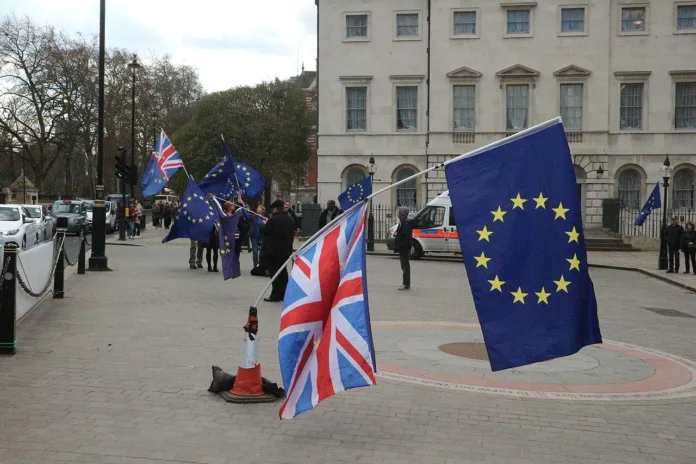

In 20In 2016, 17.4 million people voted to leave the European Union, on a turnout of 72.2%, the highest in any UK-wide vote since 1992. A decade on, the future of EU-UK relations is being shaped not by referendums or front-page rows, but by technical committees, “common understandings” and negotiating mandates most voters have never heard of. There has been no second vote. There has barely been a debate. Yet the relationship is shifting, and public attention has all but vanished: the salience of Brexit as an issue has collapsed from nearly 70% during the negotiation years to just 12% today.
Officially, this is a “reset”, practical diplomacy to smooth trade and tighten security. Critics call it something blunter: a quiet softening of Brexit, dressed in dull bureaucratic language to avoid waking the public up. So, which is it?
What the “reset” actually involves
At the May 2025 UK-EU summit in London, the two sides agreed on a package that goes well beyond polite cooperation. It included three core strands.
- A Security and Defence Partnership that opens the door to UK involvement in the EU’s €150 billion SAFE rearmament fund.
- A new sanitary and phytosanitary (SPS) agreement to slash checks on food and animal products crossing the border.
- An extension of EU fishing access to UK waters for 12 years, until 30 June 2038.
That fishing concession matters. In exchange for the EU indefinitely easing red tape on food and drink trade, EU fishermen retained access to British waters for an extended 12-year period, a far longer commitment than many Leave voters expected when “taking back control of our waters” was a defining slogan.
The quiet machinery behind the headlines
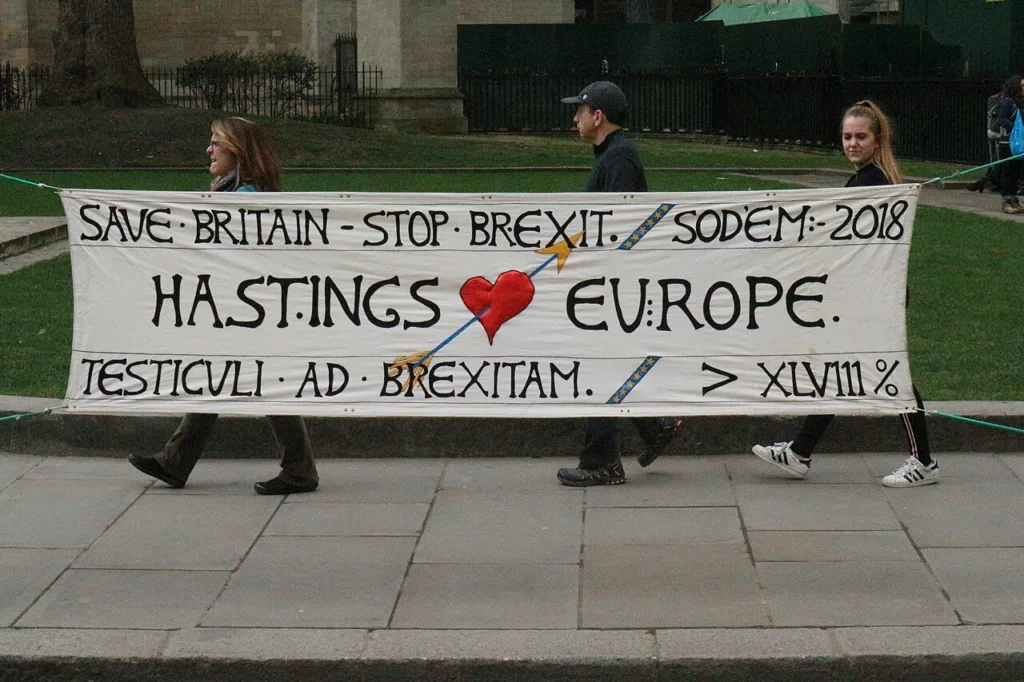
Here is the part that gets little attention. The summit didn’t finish the job. It started a process. Negotiations are now grinding forward across multiple fronts, mostly out of public view.
- The SPS deal and emissions trading (ETS) linkage are in active negotiation to reach an agreement by mid-2027.
- The Council of the EU authorised SAFE defence talks in September 2025.
- A youth experience scheme for 18- to 30-year-olds is back on the table, despite repeated government denials.
To align food rules, Britain would shadow EU standards. To link emissions schemes, Britain would track EU carbon pricing. Step by step, the UK edges back towards the EU rulebook, without ever formally rejoining anything. This is precisely why the debate around EU-UK relations has become so charged: the direction of travel is real, even if no single moment announces it.
The “dynamic alignment” question
The technical phrase to watch is “dynamic alignment”, where the UK agrees to automatically follow EU rules as they change, rather than setting its own. Supporters say it removes friction and boosts trade. Opponents say it quietly hands rule-making power back to Brussels.
There’s even reporting that the EU wants a so-called “Farage clause” in the SPS deal. This would oblige a future UK government to pay compensation to the EU if Britain ever withdrew from the agreement, effectively locking in alignment beyond the reach of any single election.
Is this a betrayal, or just growing up?
This is where the framing splits sharply, and where the cry of “Brexit betrayal” gets loudest. To critics, the pattern is unmistakable: a government that promised to “make Brexit work” is instead unpicking it by stealth, banking on the fact that few voters follow the detail of phytosanitary committees.
The defenders have a strong case too. The economic numbers behind hard Brexit have been brutal, and the government argues the reset is simply damage limitation. Consider the case for the reset:
- The public has moved. Recent YouGov polling found that 63% of Britons would vote to rejoin the EU in a new referendum, with 86% of 18–25-year-olds backing it.
- Brexit is widely judged a failure. 56% of Britons now believe leaving was the wrong decision, with only 31% saying it was right.
- The benefits are real, if modest. The government estimates the SPS and energy elements could boost UK GDP by about 0.3% by 2040, roughly £9 billion in today’s prices.
If most people now regret Brexit, the argument goes, why shouldn’t a government quietly soften its worst edges?
The democratic problem nobody wants to name
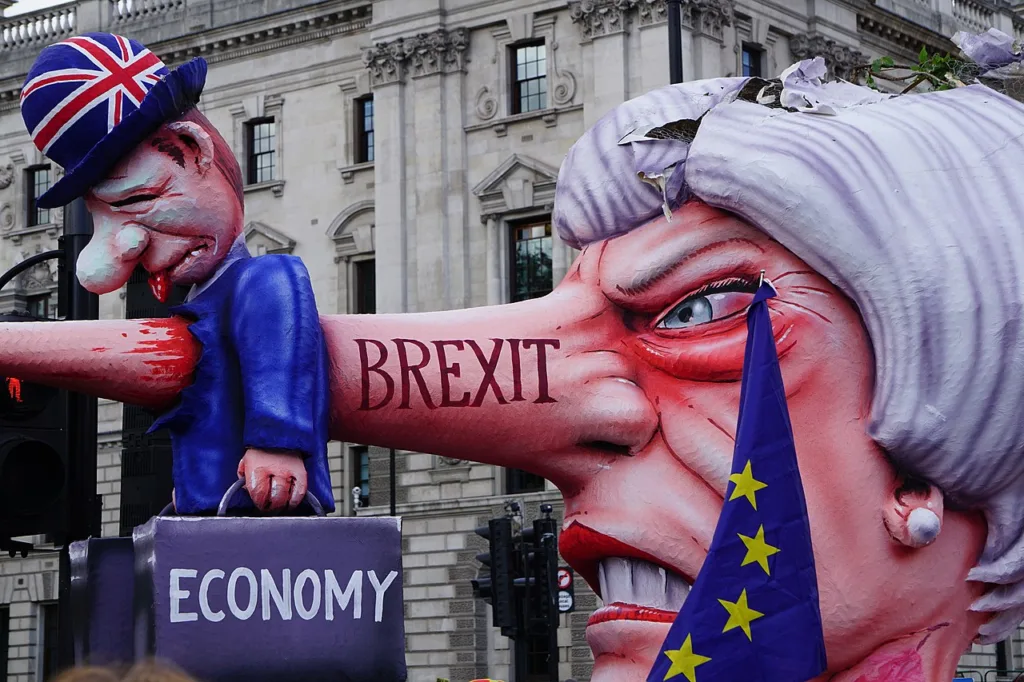
And yet the consent question doesn’t disappear just because the polls have shifted. Brexit was sold as the ultimate act of democratic sovereignty, “the people decided.” If that decision is now being reshaped through ministerial agreements and technical annexes, the same democratic logic cuts the other way.
The deeper tension in today’s EU-UK relations is that both major parties would rather not talk about it at all. Salience has collapsed: the issue has fallen from nearly 70% salience during the negotiation years to just 12% today. A public that is sick of the subject creates the perfect conditions for change without scrutiny.
That’s the real story. Not that Britain is wrong to seek a workable relationship with its largest trading partner, but that a generational decision is being adjusted in near-silence.
What to watch next
If you want to track where EU-UK relations are really heading, ignore the warm summit photos and watch the technical detail instead.
- The SPS agreement’s scope, and how much UK food law ends up shadowing Brussels.
- The “Farage clause”, whether alignment becomes legally difficult to reverse.
- The youth mobility scheme is the clearest test of the government’s “no return to free movement” red line.
- The annual summits, each one a chance to deepen ties a little further.
So, reset or rewrite?
Calling it a straightforward “Brexit betrayal” oversimplifies a genuinely difficult balancing act. But calling it a neutral, technical “reset” is just as misleading. The truth sits uncomfortably in between: Britain is realigning with the EU in meaningful ways, and doing so through a process deliberately designed to attract as little attention as possible.
Brexit was decided in the loudest vote of our lifetimes. It’s quite rewriting deserves at least a fraction of that scrutiny. Whatever you voted in 2016, the shape of EU-UK relations in 2030 is being settled right now, and almost nobody is being asked.