
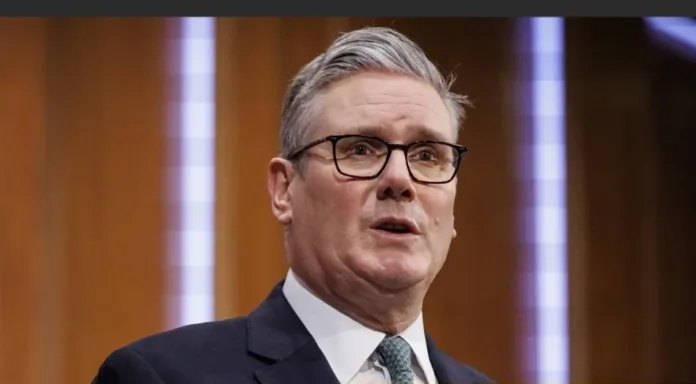

Keir Starmer faces mounting rebellion as Labour divisions spiral out of control
Keir Starmer remains Britain’s prime minister, but after days of political chaos, resignations and mounting rebellion inside Labour, his authority now appears dangerously weakened.
Westminster descended into confusion as Labour MPs, ministers and government aides openly questioned whether Starmer could survive much longer after the party’s disastrous election results across England, Scotland and Wales.
What was supposed to be a fresh start for Labour after years of Conservative instability has instead spiralled into another leadership crisis at the heart of government.
The pressure intensified after almost a quarter of Labour MPs formally requested that Starmer either resign immediately or announce a timetable for stepping down. Several ministers also resigned, while senior figures reportedly began discussing what one source described as a “responsible, dignified, orderly” exit for the Prime Minister.
The crisis deepened further after former minister Jess Phillips condemned Starmer as too weak and excessively focused on process rather than real political action.
One Labour backbencher admitted the situation now felt hopeless. “You can only lead if you have the broad support of your party,” the MP reportedly said. “It’s now undeniably true that Keir doesn’t.”
Despite the growing revolt, Labour remains bitterly divided over who should replace him. Names repeatedly circulating inside Westminster include Wes Streeting, Angela Rayner, Ed Miliband and Andy Burnham. However, none has formally launched a leadership challenge.
Burnham faces a particularly difficult obstacle because he is not currently an MP and would need to return to Parliament before contesting the leadership. That delay has reportedly encouraged some supporters of Streeting to push for a quicker leadership contest before Burnham becomes eligible.
The turmoil began escalating after Labour MP Catherine West attempted to gather the 81 MP nominations required to trigger a formal leadership challenge. Although her effort quickly lost momentum, it helped focus growing anger inside the party and accelerated discussions about Starmer’s future.
Downing Street had hoped a major speech by Starmer would restore confidence and silence critics. Instead, many Labour MPs reportedly viewed the speech as uninspiring and politically weak. His proposed policy changes, including closer ties with the European Union and moves towards formally nationalising British Steel, were criticised as too limited to reset the government’s direction.
As tensions rose, rumours spread throughout Westminster of coordinated ministerial resignations similar to the strategy used to topple Boris Johnson in 2022. While only junior resignations have happened so far, the atmosphere inside government has reportedly become deeply hostile.
At Tuesday’s cabinet meeting, Starmer attempted to project defiance. He reminded ministers that Labour has an official process for challenging a leader and insisted that process had “not been triggered”. He urged ministers to continue governing rather than focus on leadership speculation.
Privately, however, frustration inside Labour appears to be intensifying. Critics accuse Starmer of treating politics like bureaucracy and failing to respond emotionally or decisively to the growing crisis surrounding him.
Meanwhile, markets have reportedly started reacting nervously to the instability as Britain prepares for the State Opening of Parliament and the King’s Speech. The spectacle now risks unfolding under the shadow of a prime minister many MPs already consider politically finished.
After less than two years in office, Starmer’s government now appears trapped between paralysis and rebellion.
And as divisions deepen inside Labour, Britain could once again be heading towards yet another change of prime minister.