
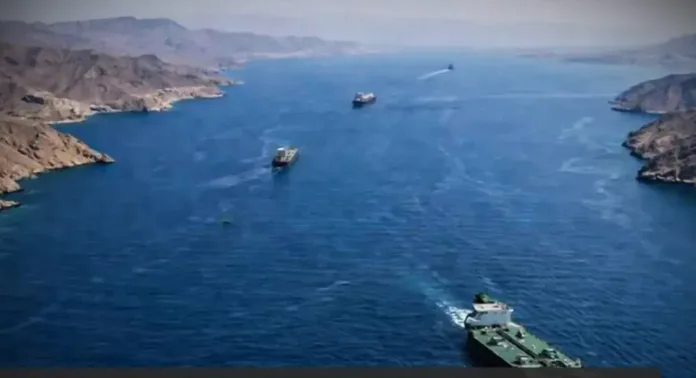

Iran allows limited passage as war continues and oil prices drop sharply
Iran has announced that “non-hostile vessels” may pass through the Strait of Hormuz, provided they coordinate with what it described as the competent Iranian authorities, highlighting its continued control over the critical waterway.
The Strait of Hormuz remains one of the most important routes for global shipping, particularly for energy supplies. Iran’s position signals that it will maintain its authority over the passage until a deal is reached, according to diplomatic analysis.
The announcement comes as tensions continue to rise across the region. Iran and Israel are still exchanging strikes, with violence spreading beyond their borders. In southern Lebanon, state media has reported that six people have been killed.
Military developments are also unfolding alongside the conflict. The Pentagon is expected to deploy troops from the 82nd Airborne Division to the Middle East, according to CBS News, a US partner of the BBC. Military experts suggest that such a move would likely aim to increase pressure on Iran to reopen the Strait of Hormuz more fully.
At the same time, diplomatic efforts appear to be ongoing. US President Donald Trump has said that talks to end the war are happening “now”. His comments have raised hopes that the situation could de-escalate, even as fighting continues.
There are also reports from US and Israeli media outlets, citing unnamed sources, that a 15-point plan has been presented to Iran outlining proposals to end the conflict. However, the BBC has not seen the document and is working to verify those claims.
The ongoing uncertainty has had a direct impact on global oil markets. Prices, which had surged amid fears of disruption, have now fallen. The price of Brent crude dropped by around 4.5% on Wednesday, trading just below $100 per barrel after rising close to $110 the previous day. Earlier in the day, the decline had reached around 6%.
US-traded oil also fell, dropping by approximately 3.5% to around $89 per barrel. Analysts say the fall is notable given the volatility seen since the conflict began.
According to Goh Jing Rong from the Singapore Management University, the drop suggests that markets are now less concerned about prolonged supply disruption and worst-case scenarios. Investors appear to be responding to signals that tensions may ease.
However, the outlook remains uncertain. Experts caution that the decline in oil prices will only continue if there is clear and tangible progress towards de-escalation. This would include safer passage through the Strait of Hormuz and reduced threats to energy infrastructure.
Without such developments, prices could rise again as quickly as they fell. The situation remains highly sensitive to both military and diplomatic changes.
Iran’s decision to allow limited passage offers some reassurance to global markets, but it also reinforces the country’s control over a vital shipping route at a time of conflict.
As strikes continue across the region and negotiations remain uncertain, the Strait of Hormuz remains at the centre of global attention. Its status will likely play a key role in shaping both the trajectory of the conflict and the stability of international energy markets in the days ahead.