

US and Iran agree two-week ceasefire as tensions remain high
The United States and Iran have agreed to a conditional two-week ceasefire, marking a pause in hostilities after more than a month of escalating conflict.
The truce follows coordinated attacks by the US and Israel on Iran and comes amid heightened tensions in the region. It was confirmed early on Wednesday by Pakistan’s Prime Minister Shehbaz Sharif, who has been mediating the negotiations.
Under the terms of the agreement, shipping traffic will be allowed to pass through the Strait of Hormuz, a vital route for global oil and trade. Iran has agreed to permit vessels through the waterway for the duration of the ceasefire, with their passage coordinated by its military.
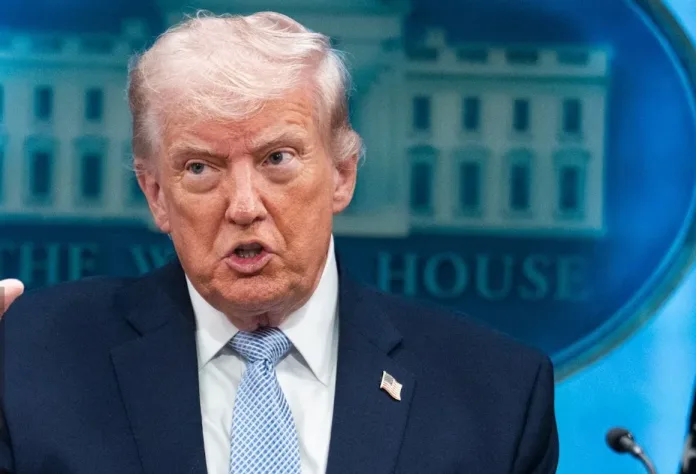
US President Donald Trump said he would suspend bombing and attacks on Iran for two weeks, provided Tehran reopened the Strait. He stated that the decision came after the US had already met and exceeded its military objectives.
The ceasefire announcement followed strong rhetoric from Trump, who had warned that the United States could take Iran out “in one night” and that a “whole civilisation will die tonight” if the Strait was not reopened.
Iran, for its part, outlined a 10-point plan tied to the ceasefire. Among its demands are a complete cessation of war across Iran, Iraq, Lebanon and Yemen, a commitment to lifting sanctions, the release of frozen Iranian funds held by the US, and compensation for reconstruction costs.
The plan also includes a statement that Iran fully commits to not seeking possession of nuclear weapons.
Iran’s Supreme National Security Council said that what it described as its victory on the battlefield would be reinforced through political negotiations.
The ceasefire is also expected to apply to Lebanon, where Israel has been engaged in conflict with the Iran-backed group Hezbollah, according to Sharif.
However, Israel’s position remains more limited. Prime Minister Benjamin Netanyahu said Israel supports the US decision to suspend strikes against Iran for two weeks, on the condition that Iran immediately opens the Strait and halts attacks on Israel, the US and other countries in the region.
At the same time, Israel has made clear that the ceasefire does not extend to Lebanon, where it continues to maintain ground operations.
Events on the ground underline the fragility of the situation. Shortly after the ceasefire announcement, sirens were reported in Israel as missiles were launched from Iran. Explosions were also heard in Jerusalem.
The differing interpretations of the ceasefire terms highlight the uncertainty surrounding the agreement. While the US and Iran have set out conditions, there is no clear indication of a fully unified understanding between all parties involved.
Looking ahead, Pakistan has invited delegations from both sides to meet in Islamabad for further negotiations aimed at reaching a more comprehensive agreement.
Officials in Washington have acknowledged that discussions about in-person talks are ongoing, although no final arrangements have been confirmed.
The path forward remains uncertain. Previous attempts at negotiations between the US and Iran have seen tensions rise even as talks were under way.
As the ceasefire begins, it offers a temporary pause in a conflict that has already had significant regional and global implications. However, with conditions attached and positions still divided, the coming days are likely to be critical in determining whether the truce can lead to a longer-term resolution.