

Trump extends strike pause as talks continue and nuclear risk fears grow
US President Donald Trump has said talks with Iran are “going very well” as he extended a pause on strikes against Iranian energy sites.
After initially announcing a five-day pause, Trump confirmed he would extend the suspension by 10 more days, pushing the deadline to Monday, 6 April 2026 at 8pm. He said the move was made following a request from the Iranian government.
Iran has not formally responded to the extension. However, Tehran had earlier indicated it was waiting for Washington to respond to its conditions for a ceasefire.
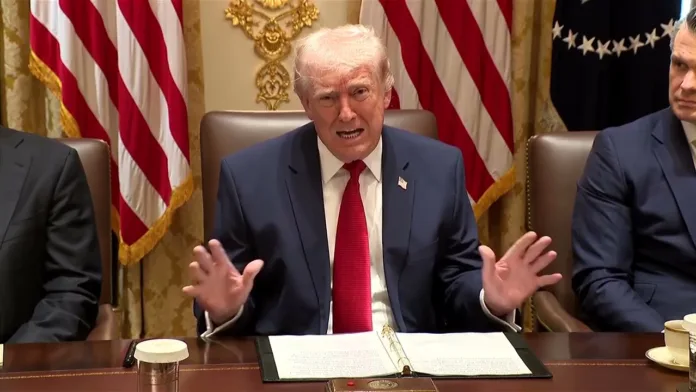
Diplomatic discussions appear to be continuing. At a cabinet meeting, US special envoy Steve Witkoff confirmed that the United States had sent Iran a 15-point peace plan. Trump also warned that the US would be Iran’s “worst nightmare” if it did not agree to a deal.
Despite the ongoing talks, military activity continues across the region. Israel has carried out new strikes on Beirut and Tehran, highlighting the ongoing instability.
At the same time, concerns have been raised about the risks to nuclear infrastructure. The International Atomic Energy Agency has urged “maximum restraint” following a reported strike near the Bushehr Nuclear Power Plant in southwest Iran.
The agency warned that any damage to the facility could result in a major radiological accident affecting a large area in Iran and beyond.
The conflict has also affected global oil markets. Prices, which had climbed earlier, dropped soon after the latest developments.
The price of Brent crude fell after rising close to $110 a barrel, while US-traded oil also declined. Analysts said the drop reflects expectations that the chances of prolonged supply disruption may be lower.
The Strait of Hormuz remains central to the situation, with nearly 90% of oil and gas passing through the waterway typically going to Asian countries.
Several countries have begun taking measures in response to the disruption. South Korea has banned exports of naphtha, while Japan plans to lift restrictions on coal-fired power plants.
Vietnam has temporarily waived an environmental tax on fuel to reduce petrol prices, and Singapore has delayed a green jet fuel levy. In the Philippines, a transport strike is continuing as rising fuel costs impact workers, and a national energy emergency has been declared.
The disruption has also affected global supply chains. The number of ships passing through the Strait of Hormuz has dropped significantly, which could impact the prices of goods including food, smartphones and medicines.
As talks continue alongside ongoing strikes, the situation remains uncertain. The extension of the pause provides more time for negotiations, but the risk of escalation and the potential impact on energy supplies and infrastructure remain key concerns.