
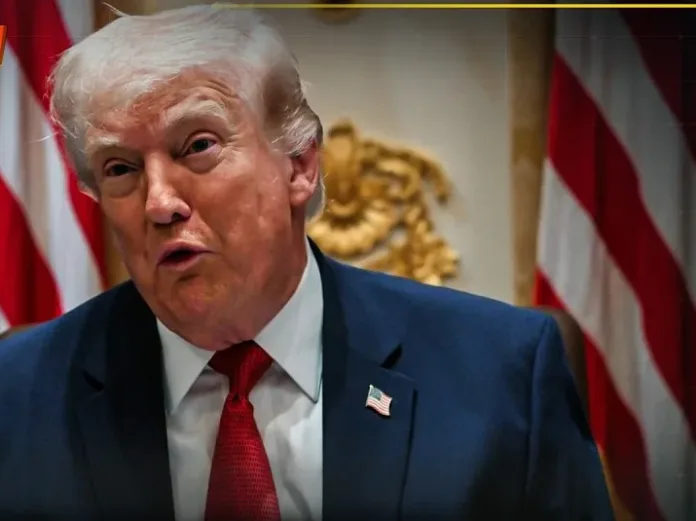

Trump suggests seizing Iran’s oil as war tensions escalate across region
US President Donald Trump has said he would prefer to “take the oil” in Iran, suggesting that the United States could seize key assets such as Kharg Island “easily” amid the ongoing conflict in the Middle East.
Speaking to the Financial Times, Trump indicated that while his preference would be to secure Iran’s oil resources, there had been criticism within the United States about such an approach. He said some questioned why such action would be taken.
His comments come as tensions in the region continue to rise, with ongoing military activity and diplomatic efforts taking place simultaneously.
Trump also said that the United States and Iran have been engaging in both direct and indirect talks. He described Iran’s new leadership as “very reasonable” and expressed confidence that a deal could be reached, while acknowledging that it was not guaranteed.
The remarks followed developments after an Israeli strike on 28 February killed Iran’s supreme leader, Ayatollah Ali Khamenei, who was replaced by his son Mojtaba.
Efforts to bring the conflict to an end appear to be under way, with Pakistan acting as an intermediary between Washington and Tehran. Pakistani foreign minister Ishaq Dar said discussions among regional foreign ministers had explored ways to achieve an early resolution to the war, including the possibility of talks taking place in Islamabad.
However, it remains unclear whether both the United States and Iran have agreed to participate in such discussions.
At the same time, the conflict continues to widen. Israel has carried out further strikes on targets across Tehran, while additional US troops have been deployed to the Middle East.
Iran has warned that it will not accept what it described as humiliation, highlighting the ongoing strain in relations.
The war is also having wider economic consequences. Oil prices have surged as the conflict has intensified, contributing to instability in global markets. Stock markets have also been affected as uncertainty continues.
Countries across the region are taking steps to respond to the impact of the crisis. In Egypt, the government has introduced measures aimed at conserving energy. These include new nationwide rules requiring shops, restaurants and cafes to close earlier than usual.
The changes are expected to have a significant effect on businesses, particularly smaller establishments that rely on late-night trade. Many of these businesses typically operate for extended hours or around the clock.
Although Egypt is not directly involved in the conflict, it has been affected by the broader consequences, including rising oil prices and disruptions to shipping routes.
The situation remains fluid, with military actions, diplomatic efforts and economic pressures unfolding at the same time.
Trump’s comments on Iran’s oil add another dimension to an already complex situation, as discussions about potential resolutions continue alongside ongoing conflict.
With talks still uncertain and tensions high, the direction of the crisis remains unclear as developments continue across the region.