
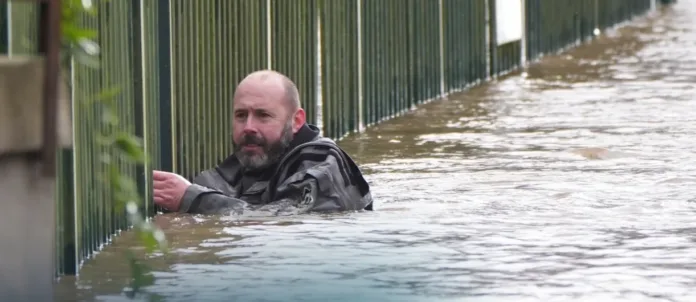

Severe flood warnings, mass rescues and travel chaos as Storm Chandra sweeps across the UK
Storm Chandra is tearing through the UK, unleashing widespread flooding, dangerous travel conditions and mounting fears for public safety as rivers burst their banks and emergency crews race to rescue stranded motorists.
Authorities have issued two severe flood warnings, the highest level available, meaning there is a danger to life. The alerts underline the seriousness of the situation as torrential rain and strong winds combine to overwhelm parts of the country.
The first severe warning was issued at 5.49 am for Ottery St Mary in Devon. The Environment Agency said floodwater in the area was expected to be deep and fast-flowing after the River Otter surged to its highest recorded level. Residents were urged to take immediate action to protect themselves, with officials warning that conditions could change rapidly.
A second severe flood warning was issued later in the day for the Upper Frome at Dorchester in Dorset. Rising water levels prompted further concern as rainfall continued to fall across already saturated ground, increasing the risk of sudden and dangerous flooding.
Emergency services have been stretched as Storm Chandra tightens its grip. Firefighters in Devon and Somerset were called out repeatedly on Tuesday morning, rescuing people from 25 vehicles that had become stranded in floodwater. In several cases, drivers were trapped as water rose around their cars, forcing crews to act quickly to prevent tragedy.
Across England, the scale of the threat is stark. By Tuesday afternoon, there were 112 flood warnings in place, where flooding is expected, alongside 237 flood alerts, where flooding is possible. The sheer number of warnings highlights how widespread the impact of the storm has become, with communities from the south-west to the Midlands facing disruption and danger.
The extreme rainfall has been accompanied by powerful winds, compounding the risks. Snow has also been forecast in parts of the country, adding another layer of hazard as weather warnings remain in force. Amber alerts, signalling a potential danger to life, were issued for heavy rain in south-west England and for strong winds along the eastern coast of Northern Ireland.
Travel disruption has followed as roads become impassable and conditions deteriorate. In London, heavy rain fell through the morning rush hour, slowing traffic and causing delays across the capital. Overnight gusts exceeded 30mph, bringing down branches and creating difficult conditions for drivers and pedestrians alike. A yellow warning for rain covering much of London was lifted at midday, but officials warned that conditions elsewhere remained volatile.
The Environment Agency has repeatedly urged people to stay away from floodwater, warning that it can hide strong currents, open drains and debris. Even shallow water can knock people off their feet or sweep vehicles away, particularly when rivers are running at record levels.
Storm Chandra arrives at a time when ground conditions are already waterlogged, leaving little capacity to absorb further rainfall. This has increased surface water flooding and placed additional strain on drainage systems, particularly in low-lying and rural areas.
Emergency planners have warned that the situation could worsen if heavy rain continues, especially in areas already under severe warnings. Residents in affected regions have been advised to monitor updates closely, prepare emergency kits and follow guidance from local authorities.
As the storm continues to move across the UK, officials say the priority remains protecting lives. With rivers still rising, more rain forecast and hundreds of alerts in place, Storm Chandra has become a stark reminder of how quickly extreme weather can turn deadly.