
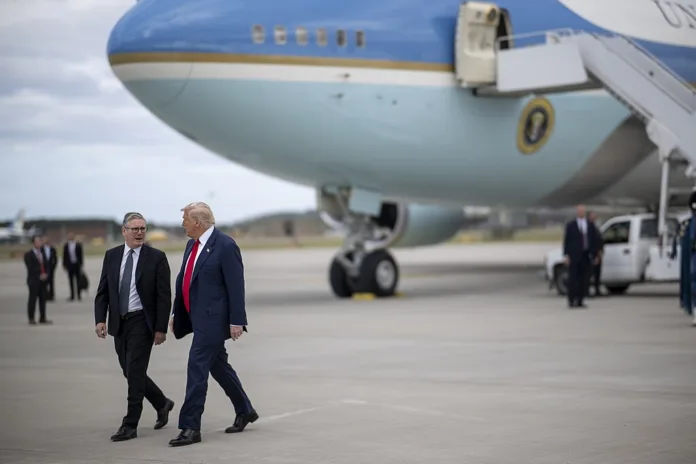


Emergency UK–US talks follow tanker seizure as diplomatic tensions rise and Washington meetings loom
UK Prime Minister Sir Keir Starmer held a high-stakes phone call with US President Donald Trump after American forces seized an oil tanker in a move that rippled across international diplomacy. The conversation took place against a backdrop of rising geopolitical tension, with Britain balancing its alliance with Washington while addressing concerns over sovereignty, security, and global stability.
The tanker was intercepted earlier this week in northern waters between the UK, Iceland and Greenland. US authorities described the vessel as stateless and linked to illicit activity, a classification that allowed the seizure under international maritime law. British forces supported the operation through surveillance and naval assistance, though they did not board the ship themselves.
Downing Street confirmed that the call between Starmer and Trump covered the tanker seizure and broader foreign policy challenges. Officials stressed that the discussion formed part of ongoing dialogue between the two leaders, rather than a response to a sudden diplomatic rupture. Even so, the timing underlined strains within the transatlantic relationship as both governments confront overlapping security threats.
Greenland emerged as a particularly sensitive issue during the exchange. The strategically important territory has drawn increasing interest from Washington, prompting concern among European allies. Starmer reiterated the UK’s position that Greenland’s future must be determined by its people and by Denmark, emphasising respect for sovereignty and international norms. The message reflected wider unease in Europe about potential shifts in Arctic power dynamics.
Embed from Getty Images
Senior figures in the UK government described relations with the United States as resilient but acknowledged that disagreements are becoming more visible. While Britain continues to view the US as a crucial partner in enforcing sanctions and countering illicit maritime trade, officials made clear that cooperation must rest on shared rules and mutual respect.
The phone call came just ahead of Deputy Prime Minister David Lammy’s scheduled meeting with US Vice-President J.D. Vance in Washington. Lammy is expected to focus formally on Ukraine and allied security, but the tanker seizure and wider strategic issues are likely to shape the tone of the talks. The visit forms part of a broader effort to maintain close diplomatic engagement at a moment of heightened global uncertainty.
The seizure has also provoked sharp reactions from Moscow, which has condemned the operation as unlawful. Western governments reject that claim, arguing that vessels involved in sanctioned oil trades undermine international stability and may finance hostile or extremist activities. Britain’s decision to support the operation, even without direct boarding, signals a firm stance on enforcement.
In Westminster, the episode has triggered political scrutiny. Opposition figures questioned whether the government is striking the right balance between loyalty to its closest ally and the protection of British interests. Some warned that alignment with an unpredictable US foreign policy could expose the UK to diplomatic and strategic risks if tensions escalate further.
Despite the controversy, officials on both sides of the Atlantic insist that cooperation remains strong. They point to shared objectives on sanctions, maritime security, and the pursuit of stability in conflict zones such as Ukraine. Starmer has repeatedly argued that democratic nations must act together, guided by clear principles, to navigate an increasingly volatile world.
Whether the oil tanker seizure marks a temporary flashpoint or a sign of deeper shifts in UK–US relations remains unclear. What is certain is that the incident has forced urgent conversations at the highest level, with implications that extend far beyond a single ship at sea.