
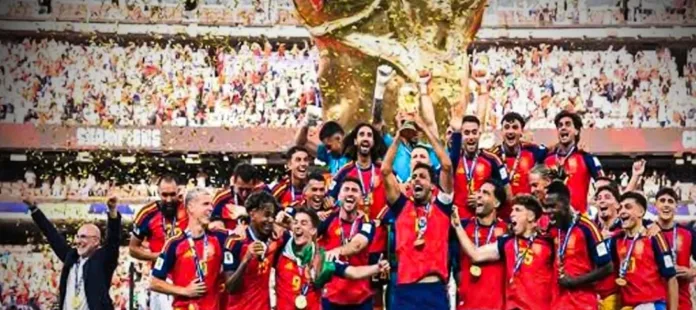

Ferran Torres scores in extra time as Spain beat Argentina 1-0 to win their second World Cup
Spain are world champions again after Ferran Torres struck in extra time to seal a tense 1-0 win over Argentina in the 2026 World Cup final.
The final in New York/New Jersey was not a classic for goals, but it became a night of history for Spain. After 90 minutes without a breakthrough, Torres delivered the decisive moment in the 106th minute, racing on to a clever nod from Nico Williams before driving his finish beyond Emiliano Martinez.
The Spain World Cup triumph secured the country’s second global title, 16 years after Andres Iniesta scored the extra-time winner against the Netherlands in 2010. This time, another Barcelona player wrote himself into national history.
Argentina arrived as defending champions, but they spent much of the final pinned back. Spain controlled the ball, pushed forward with patience and forced Martinez into several saves before finally finding a way through.
Lionel Messi, in what is expected to be his final World Cup appearance, could not produce the ending Argentina had hoped for. The 39-year-old captain was kept quiet for long periods as Spain’s midfield and defence denied him the space to shape the match.
The numbers told the story of Spain’s dominance. Argentina failed to register a shot on target, while Spain kept building pressure until Torres finally made it count. It was a controlled, patient and deserved Spain World Cup victory.
Argentina’s task became even harder late in normal time when Enzo Fernandez was sent off for a second yellow card after a challenge on Pau Cubarsi. From that moment, Spain had even more control, although Argentina still had one late chance when Giuliano Simeone fired over in added time at the end of extra time.
Spain had also seen a Nico Williams effort ruled out before the winning goal. The substitute thought he had broken the deadlock, but the strike was chalked off after a foul was spotted in the build-up.
Torres then took his chance when it came. His goal gave Spain the lead, and although he later had another effort ruled out for offside, the damage had already been done.
The Spain World Cup success completed a remarkable tournament for Luis de la Fuente’s side. They started with a goalless draw against Cape Verde, but grew stronger with every round. They beat France in the semi-final and then stopped Argentina from defending their crown.
Spain also ended the tournament with a remarkable defensive record, conceding only once in eight matches and never falling behind. Their blend of control, pressing and tactical discipline made them the best collective side in the competition.
There were emotional scenes after the final whistle, but also tension. A confrontation broke out as Argentina players reacted to defeat, and Leandro Paredes was sent off after the match. The incident added a sour note to an otherwise historic night for Spain.
The awards underlined Spain’s dominance. Rodri was named player of the tournament, Unai Simón won the Golden Glove, and Pau Cubarsi was recognised as the best young player.
For Messi, there was no final World Cup fairytale and no Golden Boot. That award went to France forward Kylian Mbappe, who finished two goals ahead of him.
For Spain, though, this was a night to remember. The European champions are now world champions too, and the Spain World Cup victory confirmed the rise of a team built less on individual stardom and more on structure, unity and belief.