

Unions urge government to boost rail safety after LNER staffer injured stopping attacker
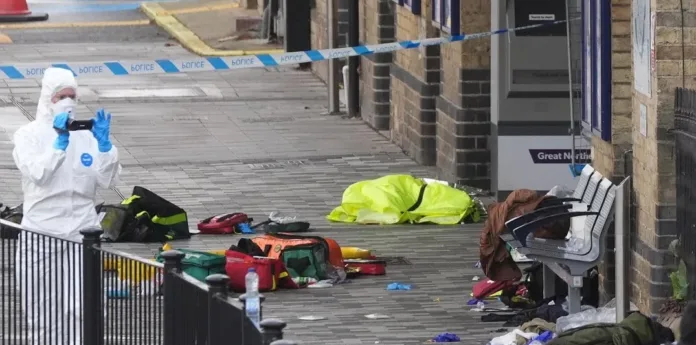
Rail unions are demanding urgent action to improve safety across Britain’s railway network after a mass stabbing on a London North Eastern Railway (LNER) service in Cambridgeshire left multiple people injured. The attack has reignited fears over passenger and staff security, particularly amid recent budget cuts affecting rail staffing and transport policing.
Authorities confirmed on Sunday that the person in hospital with life-threatening injuries is an LNER staff member who confronted the attacker in an effort to protect passengers. British Transport Police (BTP) praised the employee’s actions, calling them “nothing short of heroic” after reviewing CCTV footage. Investigators said the intervention almost certainly prevented further casualties.
Union leaders have since called for an immediate review of railway safety and for additional resources to protect both passengers and staff. Eddie Dempsey, general secretary of the RMT union, said he would be seeking urgent meetings with ministers, rail companies and police “to ensure that we have the strongest possible support, resources and robust procedures in place”.
Maryam Eslamdoust, general secretary of the TSSA, echoed those concerns and urged LNER and the government to “act swiftly to review security, to support the affected workers, and to ensure nothing like this happens again”.
While full details of the attack are still emerging, police said the violence unfolded quickly in the confined space of a moving train, where passengers had little room to escape. Such incidents are exceptionally rare on Britain’s railways, with only a handful of fatal assaults occurring in the past decade. The last comparable case was the 2019 killing of a passenger on a Guildford train, which shocked the nation for its randomness.
Despite the rarity of such attacks, the incident has intensified debate over rail safety, particularly as operators continue to cut staff numbers and shift to driver-only operation. Successive governments have encouraged rail companies to reduce costs, closing ticket offices and cutting BTP funding even as passenger numbers have returned to pre-pandemic levels.
A former BTP chief constable, Andy Trotter, ruled out introducing airport-style screening across the national rail network, describing it as impractical. “It just isn’t going to happen,” he told LBC radio, pointing out that security scanners and bag checks would cause widespread delays and require major investment. However, he argued that greater investment in facial recognition, random searches and visible policing could still help deter violence.
The BTP, which is funded by the rail industry rather than central government, has seen its resources stretched thin. Passenger groups and unions say that underfunding, coupled with the growing use of unstaffed stations, has left both employees and travellers more vulnerable.
Recent figures from the Office of Rail and Road show assaults on the rail network have risen 7% year on year, reaching 10,231 recorded incidents — the highest on record. While most involve harassment or minor assault, about one in five are serious attacks, and the total represents a worrying trend for an industry handling over 1.7 billion journeys annually.
Rail staff say they increasingly fear violence at work. A 2024 Rail Safety and Standards Board report found nearly 2,800 railway employees had been injured or traumatised by assaults or abuse in the previous year. In a TSSA survey of hundreds of members, 40% said they had faced incidents involving weapons.
“Safety and staffing go hand in hand,” Eslamdoust said. “You cannot talk about safety while cutting back on the very people who keep others safe.”
As detectives continue their investigation into the Cambridgeshire attack, attention has turned to whether years of cost-cutting have eroded the safeguards that once made Britain’s railways among the safest in the world. For now, rail workers are being hailed for their courage — and their unions are demanding that it should never again take heroism to keep passengers alive.