
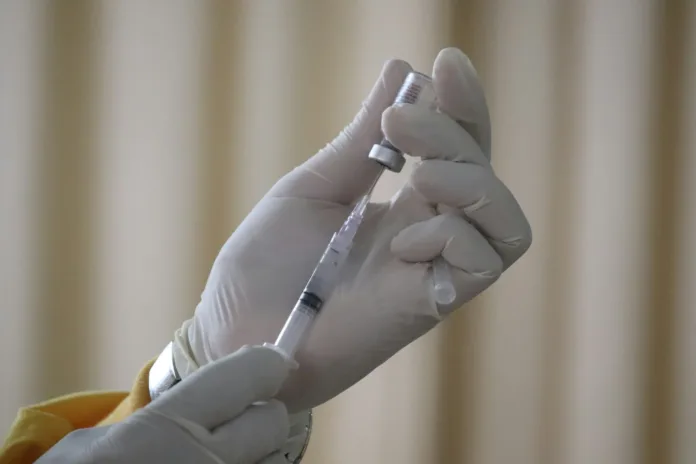

Hundreds of thousands of children will now receive routine protection against chickenpox under NHS changes
Chickenpox, long considered an unavoidable part of childhood, is no longer being treated as an accepted risk. The NHS has announced a major shift in its vaccination programme, confirming that protection against chickenpox will now be offered as part of routine childhood immunisations.
From today, hundreds of thousands of young children will be protected against the infection, formally known as varicella. The change marks the first time the NHS has included the chickenpox vaccine as standard rather than leaving families to manage the illness or seek private vaccination.
GP practices across the country will now begin offering a combined MMRV vaccine, which protects against measles, mumps, rubella and chickenpox. Children will receive the vaccine at 12 months and again at 18 months of age, replacing the previous MMR-only schedule.
Embed from Getty Images
The decision follows advice from the Joint Committee on Vaccination and Immunisation, which recommended that the combined vaccine be introduced into the routine programme. As a result, the MMR vaccine will be replaced with the MMRV version for eligible children, expanding protection without adding extra appointments.
Health Secretary Wes Streeting described the move as a landmark moment for child health in England. He said it represents the first time chickenpox vaccination has been offered universally through the NHS, highlighting the significant impact the illness can have on families.
While often regarded as mild, chickenpox can lead to serious complications and sends thousands of children to hospital every year. Beyond the medical risks, the illness frequently causes disruption to family life, forcing children to miss nursery or school and parents to take time off work to provide care.
The new vaccination programme is expected to reduce that burden. Families will no longer face the cost of private vaccinations or the loss of income linked to caring responsibilities. The NHS believes the change will offer reassurance to parents and improve overall childhood health outcomes.
Mr Streeting urged parents to take up the offer when contacted by their GP, stressing that vaccines remain one of the most effective tools for preventing illness and saving lives.
The rollout includes a carefully structured schedule to ensure children of different age groups receive appropriate protection. Children born on or after 1 January 2025 will be offered two doses of the MMRV vaccine at 12 months and 18 months.
Those born between 1 July 2024 and 31 December 2024 will receive two doses later, at 18 months and again at three years and four months. Children born between 1 September 2022 and 30 June 2024 will be offered a single dose at three years and four months.
In addition, the NHS is planning a catch-up programme later in the year for older children. This will involve a single dose for those born between 1 January 2020 and 31 August 2022, ensuring broader protection across early childhood age groups.
The announcement signals a clear shift in how chickenpox is viewed by public health officials. Once seen as a routine childhood illness, it is now being actively prevented through national vaccination policy.
For many families, the change brings peace of mind. For the NHS, it represents a significant expansion of preventive care aimed at giving children the healthiest possible start in life.