
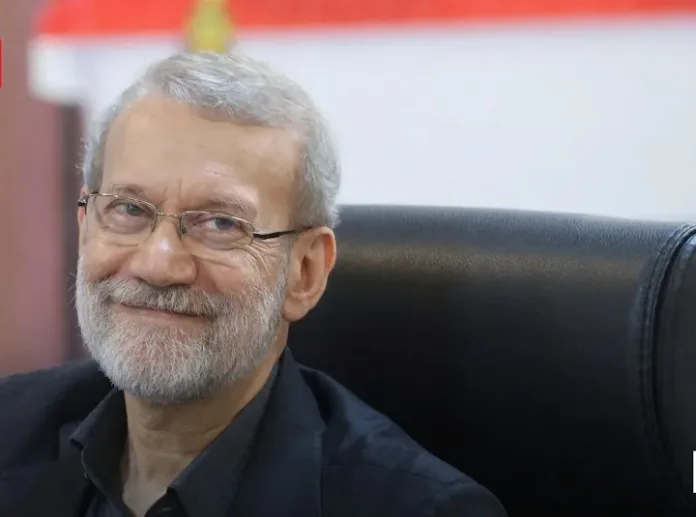

Iran says killing of Ali Larijani will not weaken its political system
Iran’s foreign minister has said the killing of senior official Ali Larijani will not destabilise the country’s political system, insisting that the state’s structure remains intact despite targeted assassinations.
Speaking in an interview with Al Jazeera, Foreign Minister Abbas Araghchi said the United States and Israel had failed to understand that Iran’s leadership does not depend on any single individual.
His comments came after Tehran confirmed the death of Larijani, the secretary of Iran’s Supreme National Security Council, who was killed in an Israeli strike earlier this week.
Araghchi stressed that Iran’s political system is built on established institutions that continue to function regardless of the loss of individual figures.
“I do not know why the Americans and the Israelis still have not understood this point,” he said.
“The Islamic Republic of Iran has a strong political structure with established political, economic, and social institutions.”
He added that while individuals play important roles within the system, their absence does not undermine its overall stability.
“The presence or absence of a single individual does not affect this structure,” Araghchi said.
“Of course, individuals are influential, and each person plays their role – some better, some worse, some less – but what matters is that the political system in Iran is a very solid structure.”
Larijani, 67, was one of the most senior figures in Iran’s leadership and a close confidant of the country’s former supreme leader, Ayatollah Ali Khamenei, as well as his successor, Mojtaba Khamenei.
His killing marks the removal of one of Tehran’s most prominent officials since the start of US-Israeli strikes on 28 February.
Araghchi pointed to previous high-profile losses to support his argument that the system remains resilient.
He referenced the killing of Ayatollah Ali Khamenei, who died during the opening phase of the conflict, saying that even the loss of the country’s most senior leader did not disrupt governance.
“We have not had anyone more important than the leader himself, and even the leader was martyred, yet the system continued its work and immediately provided a replacement,” he said.
The foreign minister added that similar continuity would apply to any other senior position within the government.
“If anyone else is martyred, it will be the same,” he said.
“If the foreign minister were ever to be martyred, there would ultimately be someone else to take the position.”
The comments underline Iran’s attempt to project stability and continuity during an ongoing conflict that has seen repeated strikes against key figures and infrastructure.
Larijani’s death represents one of the most significant losses for Iran’s leadership since the escalation of hostilities nearly three weeks ago.
The broader conflict continues to unfold across the region, with both sides engaging in military operations and issuing warnings about further escalation.
Despite the growing number of casualties among senior officials, Iranian leaders have maintained that their political system is designed to withstand such shocks.
Araghchi’s remarks reflect that position, emphasising that the country’s institutions, rather than individual leaders, form the foundation of its governance.