

Greenland urges british MPs to defend international law as US threats escalate
Greenland has taken its concerns directly to the heart of British politics, warning lawmakers that escalating pressure from the United States has left its leaders feeling betrayed, alarmed and deeply uncertain about the future.
Speaking after a briefing with MPs at the UK parliament in London, Greenland’s business and energy minister Naaja Nathanielsen made an emotional appeal for dialogue, restraint and respect for international law as Donald Trump intensifies threats to seize control of the Arctic territory.
Nathanielsen said the United Kingdom must dare to act on principle and insist that disputes are resolved through diplomacy rather than intimidation or force. She stressed that even when global problems are complex, that complexity should never be used as an excuse to abandon dialogue.
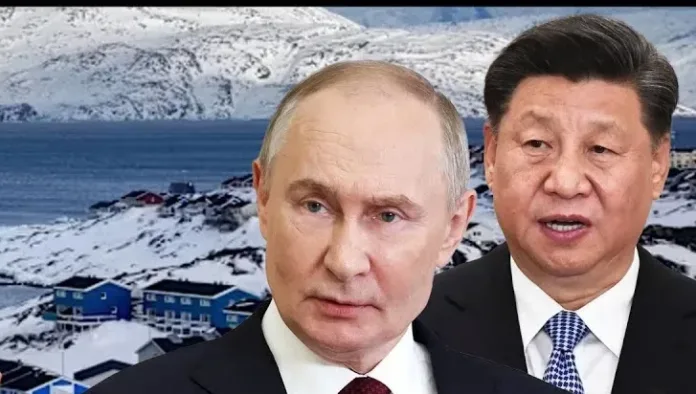
Her comments come amid growing alarm in Europe after Trump publicly claimed that the United States could take Greenland either peacefully or by force. The territory is rich in minerals and occupies a strategically significant position in the Arctic. Trump has argued that controlling Greenland is essential for US security against perceived threats from Russia and China.
Greenland’s leadership strongly rejects that framing. Nathanielsen said her government feels bewildered by the aggressive rhetoric, particularly given Greenland’s long standing cooperation with the United States on security matters.
She said Greenland has consistently supported the idea that it plays a role in American national self interest, making the recent threats feel both offensive and deeply confusing. Despite that cooperation, she said, Greenlanders now feel betrayed by Washington’s tone and actions.
The visit to London followed warnings from Denmark that any US aggression against Greenland would severely damage the Nato alliance. Both Denmark and Greenland have repeatedly stated that the territory is not for sale and that its future can only be decided by its own people in cooperation with Copenhagen.
Asked what message she wanted British politicians and Prime Minister Keir Starmer to hear, Nathanielsen said the UK should insist on dialogue even when it is uncomfortable. She urged Britain to stand firm on international law and to reinforce the importance of Nato as a cornerstone of collective security.
She also expressed gratitude for Starmer’s public support, noting that he has said Greenland’s future must be determined by Denmark and Greenland alone. Danish Prime Minister Mette Frederiksen has delivered the same message to Washington.
However, the situation places the UK in a delicate position. Starmer is attempting to maintain workable relations with Trump while also pursuing a US trade deal and seeking American cooperation on efforts to end the war in Ukraine. Direct confrontation risks complicating those priorities.
Trump has repeatedly claimed that Chinese and Russian vessels are operating near Greenland, presenting the territory as a frontline in great power competition. Nordic governments have rejected those claims, saying they do not reflect reality on the ground.
Nathanielsen said Greenland does not detect any immediate military threat. She added that the government is comfortable with increased monitoring in the Arctic but sees no justification for aggressive posturing or talk of force.
She made clear that Greenland has no desire to become part of the United States. She said the population is content remaining within the Kingdom of Denmark and has no intention of changing that status.
When asked whether Greenland would expect Nato allies such as the UK to provide military backing in the event of a US invasion, Nathanielsen declined to speculate.
Her message remained focused on diplomacy. She warned that the choices being made now will shape how international law is judged in the years ahead and said governments across Europe will be asked whether they stood by their principles when it mattered most.