
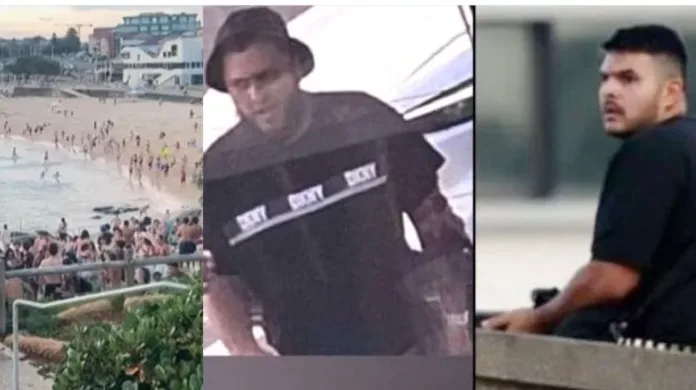

Police probe gunmen’s overseas travel as terror material and explosives are linked to Bondi attack
Australian authorities are intensifying their investigation into the Bondi Beach shooting after confirming that the two alleged gunmen travelled to the Philippines in the month before the attack that left 15 people dead.
Police are examining whether the overseas trip, which took place between 1 and 28 November, played any role in the lead-up to the violence that shocked Australia. Manila’s immigration authorities have confirmed to the BBC that the pair entered and exited the Philippines during that period, following reports they may have sought military-style training.
The men have been identified in Australian media as Sajid Akram, 50, and his 24-year-old son Naveed. Philippine officials said Sajid Akram travelled on an Indian passport, while Naveed used an Australian passport. Both declared the southern city of Davao as their destination before returning to Sydney.
Davao lies on the island of Mindanao, a region where Islamist militant groups have operated in the past. However, the Philippine military said it could not immediately confirm reports that the pair received any form of training during their stay.
Back in Australia, investigators say disturbing discoveries have added urgency to the case. Police confirmed that homemade Islamic State group flags and improvised explosive devices were found in a vehicle used by the gunmen. The findings have raised serious concerns about the scale of planning behind the attack.
Prime Minister Anthony Albanese said the shooting appears to have been motivated by Islamic State ideology. He described the attack as an act of extreme violence that targeted innocent civilians during a Hanukkah event at one of Australia’s most famous beaches.
The attack claimed 15 lives, including a 10-year-old girl, a British-born rabbi, a retired police officer and a Holocaust survivor. Their deaths have sent shockwaves through communities across the country and abroad.
As of the latest update, 24 people remain in hospital. Three are in critical condition, while another five are listed as critical but stable. Medical teams continue to work around the clock to support the wounded.
In Bondi, grief has spilled onto the streets. Mourners have gathered at beachside memorials, laying flowers, lighting candles and holding vigils for those killed. The normally vibrant coastline has become a place of quiet reflection and sorrow.
The scale of public response has also been seen in an unprecedented surge in blood donations. Lifeblood Australia said nearly 50,000 people nationwide booked appointments to donate blood in the aftermath of the shooting, more than double the previous national record. One day alone saw 7,810 donations of blood, plasma and platelets.
Eyewitness accounts continue to emerge. One woman from the UK, who lives just 200 metres from the scene, said she initially mistook the gunfire for fireworks before hearing screams and seeing people flee. She described the moment police and helicopters arrived as the point she realised something was “seriously wrong”.
For investigators, key questions remain unanswered. Authorities are working to establish what the gunmen did overseas, how long they had been planning the attack, and whether others were aware of or assisted their actions. Officials have stressed that the investigation remains active and complex.
As Australia mourns, the focus now turns to accountability and prevention. The findings from the Philippines trip and the materials recovered domestically are expected to play a crucial role in understanding how such an attack was carried out, and how future threats can be stopped.