
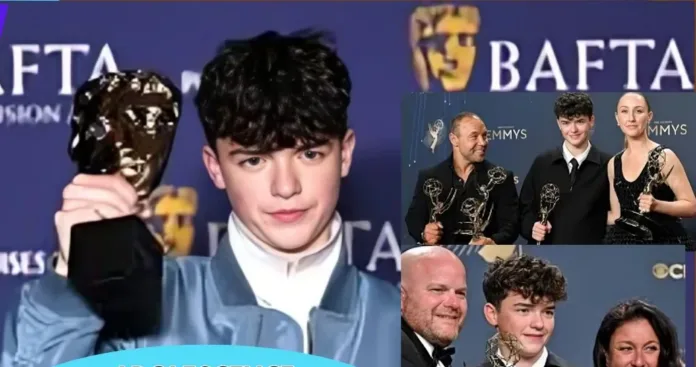

Netflix drama Adolescence shattered records during an emotional night at the Baftas
Adolescence made television history at the 2026 Bafta TV Awards after dominating the ceremony with a record-breaking four wins in one night.
The hard-hitting Netflix drama became the biggest success of the evening, securing awards for best limited series while stars Stephen Graham, Owen Cooper and Christine Tremarco all collected acting honours.
The show, which sparked intense national debate following its release in March 2025, officially broke the record for the most wins by a single programme at the Bafta Television Awards in one year.
One of the night’s most emotional moments came when 16-year-old Owen Cooper became the youngest ever winner of the Bafta for best supporting actor. Cooper, already celebrated with Emmy, Golden Globe and National Television Award victories for his role as a boy accused of murdering a female classmate, delivered a speech packed with references to The Beatles.
“In the words of John Lennon, you won’t get anything unless you have the vision to imagine it,” Cooper told the audience before saying people only need “an obsession, a dream and the Beatles” to succeed.
Stephen Graham also received huge applause after finally securing his first Bafta following seven previous nominations. The actor won best leading actor for playing Cooper’s on-screen father and used his speech to encourage younger generations to pursue careers in storytelling and acting.
“We have the opportunity to tell the human condition,” Graham said, before ending with another Beatles lyric: “All we need is love.”
Elsewhere during the ceremony, Narges Rashidi won best leading actress for portraying Nazanin Zaghari-Ratcliffe in the BBC drama Prisoner 951. Rashidi dedicated her award to Zaghari-Ratcliffe and her family, praising their resilience during her imprisonment in Tehran.
Code of Silence claimed the award for best drama series. The programme starred Rose Ayling-Ellis as a deaf woman assisting police investigations through her lip-reading abilities.
Entertainment categories also produced major moments. The Celebrity Traitors won best reality programme, while comedian Alan Carr secured the public-voted award for the year’s most memorable TV moment after his performance on the show.
Carr jokingly questioned whether he had genuinely played well or whether the other celebrities were simply “thick” for failing to identify him as a Traitor.
Meanwhile, Last One Laughing took best entertainment programme, while comedian Bob Mortimer won best entertainment performance.
The ceremony also featured emotional tributes beyond scripted television. Legendary cook Mary Berry received the prestigious Bafta Fellowship at the age of 91. During her speech, she remembered her late son William, who died in a car accident in 1989.
Consumer journalist Martin Lewis also fought back tears while accepting the Bafta Special Award. Lewis reflected on the death of his mother when he was 11 and described how journalism helped him rebuild his life.
The ceremony also sparked controversy after Gaza: Doctors Under Attack, which had previously been dropped by the BBC over impartiality concerns before airing on Channel 4, won the current affairs prize. Filmmakers used the moment to criticise the BBC during their acceptance speeches.
But above everything else, the night belonged to Adolescence.
In a ceremony filled with grief, politics, laughter and emotional confessions, the Netflix drama stood above them all turning a television phenomenon into Bafta history.