
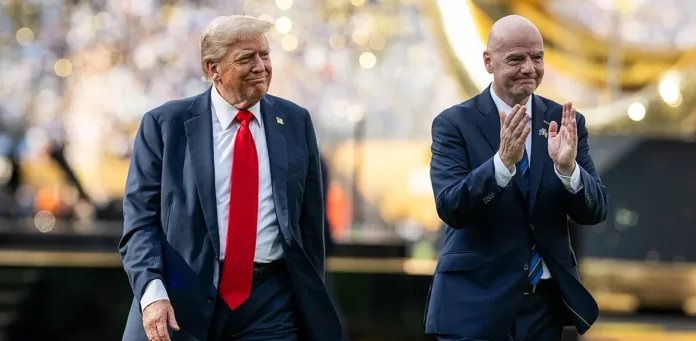


Trump says FIFA would make a terrible mistake by replacing Gianni Infantino
Donald Trump has defended Gianni Infantino, warning FIFA that it would be making a “terrible mistake” if it replaced its under-pressure president.
The US president backed Infantino in a post on Truth Social, describing him as “fantastic” and arguing that FIFA’s recent success would be difficult to repeat without him.
His intervention comes as Infantino faces growing pressure over a failed proposal to sell stakes in the men’s World Cup to private investors.
The FIFA leadership crisis has intensified after UEFA, the Asian Football Confederation and CONCACAF held initial talks about organising competitions themselves. The move reflects deep concern among major confederations over the direction of world football under Infantino.
Trump, however, made his position clear. He said FIFA should not even consider replacing Infantino, claiming the organisation would never again be as successful or profitable if he left.
The timing of the message is significant. Infantino has been under heavy scrutiny since the collapse of his plan to create FIFA Forward Enterprise, a company that would have managed commercial and operational parts of FIFA tournaments.
Embed from Getty Images
The proposal included the idea of selling around 20% of the company to private investors. That sparked outrage across football, with critics arguing that the World Cup should not be treated as a private investment asset.
Infantino has since apologised for the proposal, but that has not ended the backlash.
UEFA has previously threatened to boycott FIFA competitions, while UEFA, AFC and CONCACAF have accused Infantino of deception. They are understood to want him to resign and leave with dignity rather than seek re-election in March next year.
An open letter signed by the heads of the three confederations urged FIFA to hold an independent review into the scheme. The letter did not name Infantino directly, but its message was clearly aimed at the leadership of world football.
It argued that football leadership is a duty of service, not a possession. It also warned that trust is broken when an individual places himself above the collective that gave him authority.
That language shows how serious the dispute has become. This is no longer only a row about one commercial proposal. It has become a wider question about Infantino’s leadership, FIFA’s governance and who should control the future of the World Cup.
Trump’s support may give Infantino a political boost, especially given the close attention paid to the US president’s views on major international sporting events. But it could also sharpen the divide between Infantino and the confederations demanding change.
For UEFA and the other bodies, the concern is that FIFA’s competitions should remain under football’s collective control. For Trump, the argument appears simpler: Infantino has delivered a hugely successful World Cup and should remain in place.
The clash leaves FIFA facing a difficult period before next year’s election. Infantino had previously been expected to seek another term with little serious resistance. That now looks less certain.
If opposition grows, football’s power brokers may try to find an alternative candidate. If they fail, Infantino may survive the crisis despite the anger around him.
For now, Trump has chosen his side. He is standing firmly behind Infantino, while some of football’s most powerful confederations are looking for ways to protect themselves from the fallout.