
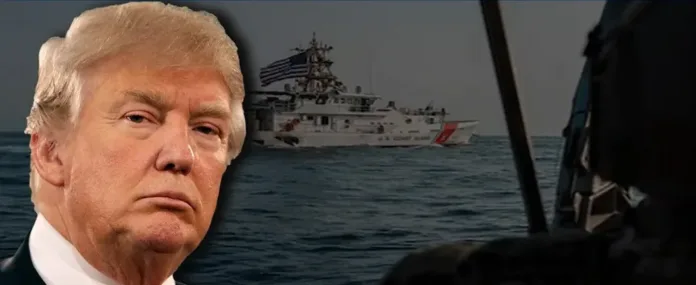

US forces strike Iranian military sites again as Tehran retaliates across the Gulf
The US has launched a seventh consecutive night of attacks on Iran, deepening a conflict that is now spreading across the Gulf and disrupting one of the world’s most important shipping routes.
US Central Command said its forces struck Iranian surveillance sites, weapons storage areas, military logistics facilities and maritime capabilities. The latest operation lasted several hours and came after President Donald Trump declared the temporary ceasefire with Iran was over.
Iran responded by targeting countries in the region that host or support US forces. Kuwait said an electricity and water distillation plant was hit, causing a fire and forcing some power generation units offline. Jordan said it intercepted 10 Iranian missiles, while Bahrain said its air defences stopped incoming attacks.
Explosions were also reported in parts of Iran, including Yazd, Qeshm Island and Bandar Abbas, close to the Strait of Hormuz.
The fighting has placed the Strait of Hormuz at the centre of the crisis. Iran says the route is closed to shipping, and commercial traffic has largely stopped. Before the latest escalation, about a fifth of the world’s oil and liquefied natural gas passed through the strait.
Washington says its strikes are aimed at reducing Iran’s ability to threaten ships and crews. Tehran says the US blockade of Iranian ports and military pressure in the region have destroyed the ceasefire process.
The conflict has also brought new disputes over civilian damage. Iran accused the US of hitting civilian infrastructure, including bridges and transport sites. The US denied this, saying its attacks were limited to military targets and logistics networks.
Footage from Hormozgan province showed serious damage to Gariveh Bridge, where local authorities said seven people were killed. The US said it also destroyed a control tower at Chabahar port, describing it as part of an Iranian maritime surveillance network.
The competing claims have made the situation difficult to assess with certainty. Iran has accused the US of widening its targets, while Washington insists the operation remains focused on military infrastructure. In fast-moving conflicts, casualty figures, damage reports and claims of successful strikes can change as more evidence emerges.
The latest attacks also place Gulf governments under growing pressure. Kuwait, Bahrain and Jordan are now dealing with direct security threats while trying to avoid being pulled deeper into the conflict. Their responses so far have focused on air defence, emergency services and protecting essential infrastructure.
The disruption around the Strait of Hormuz is also creating wider concern for shipping firms, insurers and energy buyers. Even when vessels are not directly hit, the risk of missiles, drones or mines can be enough to slow traffic and raise costs. That uncertainty is why the crisis is being watched closely far beyond the Middle East.
The crisis is now moving beyond a direct US-Iran exchange. Gulf states are being drawn into the confrontation, shipping is slowing, and energy markets are watching closely for further disruption.
Neither side appears ready to step back. The ceasefire has collapsed, the Strait of Hormuz remains under pressure, and the region is bracing for more attacks.