
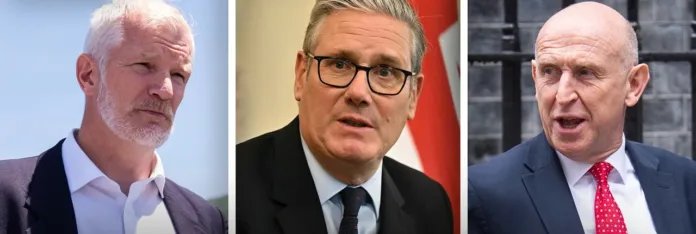

Two defence resignations revive Labour unrest days before Starmer heads to the G7 summit
Sir Keir Starmer is facing a renewed Labour crisis after two senior defence ministers resigned within hours, reopening questions about his authority and the future of his premiership.
John Healey stepped down as Defence Secretary on Thursday, 11 June, after rejecting the level of military funding proposed in the government’s Defence Investment Plan. In his resignation letter, Healey told the Prime Minister that the settlement “falls well short” of what Britain needs to protect the country.
The departure landed at a damaging moment for Sir Keir. Labour had only recently emerged from a period of resignations, anger and internal recrimination following poor election results. The Makerfield by-election campaign appeared to have temporarily contained the unrest, but the calm did not last.
Sir Keir had hoped to present the Defence Investment Plan as proof that his government could provide direction and deliver major decisions. Instead, departing ministers have turned it into another test of whether he can make his administration function under pressure.
The upheaval deepened when Armed Forces Minister Al Carns also resigned. Earlier on Thursday, Carns gave television interviews while still in office and said his job was to “steady the ship”. About an hour later, he left the government.
That reversal intensified the sense of disorder around Downing Street. Carns, a former soldier, had also spoken openly about a possible future Labour leadership contest, saying he was not frightened by the prospect of a contest beginning.
Sir Keir appointed Dan Jarvis as the new Defence Secretary on 11 June. Jarvis previously served as a security minister and completed military tours in Northern Ireland, Kosovo, Iraq and Afghanistan. He now inherits the dispute over defence spending and the immediate task of rebuilding stability inside the department.
The government must also find a replacement for Carns. At the same time, Downing Street and the Treasury are defending their attempt to reach a funding agreement that could satisfy the armed forces, defence ministers, other departments and the public.
Sir Keir’s allies argue that he is confronting an exceptionally difficult financial and security landscape. The economy remains sluggish, the overall tax burden is high, benefit costs are rising, and international threats are increasing. Ministers also face demands for substantially higher military spending, while other departments have already been warned that money may be redirected towards defence.
Critics, including the Conservatives, argue that the government should make deeper welfare reductions to strengthen the armed forces. However, the dispute has now moved beyond budgets and into a direct political threat to Sir Keir’s leadership.
The Defence Investment Plan was also meant to help Sir Keir draw a contrast with colleagues manoeuvring for his job. He wanted to focus attention on government delivery while possible successors courted Labour MPs. The resignations have instead returned those leadership ambitions to the centre of debate.
Potential challengers, including Greater Manchester Mayor Andy Burnham and Labour MP Wes Streeting, will be watching closely. Burnham is campaigning in the Makerfield by-election as he seeks a route back to Westminster, while discontent among Labour MPs has again become visible.
The timing creates another problem for the Prime Minister. Sir Keir is due to attend the G7 summit in Évian, France, from 15 to 17 June, where he will meet other world leaders while facing questions at home about defence policy and ministerial discipline.
For Downing Street, the task is now urgent. Sir Keir must persuade his party, government and country that he can recover control, secure a workable defence settlement and continue leading. After another day of resignations and public criticism, his opportunities to reset his premiership appear to be narrowing.