
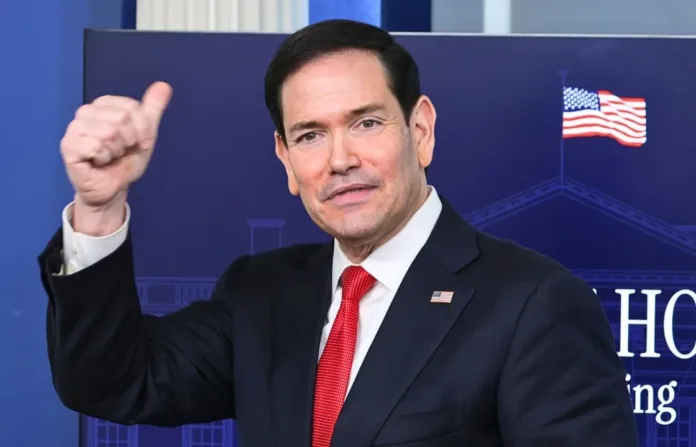

Marco Rubio says an Iran agreement may still take days as fresh US strikes raise tensions
Fresh US military strikes and fragile diplomacy have pushed the Iran conflict back into dangerous uncertainty, with US Secretary of State Marco Rubio warning that a breakthrough deal with Iran is still not within immediate reach.
Speaking on Tuesday, Rubio said negotiations could “take a few days”, cooling expectations of a rapid agreement even as behind-the-scenes diplomacy intensified. His remarks came just one day after American forces carried out new strikes in southern Iran in what Washington described as defensive military action.
The latest attacks targeted boats allegedly attempting to lay mines and missile launch locations, according to US officials. Rubio made clear that the strategic importance of the Strait of Hormuz remains central to Washington’s calculations.
“The straits have to be open,” he said, insisting the vital waterway would remain operational “one way or the other.”
Despite a ceasefire that has technically remained in place since early April, tensions have refused to ease.
US Central Command said the new operations aimed to protect American troops from threats posed by Iranian forces. Iran responded with claims that it had brought down a “hostile” stealth drone using a newly deployed air defence system, though Iranian reports did not specify the drone’s origin.
The military escalation unfolded while senior Iranian officials travelled to Doha for sensitive discussions involving Qatar’s prime minister.
According to an official briefed on the meetings, talks focused on some of the conflict’s most explosive issues: reopening the Strait of Hormuz, Iran’s stockpile of highly enriched uranium and the possible release of frozen Iranian funds. Iran’s central bank governor reportedly joined discussions concerning financial elements of a potential settlement.
Rubio struck a cautiously optimistic tone but stopped far short of declaring success.
Earlier comments from the US official suggested Washington still preferred diplomacy before considering other options. He described negotiations over nuclear issues and maritime access as a serious proposal already placed before Tehran.
Meanwhile, Donald Trump claimed discussions with Iran were progressing positively. In a social media post, Trump said talks were going “nicely” but coupled that optimism with a stark warning: failure could bring renewed attacks. He framed the outcome as an all-or-nothing agreement.
Iran, however, signalled that expectations should remain restrained.
Foreign ministry spokesperson Esmaeil Baghaei said a final agreement was not imminent and stressed that nuclear matters would only be negotiated after a broader framework accord had first been secured. He also stated that no detailed arrangement regarding management of the Strait of Hormuz currently exists within the proposed deal.
The waterway remains one of the world’s most sensitive economic pressure points.
Roughly one-fifth of global oil and liquefied natural gas supplies usually pass through the Strait of Hormuz. Since military action by the US and Israel began in late February, shipping traffic through the corridor has fallen dramatically, dropping from well over 100 daily vessel movements to only a few dozen. The disruption has fuelled sharp rises in oil prices and increased costs linked to fuel, fertiliser and food markets.
Regional instability stretched beyond Iran itself.
Benjamin Netanyahu announced that Israel would intensify strikes against Hezbollah positions in Lebanon. Israeli forces later reported attacks targeting Hezbollah infrastructure in the Bekaa Valley and other locations, despite an earlier ceasefire arrangement between Israel and Lebanon.
For now, diplomacy remains alive but so does the threat of further conflict.
Negotiators continue talking. Military operations continue unfolding. And with oil routes, nuclear concerns and regional security all tied to the outcome, the countdown to an Iran agreement has become a high-stakes global test.