
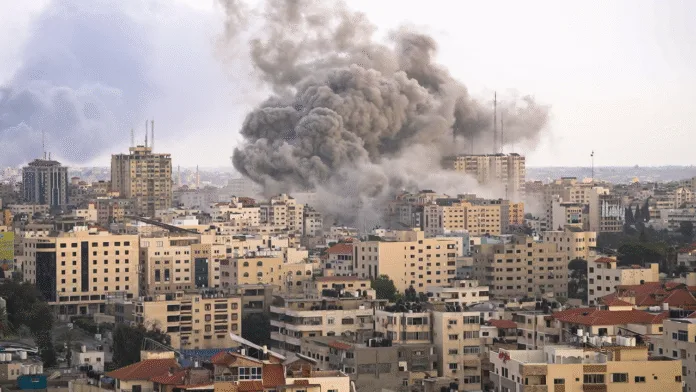


More than 72,000 Palestinians have been killed since October 2023. A ceasefire was signed on 10 October 2025. Since then, Israeli forces have attacked Gaza on 193 out of 217 days, meaning there were only 24 days during which no violent attacks, deaths, or injuries were recorded. Over 2,400 ceasefire violations have been documented by Gaza’s Government Media Office. At least 850 Palestinians have been killed after the ceasefire took effect.
This is what a Gaza ceasefire looks like in practice.
The media keeps presenting each collapse as a mutual failure: “both sides failed again.” But this framing obscures something far darker: the ceasefire is not failing by accident. It is being used as leverage by powerful players who have no interest in a genuine, lasting peace, only in managing the war at a pace that serves their political purposes.
Table of Contents
What the ceasefire actually said, and what happened
The October 2025 agreement, brokered by the United States, Egypt, Qatar, and Türkiye, outlined a 20-point peace plan.
It promised:
- 600 humanitarian aid trucks per day are entering Gaza
- Full Israeli military withdrawal from populated areas
- Release of all remaining hostages and Palestinian prisoners
- A pathway toward reconstruction and a political future for Palestinians
On paper, it looked like a turning point. In practice, only about 37% of the agreed aid trucks have actually entered Gaza. Of 7,800 people permitted to travel through crossings, only 625 were allowed through, just 8% compliance. Over 18,000 patients, including 11,000 cancer patients, require urgent medical evacuation. Fewer than 400 have been permitted to leave.
The ceasefire agreement was signed at a ceremony attended by representatives of 30 countries. Notably absent: Israel and Hamas.
The “both sides” myth and why it fails
When the ceasefire collapses, Western headlines reach for symmetry. Hamas rejected a proposal; Israel resumed strikes. Both sides violated the terms. Both sides share blame.
This framing is not neutral; it is misleading.
Yes, Hamas has refused to disarm, conditioning any disarmament on Israel first halting military operations and allowing full humanitarian access. That is a negotiating position. But Israel controls the crossings, the airspace, the buffer zones, and the aid inspections. Israel has carried out near-daily airstrikes since the ceasefire began. Gaza’s Government Media Office documented that Israel shot at civilians 921 times, bombed or shelled Gaza 1,109 times, and demolished properties on 273 separate occasions, all post-ceasefire.
To describe this as a mutual failure is to suggest that a landlord and a tenant share equal blame for a flooded flat when only one of them controls the pipes.
The real players, and what they want
Israel: Control over withdrawal
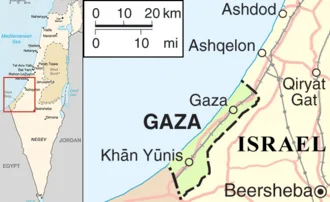
Israel has not conducted any further military withdrawals since the initial pullback on 10 October 2025. The IDF is actively building fortifications along the ceasefire line and reinforcing existing positions. Under the October agreement, Israeli forces withdrew to a demarcation line, known as the “yellow line”, which already encompasses roughly 53% of Gaza’s territory.
That line has been moving. Towards the sea. Cramming two million Palestinians into an ever-shrinking strip of land.
Senior Israeli officials have previously suggested the government is not seeking a permanent hostage deal but is instead seeking the annexation of large parts of Gaza. Finance Minister Bezalel Smotrich has publicly stated that Gaza’s Palestinian population should be pushed out entirely. Prime Minister Netanyahu openly opposes a Turkish peacekeeping presence in Gaza. The political calculus is clear: the ceasefire is a pause, not a conclusion.
Hamas: armed leverage as the only leverage
Hamas’s position is also not that of a neutral party committed to civilian welfare. The group has refused to disarm, rejected the proposed sequenced disarmament plan, and conditioned every concession on guarantees it knows are unlikely to materialise.
At the same time, Hamas’s logic is not irrational from its own perspective. Every time a previous ceasefire ended, as in March 2025, when Israel launched a surprise attack after the first ceasefire’s first phase concluded, it reinforced Hamas’s belief that disarmament without binding international guarantees is a death sentence for the group. The hostages and Palestinian prisoners become chips in a high-stakes game where neither side trusts the other to follow through.
The result: civilians on both sides, but overwhelmingly Palestinians, pay the price.
The United States: Peace broker or arms supplier?
The Trump administration unveiled the 20-point peace plan and called it a framework for ending the war. Six months later, the plan has largely stalled on every promise beyond the initial pause in fighting. The US has continued large-scale arms transfers and diplomatic backing to Israel throughout the conflict, offering only vague statements about Gaza’s political future.
Qatar’s Prime Minister has warned that what exists on the ground is merely a “pause” in hostilities, not a genuine Gaza ceasefire. Türkiye’s Foreign Minister has stated that without timely US intervention, the peace process risks losing all momentum entirely. The US holds enormous leverage. It has repeatedly chosen not to use it.
The humanitarian reality nobody wants to lead with
Médecins Sans Frontières (MSF) has been explicit: “This is not a ceasefire.”
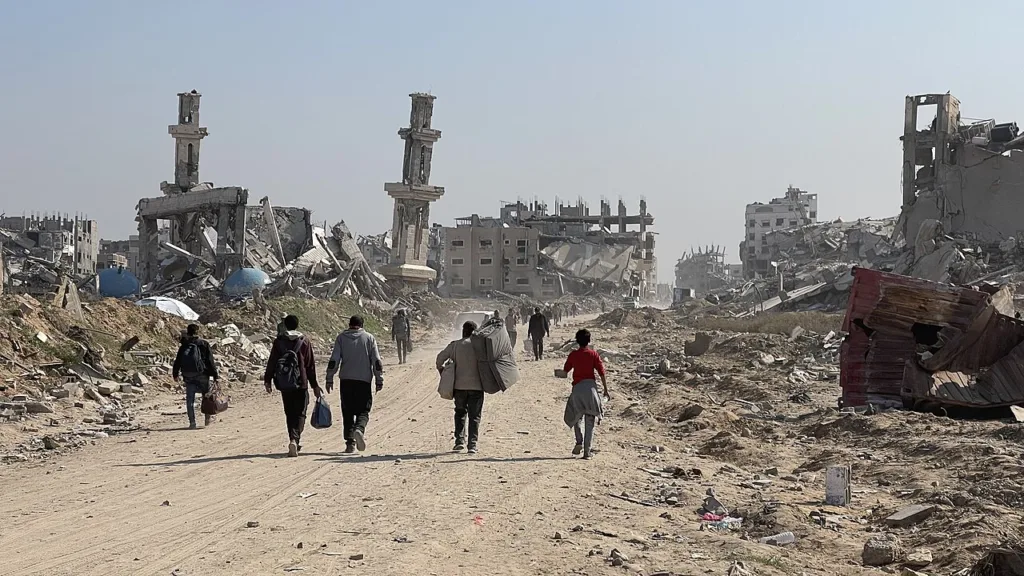
Six months into the truce, approximately 90% of Gaza’s population has been forcibly displaced, living in tents or makeshift shelters. Seventy-seven per cent of Gaza’s population still faces acute food insecurity. Blood pressure medication, diabetes medication, and heart drugs are unavailable across much of the territory. MSF teams have done over 40,000 wound dressings since the ceasefire began.
Only 0.5% of rubble has been cleared. Just 0.5%. The reconstruction that was promised has barely begun. The vast majority of donor funding pledges have not been transferred to the World Bank-administered reconstruction fund.
Children are receiving no education. Israel has restricted the import of notebooks, pencils, and textbooks, items classified, apparently, as a security concern.
This is what civilians are being asked to survive between diplomatic headlines.
Why the ceasefire keeps collapsing: the core issues being avoided
Every round of Gaza ceasefire talks collapses not because of bad faith alone, though there is bad faith in abundance, but because the negotiations consistently avoid the questions that actually matter:
- What is the political future of Gaza?
There is no agreed answer. Israel has pledged not to allow a Palestinian state. Hamas governs Gaza, but the world refuses to engage with it as a legitimate actor. The Palestinian Authority is too weak to fill the vacuum. Nobody is seriously addressing this. - Who governs Gaza after the war?
The October 2025 agreement called for a “Palestinian body of independent technocrats” to administer Gaza. Hamas conditionally agreed but did not agree to disarm or forgo political influence. No such body has meaningfully taken shape. - What are Israel’s actual borders in Gaza?
The yellow line shifts. There are no binding guarantees of full withdrawal. Israel is building fortifications on land it was supposed to evacuate. - Will aid actually flow freely?
The agreement promised 600 trucks a day. The reality has been obstruction, inspection delays, and the blocking of nutritious food items , replaced, according to aid workers, with crisps, chocolate, and soft drinks. - What happens to the remaining hostages and Palestinian prisoners? Negotiations continue, but the leverage each side holds over the other makes every exchange a potential flashpoint.
A pause is not peace
Qatar’s Prime Minister said it plainly: a true ceasefire in Gaza cannot exist without full Israeli withdrawal, restored freedom of movement for Palestinians, and a viable political framework. None of those things exists.
The international community has accepted a situation where:
- Over 700 Palestinians have been killed under a ceasefire
- Aid is trickling in at 21–37% of agreed levels
- Israel controls 53% of Gaza’s territory under military administration
- Reconstruction is at 0.5% completion
- Children cannot access pencils
And yet the headlines say: peace talks continue.
The Nikolay Mladenov, the official overseeing the ceasefire implementation, has himself warned that failure to advance the agreement will lead to “a dangerous status quo” , one that leaves two million Palestinians without a viable future while entrenching Israel’s long-term military presence across more than half of Gaza’s shattered territory. He warned: “Gaza is gone.”
Who doesn’t want peace?
The honest answer is complicated, and that is precisely the point.
- Israel’s far-right government does not want a Palestinian state and has political incentives to keep the conflict in a managed, low-intensity phase that allows territorial consolidation.
- Hamas cannot afford to disarm without guarantees it does not believe will be honoured, and its political survival depends on remaining the armed face of Palestinian resistance.
- The United States continues to back Israel diplomatically and militarily while brokering deals it lacks the political will to enforce.
- Regional powers, Egypt, Qatar, and Saudi Arabia, want stability but not at the cost of domestic political exposure.
- The international community has accepted a “ceasefire” that does not meet the basic definition of one.
The people who unequivocally want peace, who want clean water, medical care, intact homes, and safety, are the ones living in tents in Khan Yunis and Al-Mawasi. They are not at the negotiating table
The cycle will repeat
The Gaza ceasefire is not collapsing because peace is hard. It is collapsing because it was never designed to produce peace, only to produce a pause long enough for each party to consolidate its position and wait for the next round of leverage.
Until the core questions are answered, the political future, governance, borders, aid, and accountability, the cycle will repeat. Ceasefires will be announced. Violations will be committed. Headlines will declare both sides at fault. And civilians will be asked to survive in the gap between diplomatic language and military reality.
That is not a peace process. It is a performance of one.